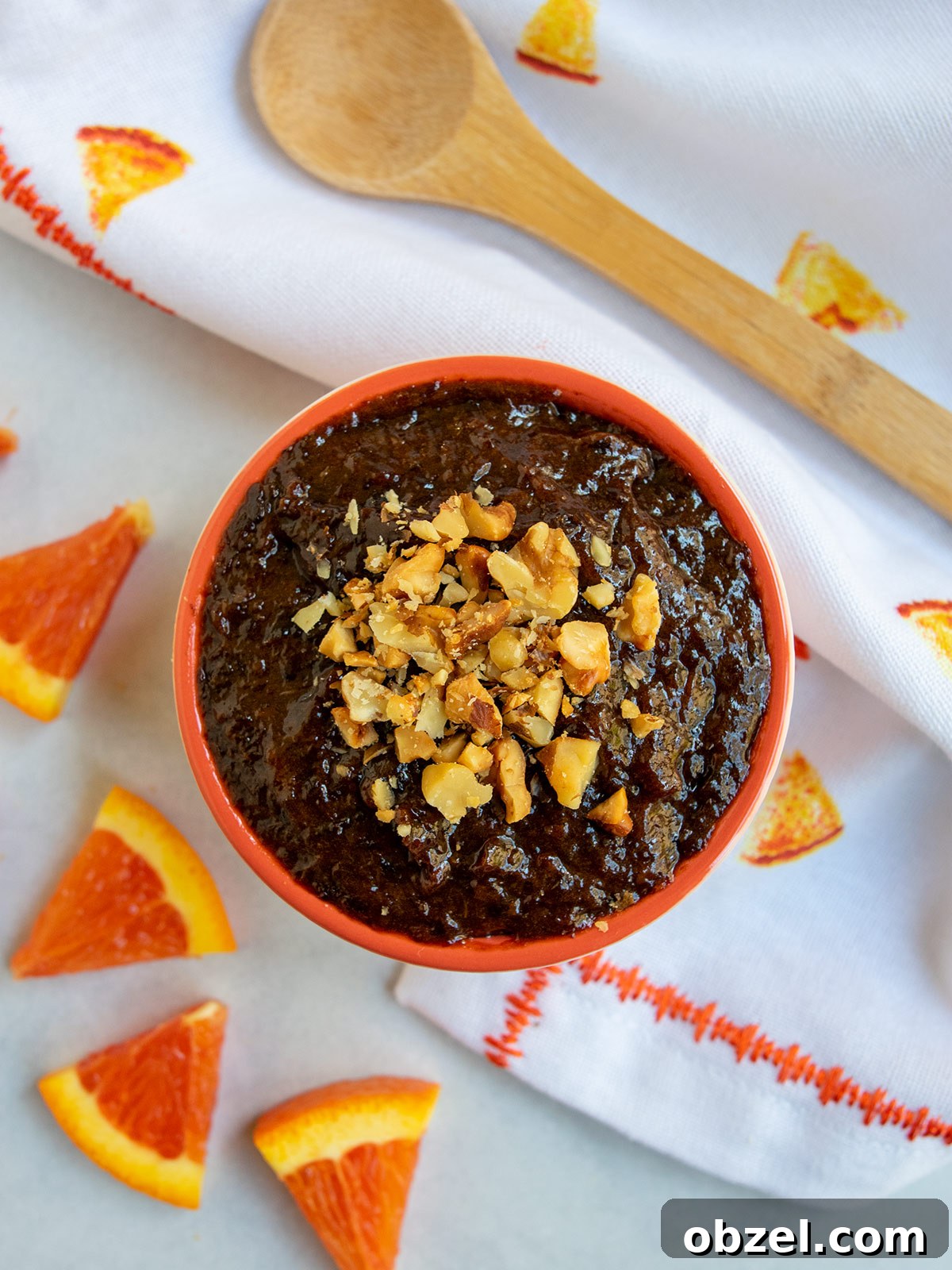
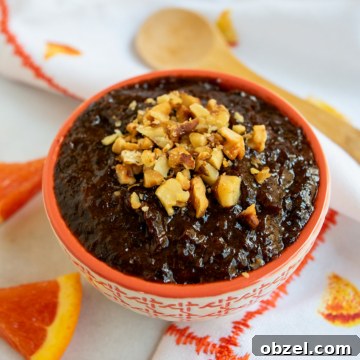
Lekvar, also known as prune butter, is a classic prune filling for hamantaschen cookies during Purim. Made with softened prunes, fresh orange zest, orange juice, a little sugar, and optional toasted walnuts, this simple fruit filling adds rich flavor and a lovely texture to cookies, pastries, and even morning toast.
You might also enjoy my poppy seed filling or apricot lekvar recipe.
For easy browsing, explore all of my Purim recipes and baking recipes.
Why you’ll love this recipe
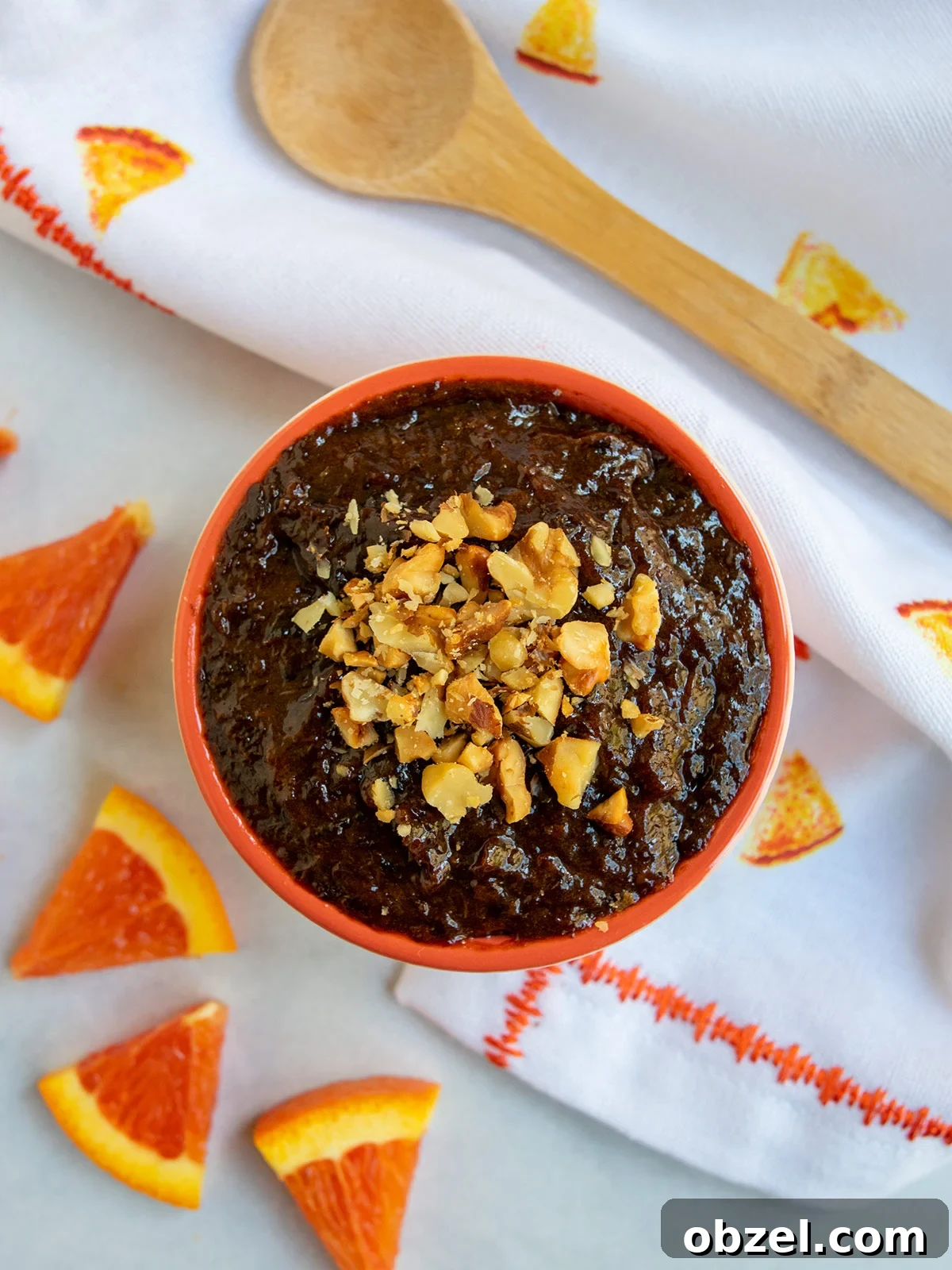
If you grew up eating hamantaschen, you may already know the deep, sweet flavor of lekvar. If prune filling is new to you, this recipe is a wonderful introduction. Prunes may not sound glamorous at first, but they began as plums, and when simmered and blended, they become smooth, rich, and naturally fruity.
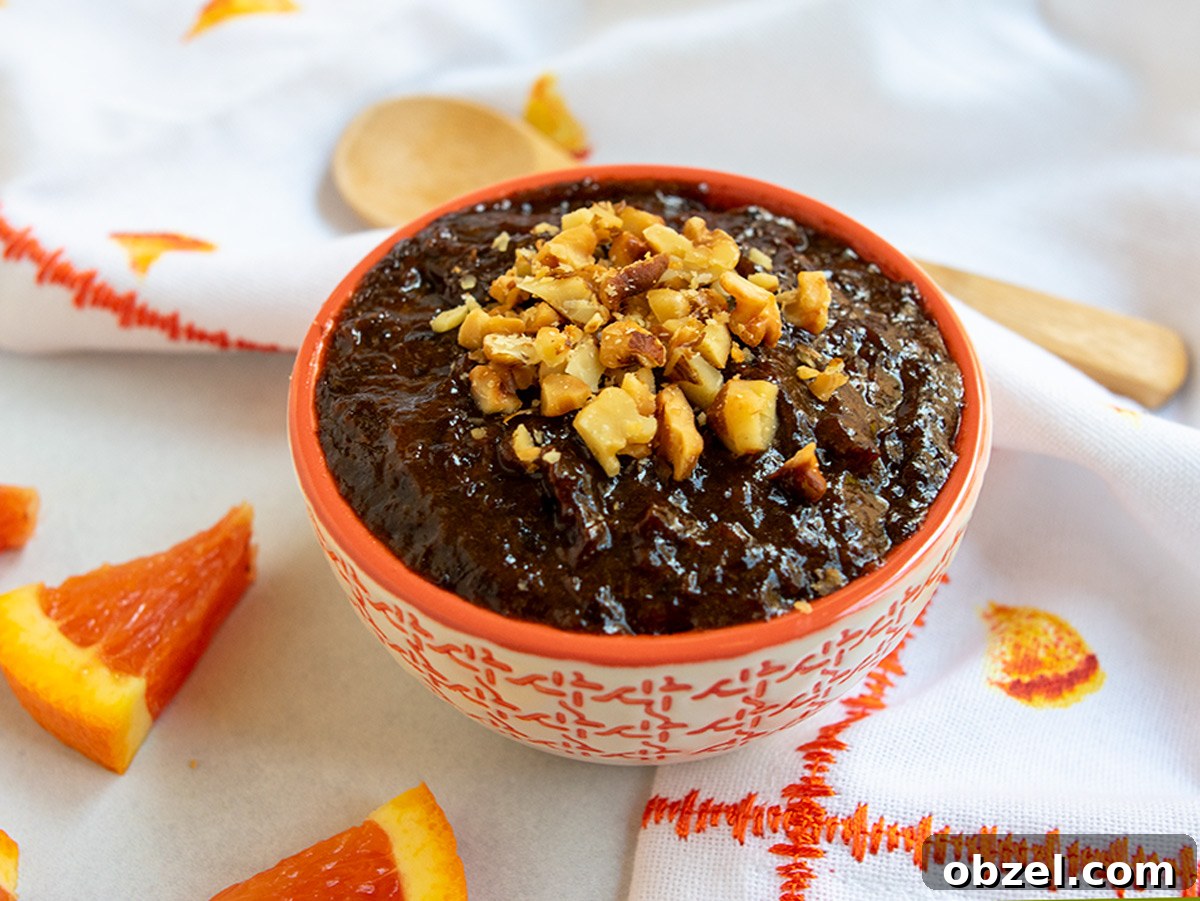
The orange zest and juice brighten the flavor, while the optional toasted walnuts add a satisfying crunch and a nutty finish. The result is a balanced hamantaschen filling that is sweet but not overly sugary, thick enough for baking, and versatile enough to use in many desserts.
This prune butter is especially good for Purim baking, but it does not need to be saved for hamantaschen alone. Spread it on toast, spoon it into thumbprint cookies, tuck it into pastries, or use it anywhere you would enjoy a thick fruit filling. The same method also works well with other dried fruits, including apricots.
Ingredients you’ll need
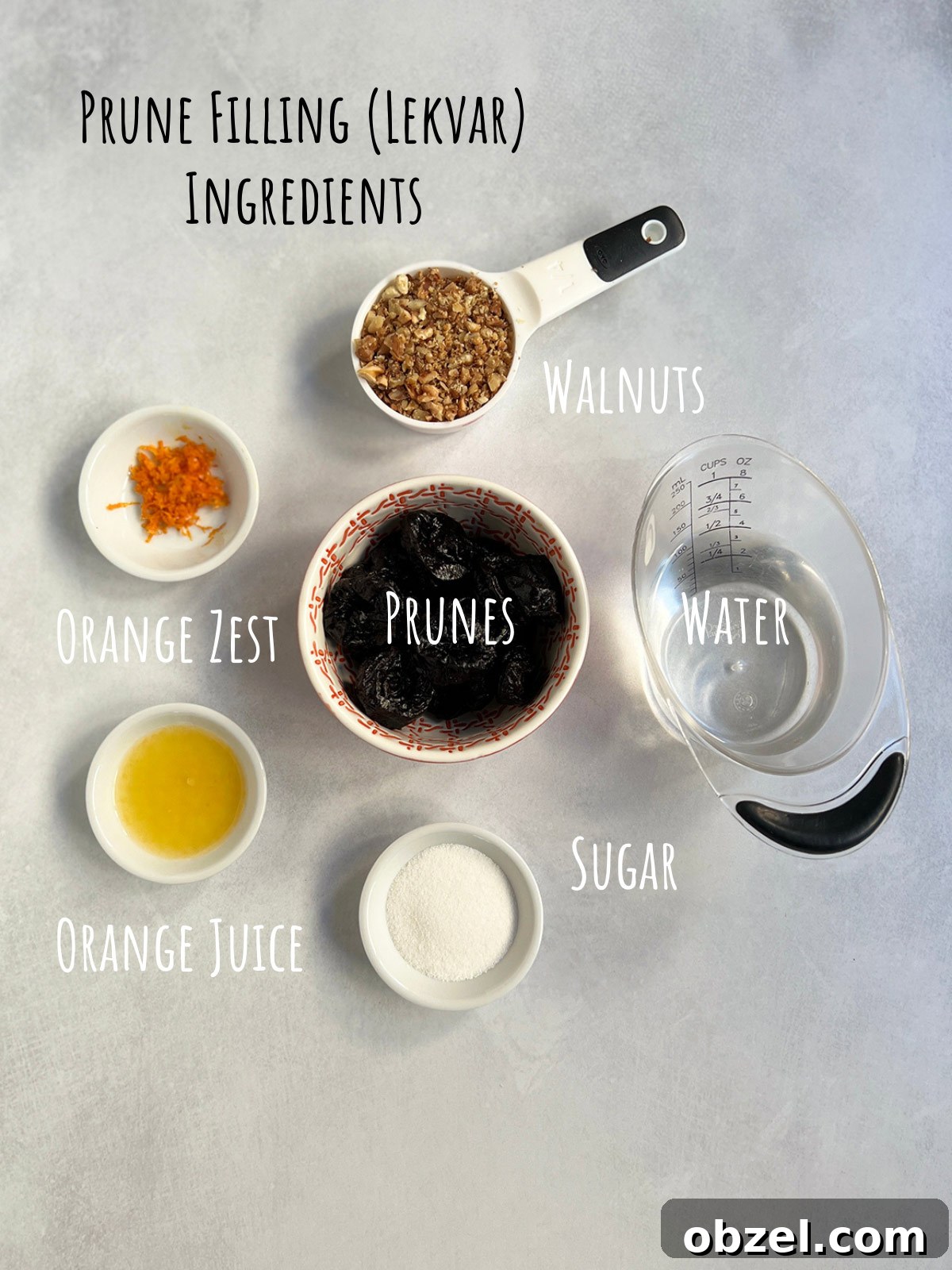
- Prunes: Use pitted prunes if possible. If your prunes still have pits, remove them before cooking.
- Orange zest: Fresh orange zest gives the prune butter a bright citrus note and keeps the filling from tasting too heavy.
- Orange juice: Squeeze a little juice from the same orange you zested.
- Walnuts: Toasted chopped walnuts are optional, but they add texture and flavor.
- Sugar: Granulated sugar works well. Brown sugar, honey, or date syrup can also be used.
- Water: Water softens the prunes and creates a little reserved liquid to adjust the final texture.
How to make this recipe
A mini food processor makes the smoothest lekvar, but you can also mash the cooked prunes with a potato masher or blend them with an immersion blender. The goal is a thick, spreadable prune filling that is mostly smooth with a few small pieces for texture.
1. Place the prunes in a small saucepan and add the water.
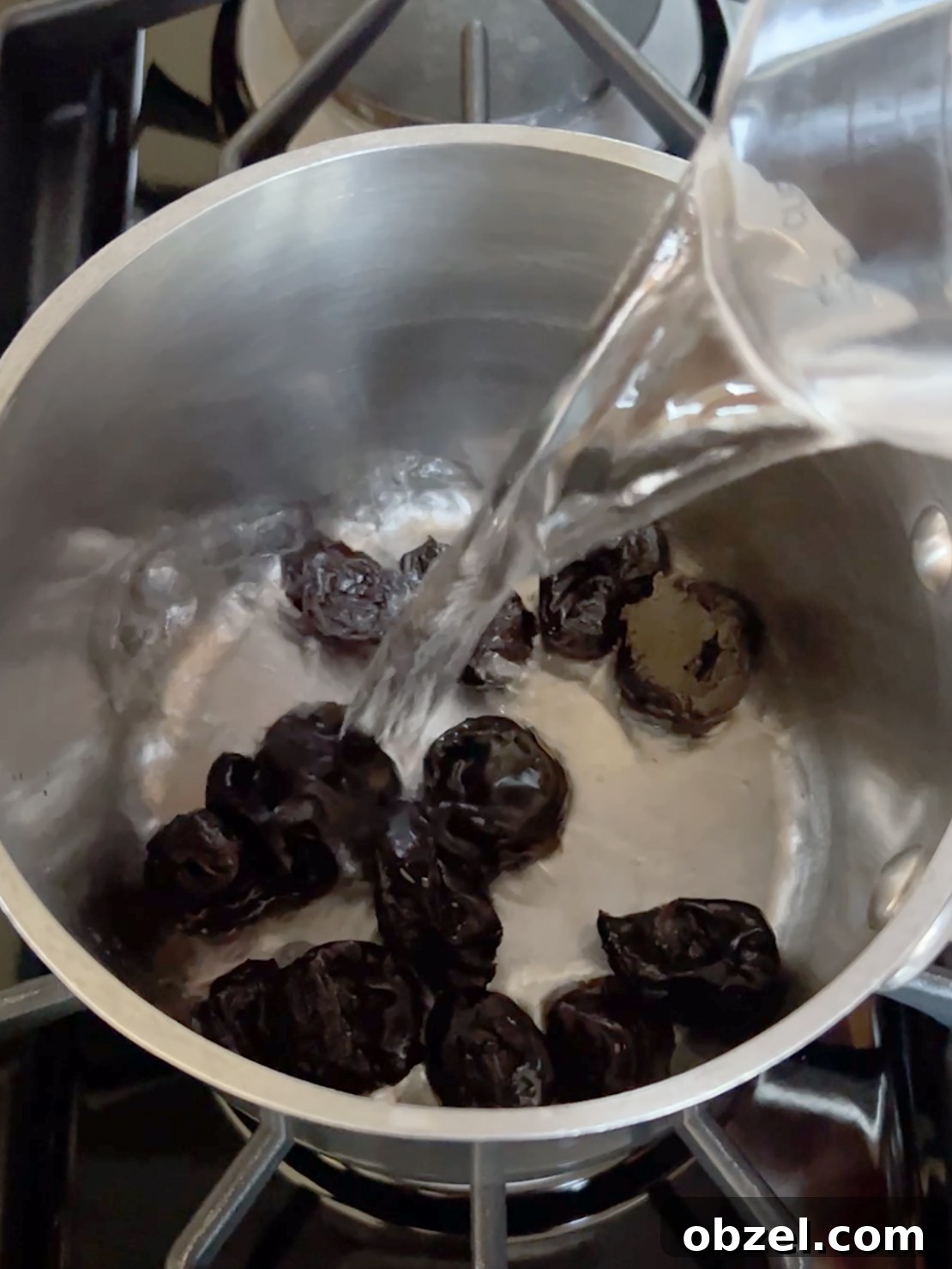
2. Set the saucepan over medium heat and bring the mixture to a gentle boil.
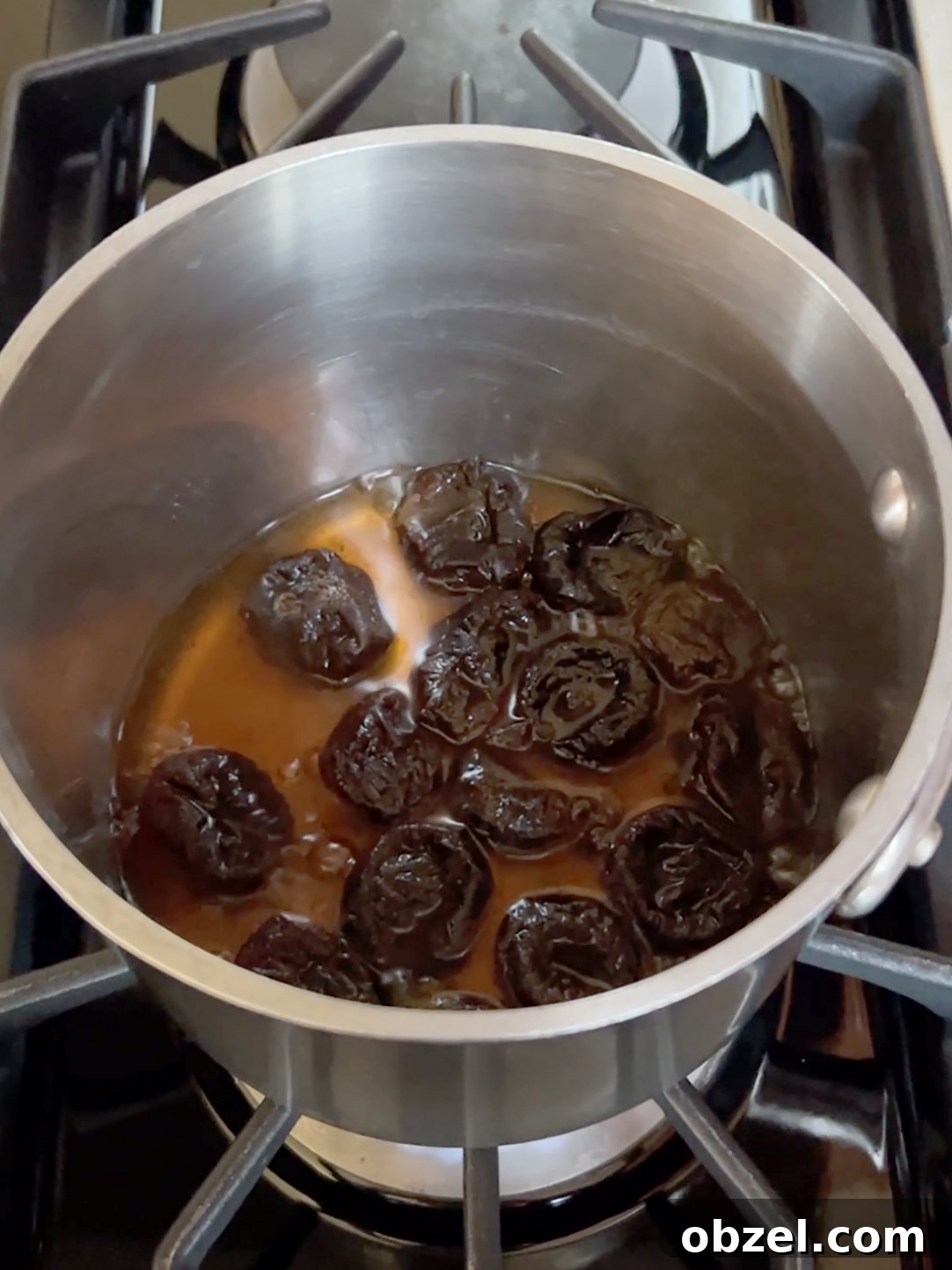
3. Reduce the heat so the prunes continue to simmer gently. Cook for 5 to 7 minutes, or until the prunes are soft.
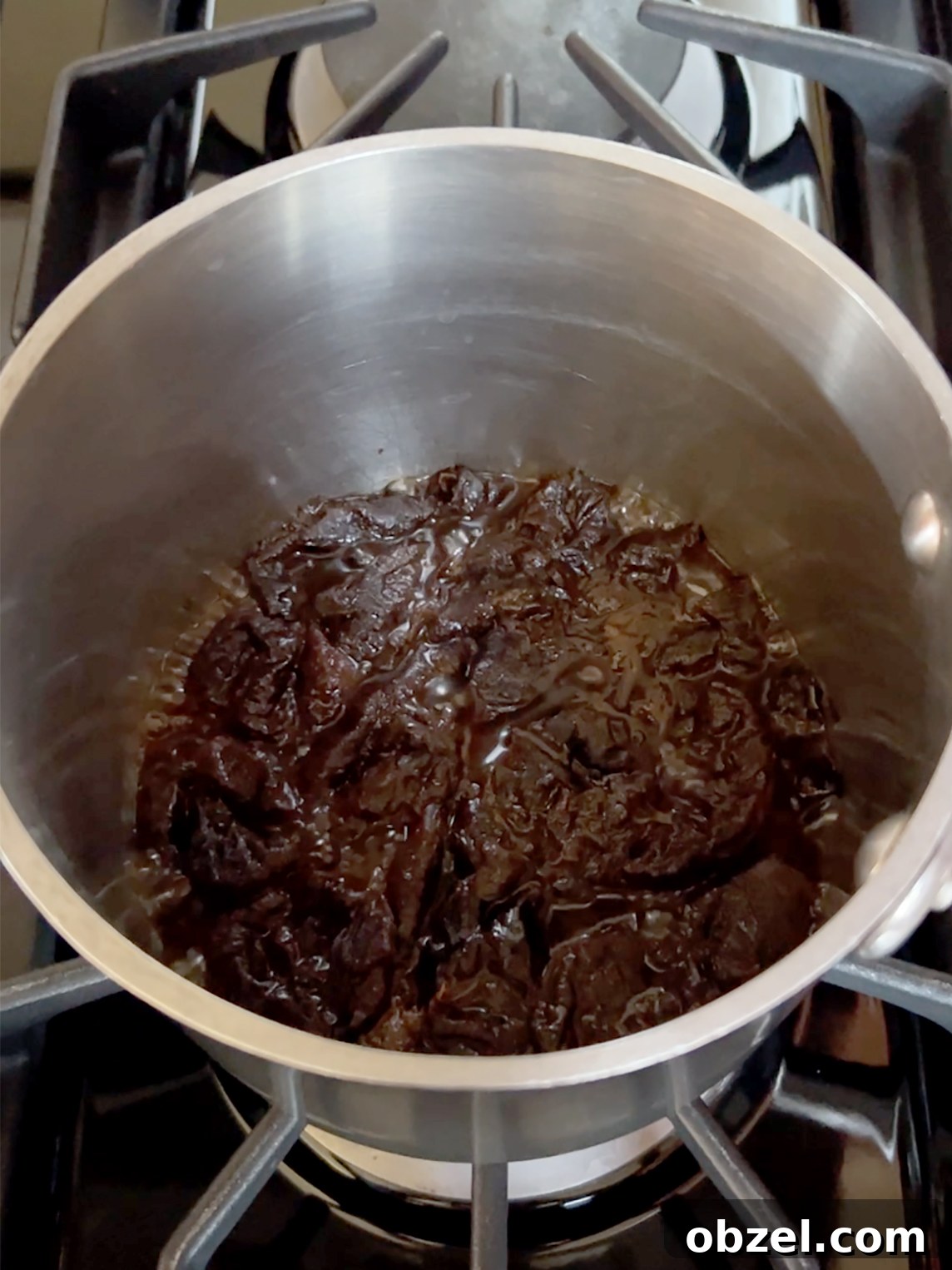
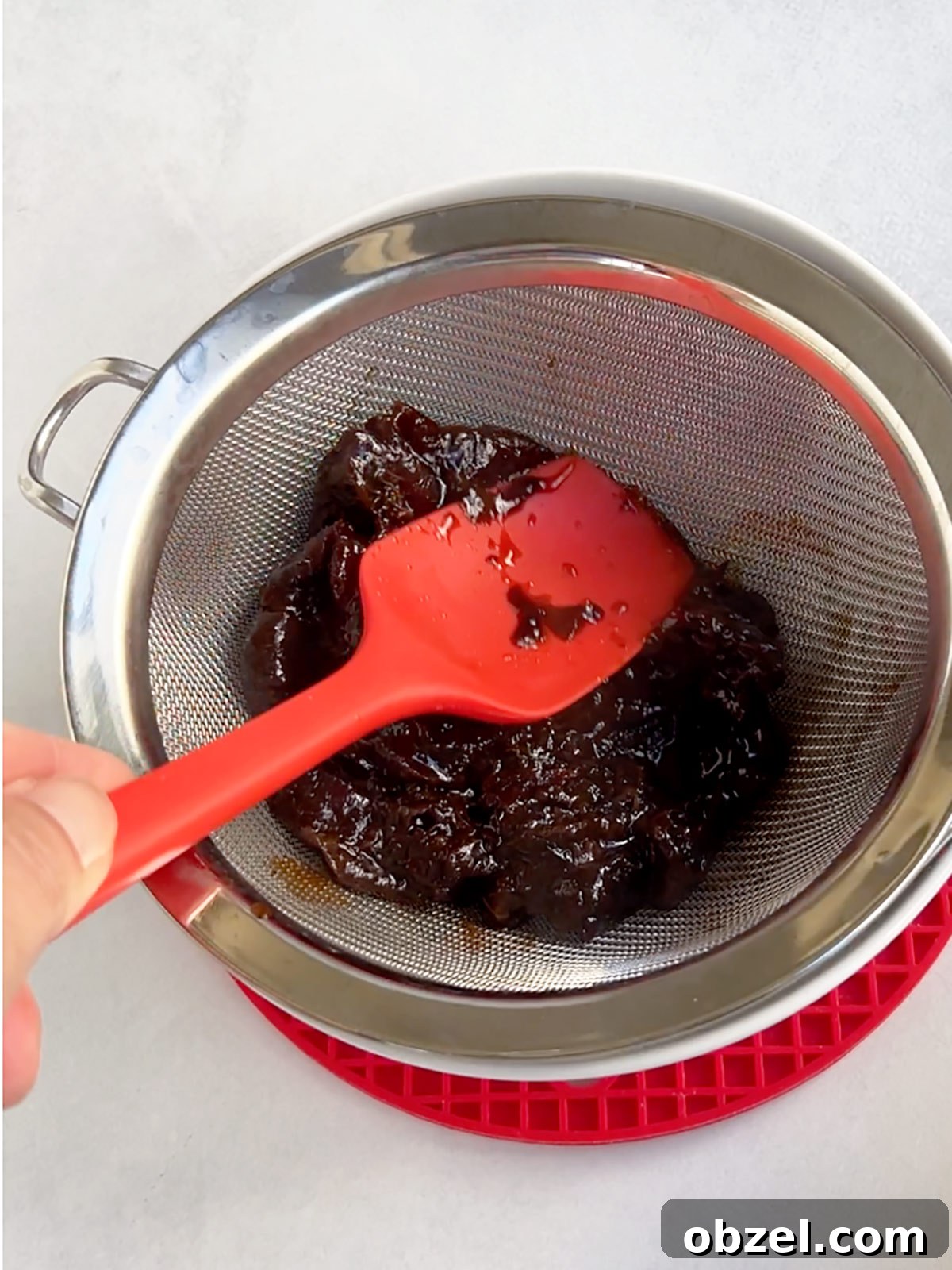
4. If more than a couple of teaspoons of liquid remain, strain the prunes or lift them out with a slotted spoon. Save a little of the prune water so you can loosen the filling if needed.
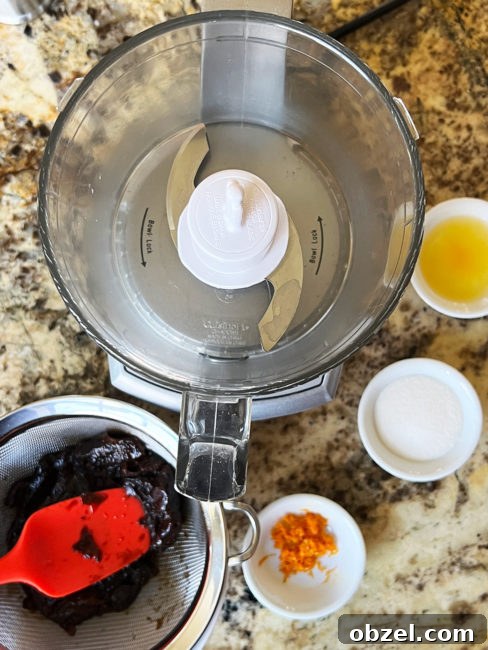
5. Add the cooked prunes, 2 teaspoons of reserved prune water, sugar, orange zest, and orange juice to a mini food processor. If you are mashing by hand, place everything in a mixing bowl.
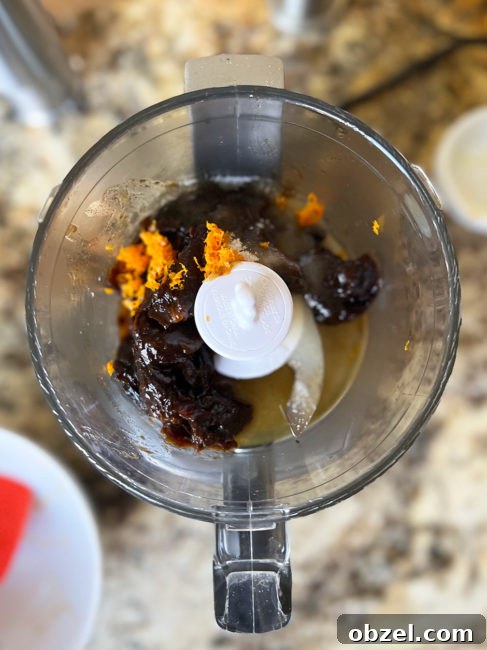
6. Pulse or mash until the lekvar reaches your preferred texture. It should be thick and mostly smooth, with a few small prune pieces if you like a more rustic filling.
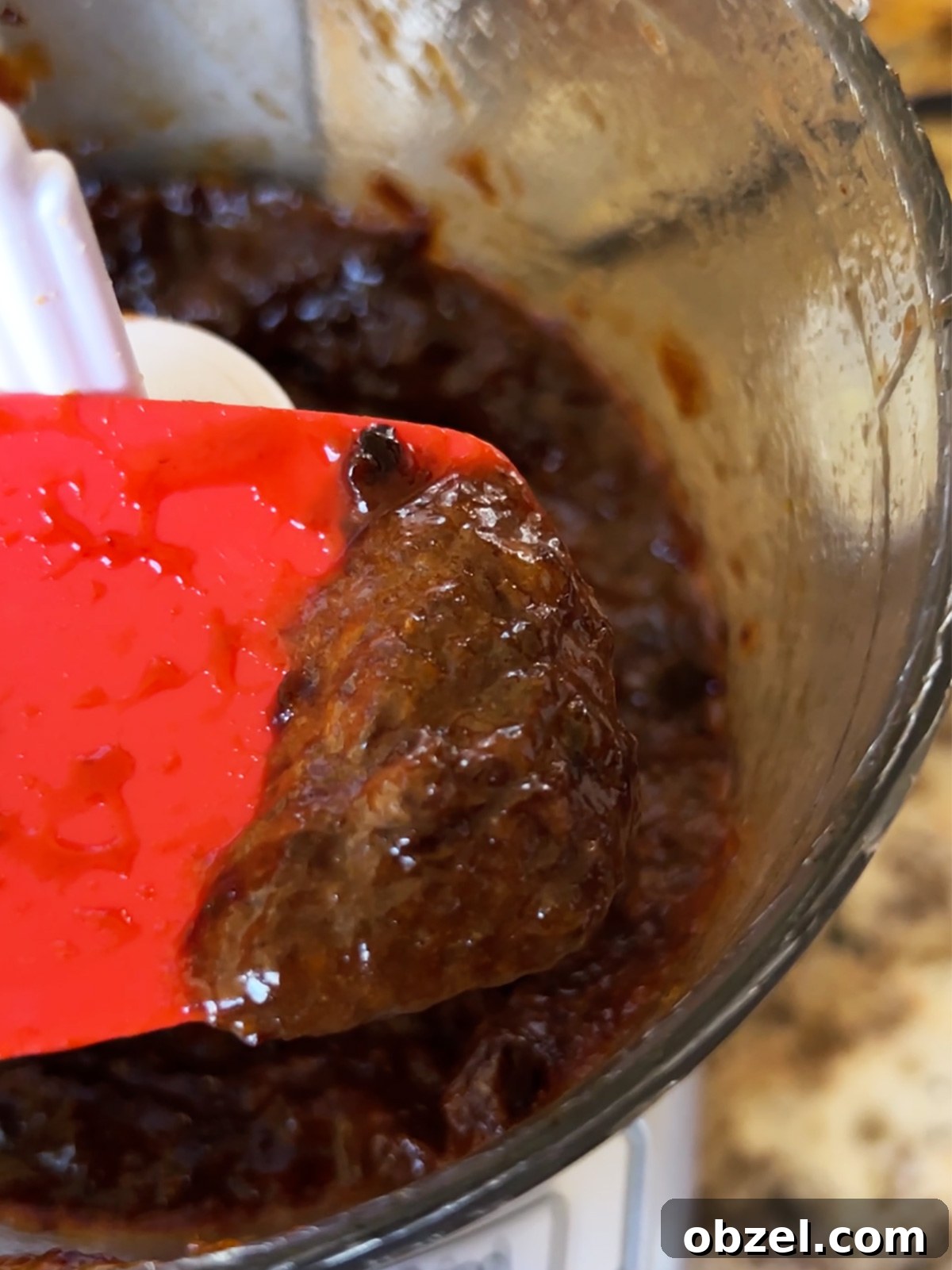
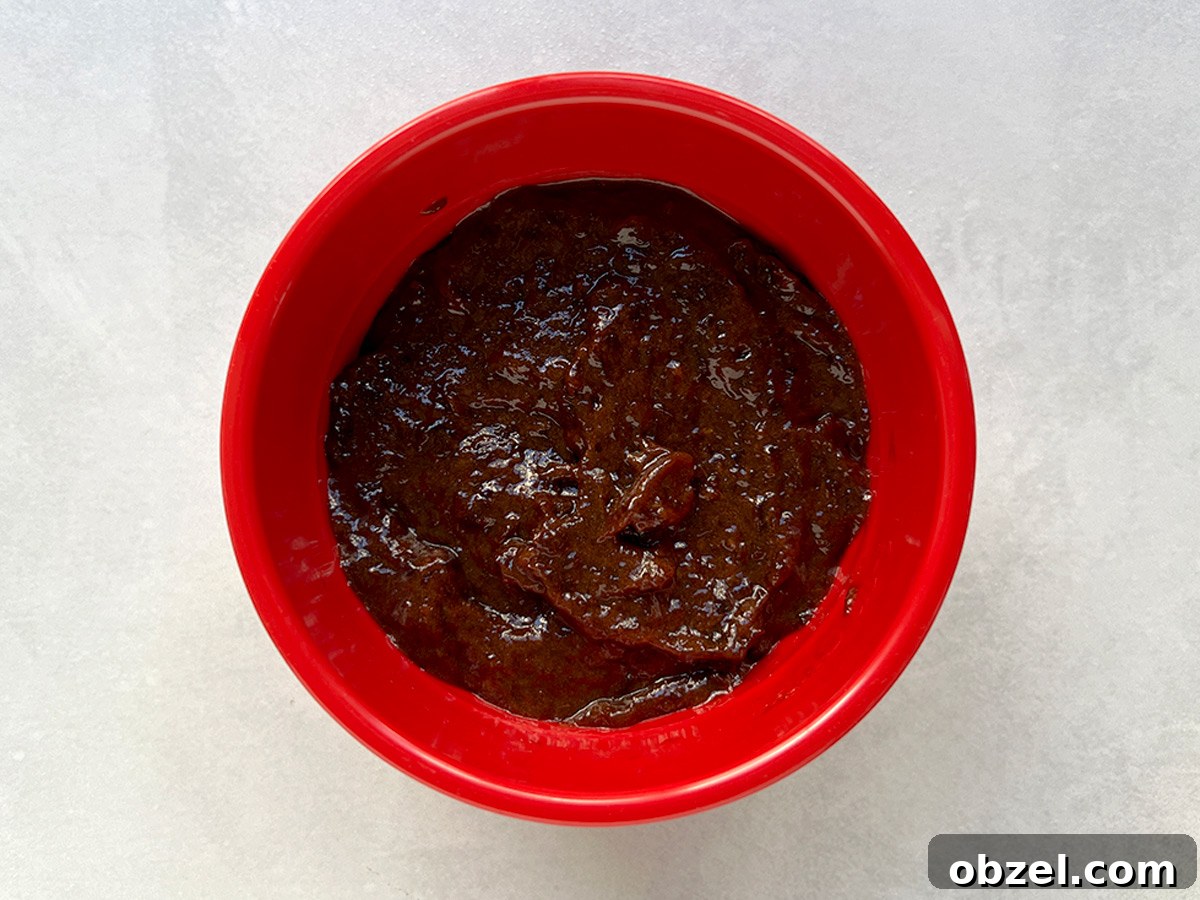
7. Taste the prune butter and adjust the texture with another teaspoon of reserved prune water if it seems too thick. Stir in toasted walnuts if using.
Expert tips and FAQs
- This recipe makes about ¾ cup of lekvar, enough to fill many hamantaschen, especially if you are using more than one filling. It is also useful for toast, kolaches, thumbprint cookies, and other pastries, so feel free to make a double batch.
- Use the same simmering and blending method with other dried fruits, such as apricots. You can also combine dried fruits, such as prunes and apricots, for a different flavor.
- Try different nuts or flavor accents. Meyer lemon, rose water, or orange blossom water can change the character of the filling without making the recipe more complicated.
Yes. Store the lekvar in an airtight container. If you freeze it in glass, leave space at the top for expansion.
The prune filling should keep for at least two weeks in the refrigerator when stored in a covered container.
Not exactly. Plum butter is made from fresh Italian prune plums before they are dried. Prune butter, or lekvar, is made from dried plums, which are prunes.
Other recipes for Purim
For Purim baking, try this lekvar with orange hamantaschen. It also works beautifully in Mexican wedding cookie-style hamantaschen if you prefer prune filling instead of chocolate. For another filled-cookie option, make date thumbprints and experiment with this prune butter as the filling. You can also try poppy seed filling or apricot butter for more hamantaschen filling ideas.
- Chocolate-filled Hamantaschen
- How to Make Apricot Butter for Hamantaschen
- Poppy Seed Filling for Hamantaschen
- How to Make Lekvar Prune Butter

Find more baking ideas in my cookbook.
P.S. If you try this lekvar recipe, please leave a star rating or review in the comment section. Your feedback is always appreciated.
How to Make Lekvar (Prune Butter)
Beth Lee
Ingredients
- 4 ounces pitted prunes about 12
- ½ cup water or enough to cover
- Zest of ½ a medium orange
- 2 teaspoons freshly squeezed orange juice
- 1 tablespoon granulated sugar
- 2 – 3 teaspoons reserved prune water
- ¼ cup chopped toasted walnuts optional
Instructions
-
Place the prunes and water in a small pot. Bring to a boil over medium heat, then reduce the heat and simmer for 5 to 7 minutes, until the prunes are soft. Strain the prunes or remove them with a slotted spoon, reserving the cooking water.
-
Add the prunes, orange zest, orange juice, sugar, and 2 teaspoons of reserved prune water to a mini food processor. Pulse until mostly smooth. A few small pieces of prune are fine. If mashing by hand or using an immersion blender, combine the ingredients in a bowl and blend or mash until thick and spreadable.
-
Taste and check the texture. If the lekvar is too thick, add the remaining teaspoon of prune water. If using walnuts, stir them in gradually until the texture is as nutty as you like.
Notes
- A single recipe makes about ¾ cup of prune butter, which is enough for many hamantaschen. Make a double batch if you want extra for toast, kolaches, pastries, or thumbprint cookies.
- This method also works with other dried fruits, including apricots. You can combine prunes and apricots for a different flavor.
- Try other nuts or add flavor accents such as Meyer lemon, rose water, or orange blossom water.
Nutrition
Calories: 43kcal
Carbohydrates: 7g
Protein: 1g
Fat: 2g
Sugar: 5g

Enjoyed this post?
Sign up for my email list.
Follow along for more recipes and baking inspiration.