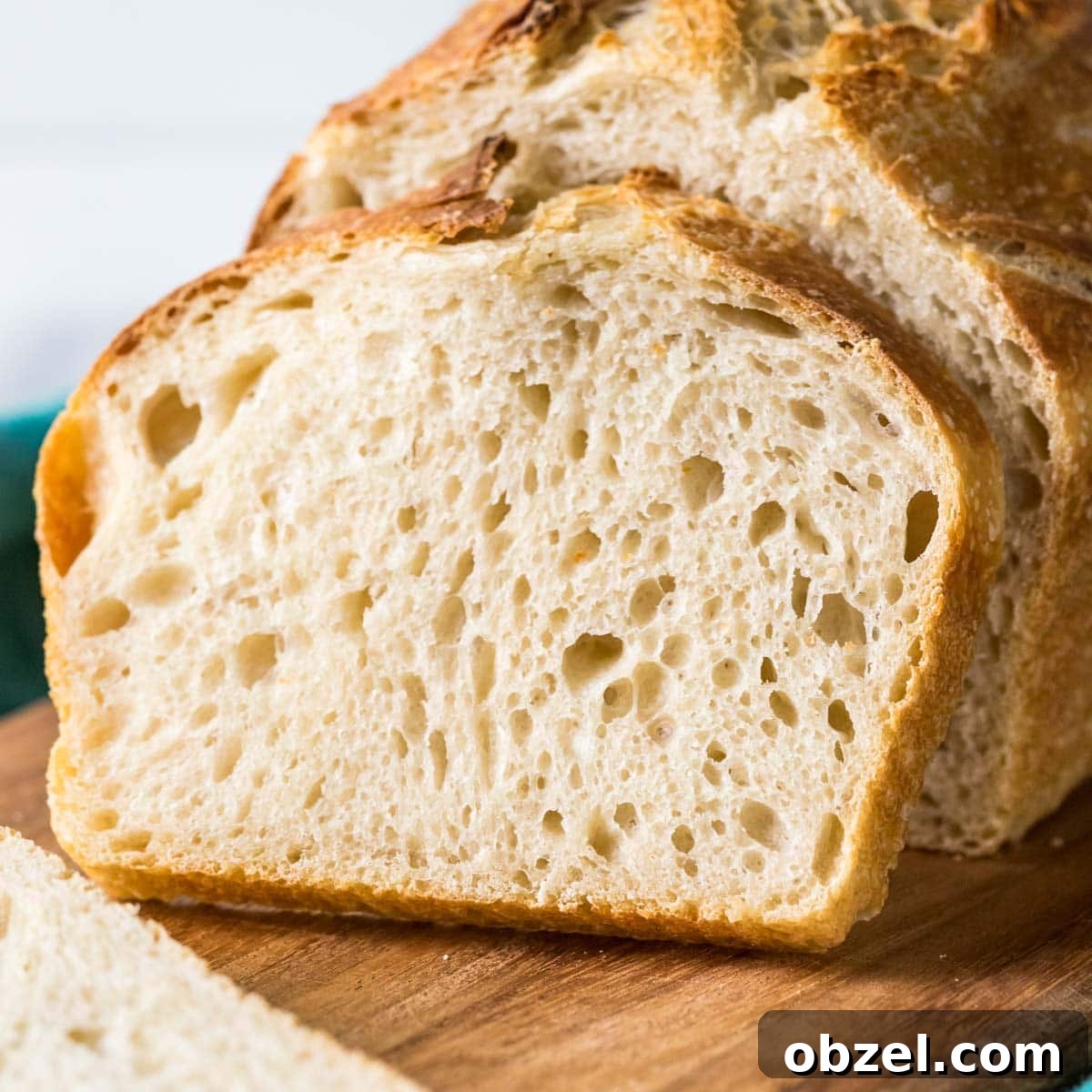
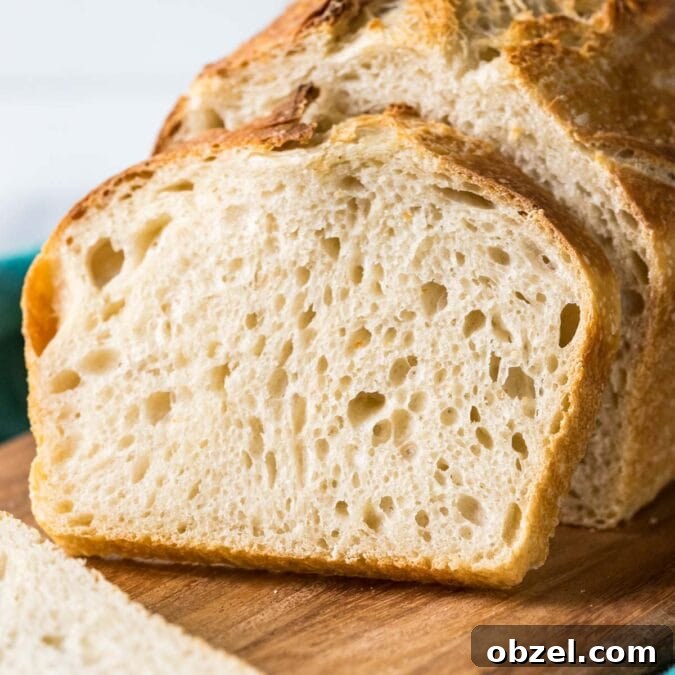
This easy sourdough bread recipe makes a hearty, flavorful loaf with a soft, springy crumb and a crisp, rustic crust. It uses just five simple ingredients, requires no mixer, banneton, or Dutch oven, and works beautifully for sandwiches, toast, dipping, or enjoying warm with butter. The method is beginner-friendly while still producing the kind of homemade sourdough bread that experienced bakers will appreciate.
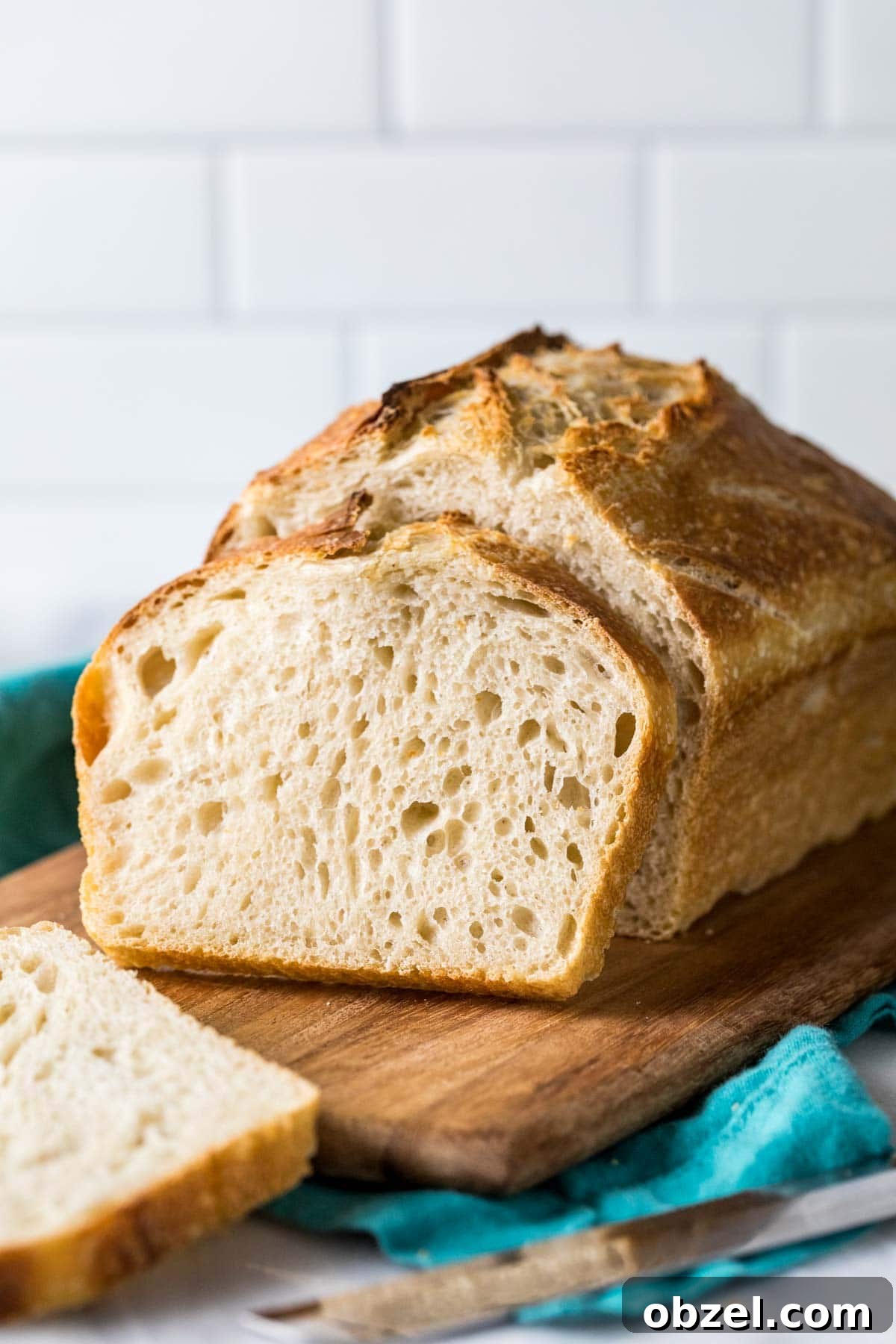
Homemade Sourdough Bread is Easier Than You Think!
Homemade sourdough bread may seem intimidating at first, but this recipe keeps the process approachable and practical. You do not need special baking tools, a stand mixer, or complicated techniques. A large mixing bowl, a loaf pan, and a little patience are enough to make a beautiful loaf with excellent flavor and texture.
This sourdough bread recipe is designed for everyday baking. The dough is mixed by hand, strengthened with simple stretch-and-fold steps, shaped into a loaf, and baked in a standard bread pan. The result is a versatile sourdough loaf with a balanced flavor, a sturdy crust, and a tender interior that slices well for sandwiches.
The most important part of sourdough baking is time. The dough needs several hours to rise, and an overnight rest in the refrigerator gives the bread deeper flavor and a better texture. While the process takes planning, the hands-on work is simple and manageable, even if this is your first loaf of sourdough bread.
Ingredients
This recipe uses only a few basic ingredients, but each one has an important purpose. For the best results, measure by weight when possible, as it is the most accurate and consistent way to bake bread.
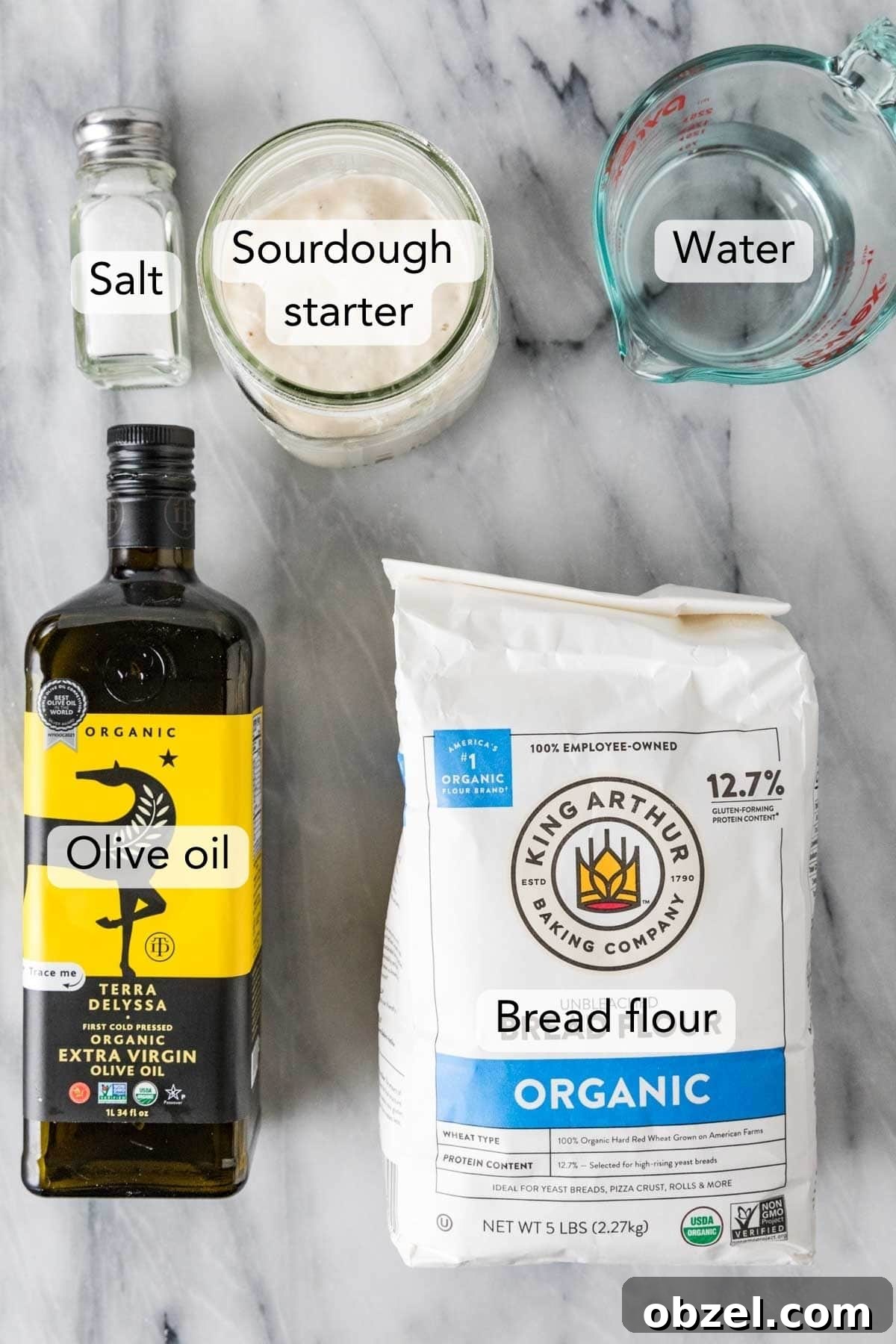
- Sourdough starter. Use an active, bubbly, recently fed starter. The starter provides the wild yeast needed to raise the dough and gives sourdough bread its signature flavor.
- Bread flour. Bread flour is recommended because its higher protein content helps create a chewy, well-structured crumb. All-purpose flour can work in a pinch, but bread flour gives the best texture.
- Olive oil. A small amount of olive oil helps keep the loaf soft and tender while adding a pleasant chew.
- Salt. Salt is essential for flavor, but it also strengthens the dough and helps balance the natural tang of the sourdough starter.
- Water. Warm water helps bring the dough together and supports fermentation. This recipe creates a dough with a manageable hydration level, making it easier to shape while still producing a flavorful loaf.
Once you are comfortable with this basic sourdough bread recipe, you can experiment with add-ins such as cheese, herbs, or jalapeños. You can also use your starter in other sourdough recipes, including pizza dough, rolls, or crackers.
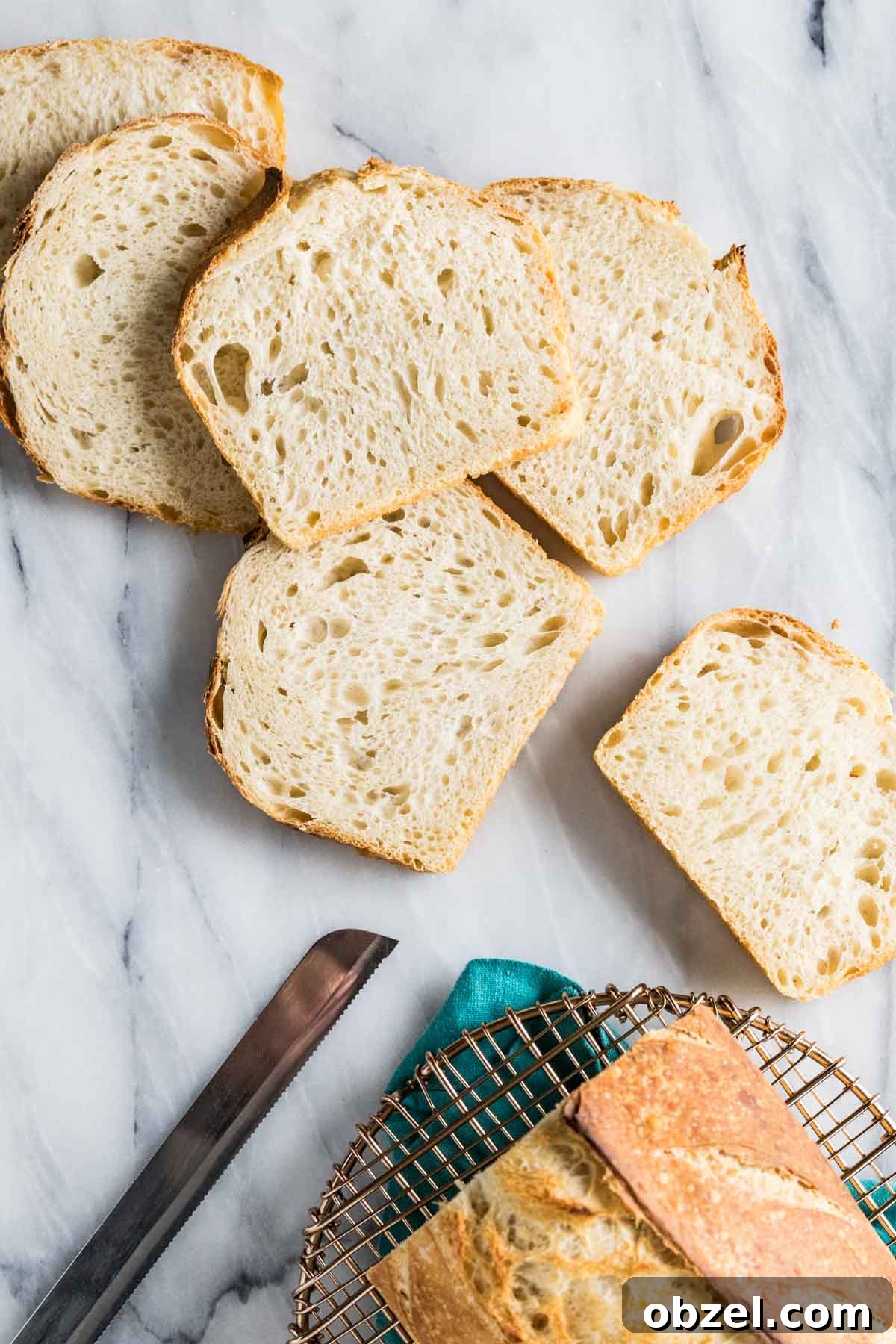
How to Make Sourdough Bread
Make the Dough
The first stage is a resting period often called autolyse. In this recipe, all of the ingredients are mixed together before the rest. This helps hydrate the flour, improves texture, supports fermentation, and makes the dough easier to handle later.
Salt is included from the beginning because it mixes more evenly this way and helps avoid accidentally leaving it out. With this method and timing, adding salt at the start works well and does not noticeably interfere with the rise.
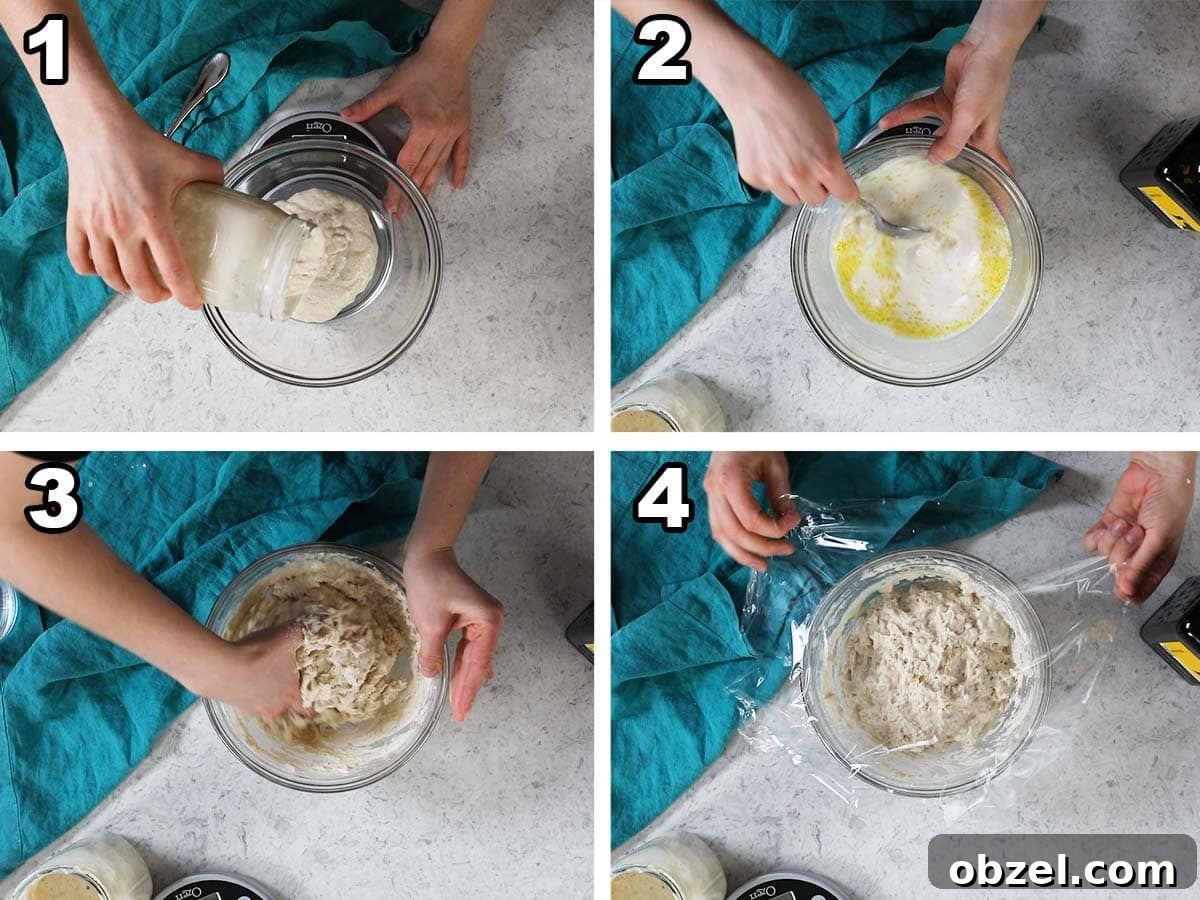
- Combine the active sourdough starter, warm water, and olive oil in a large mixing bowl.
- Add the bread flour, then sprinkle the salt over the flour.
- Mix until no dry patches remain. The dough should look shaggy, not smooth.
- Cover the bowl and let the dough rest at room temperature for one hour.
Stretch and Fold Your Sourdough
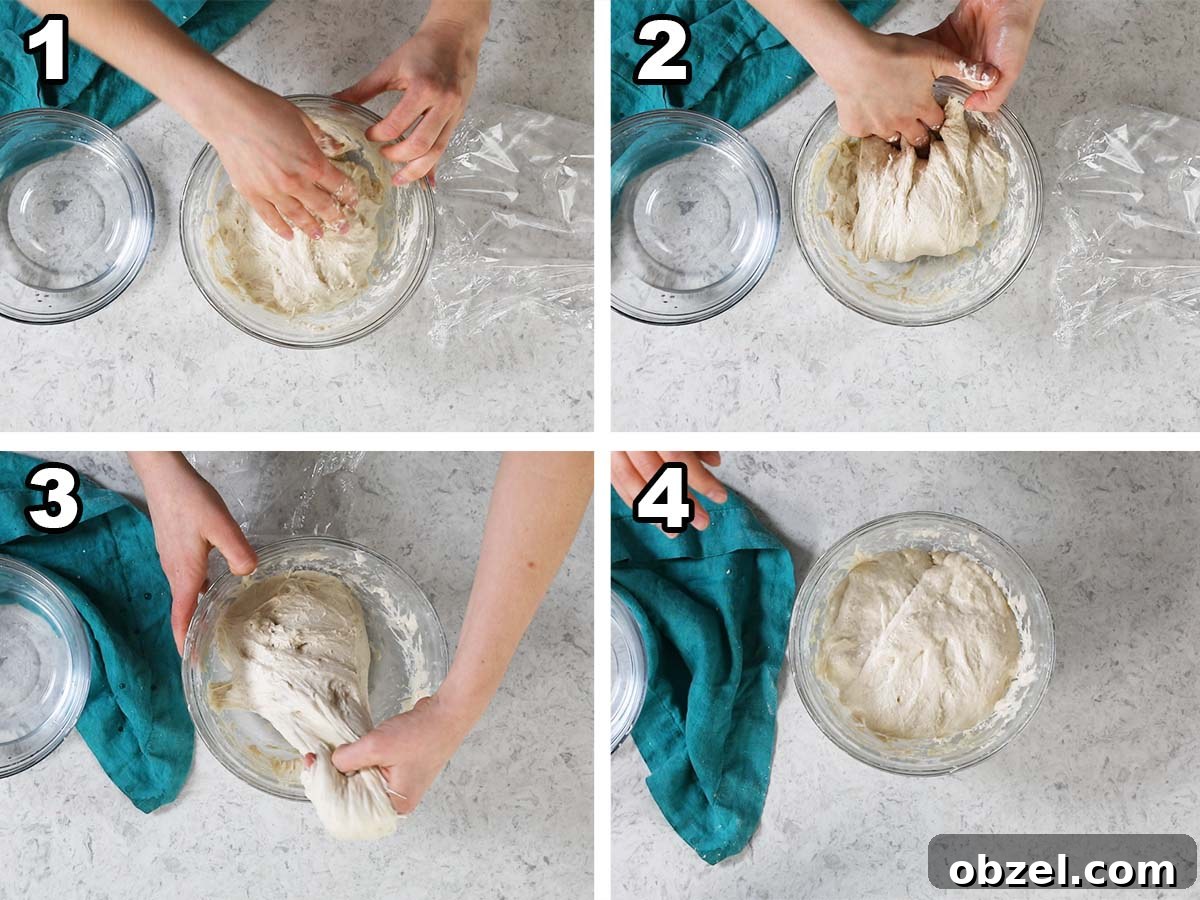
- Use your hands to gather the dough into a rough ball. Wet your hands with cool water to help prevent sticking.
- Lift the top of the dough, stretch it upward, and fold it over itself.
- Turn the bowl 90 degrees and repeat until you have completed four folds.
- Cover the dough and let it rest in a warm place for 30 minutes.
- Repeat the stretch-and-fold process every 30 minutes until the dough has increased in size by about 80%.
TIP: A warm spot helps the dough rise more efficiently. The top of the refrigerator, a proofing setting, or an oven that is turned off with the light on can work well. If your oven becomes too warm with the light on, leave the door slightly open.
Shape the Dough
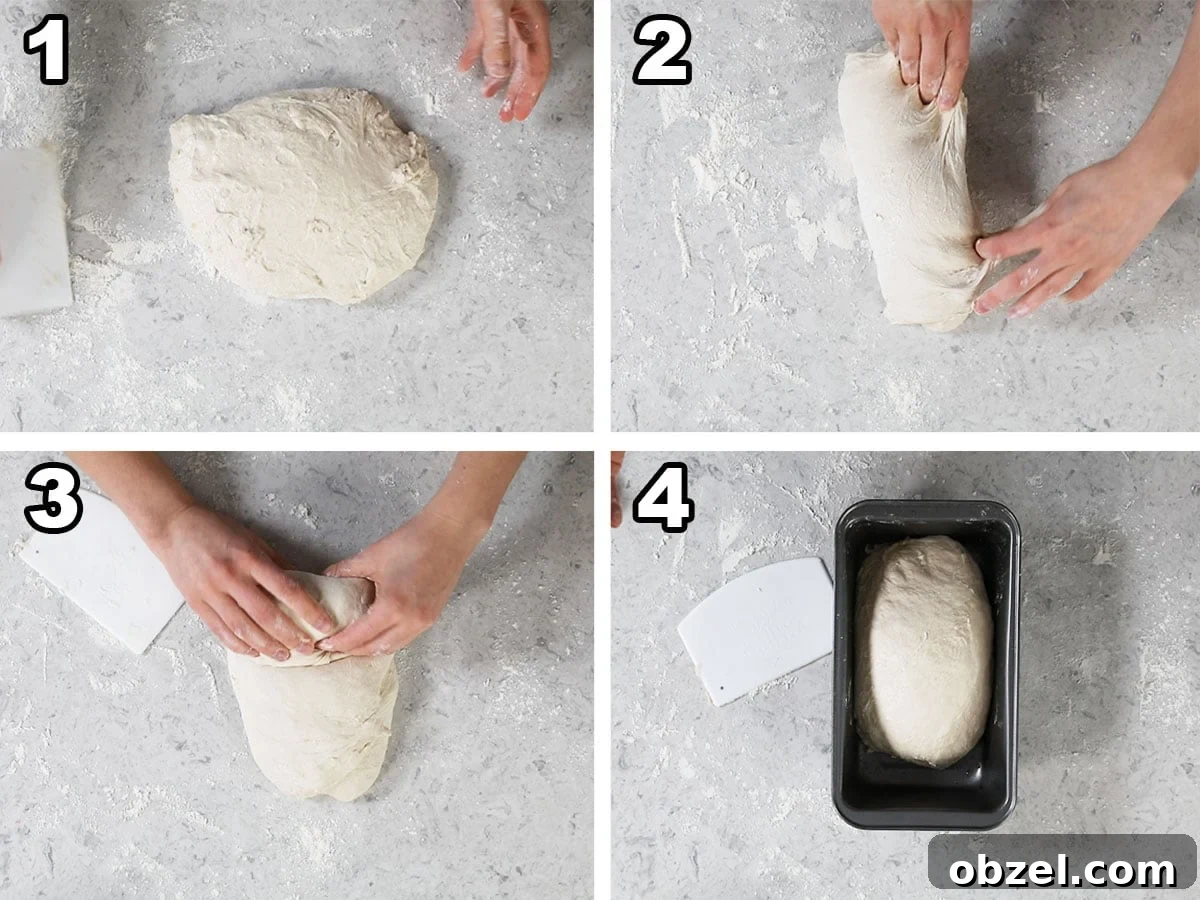
- Turn the dough out onto a lightly floured surface and gently press it into a rectangle.
- Fold the right side toward the center, then fold the left side over it, similar to folding a letter.
- Starting at the short end, roll the dough tightly into a log.
- Tuck the ends underneath and place the dough into a greased loaf pan.
- Cover the pan and refrigerate overnight.
TIP: An overnight refrigerator proof improves the flavor, structure, and fermentation of the bread. Do not leave the dough refrigerated for more than 48 hours, as over-proofing can affect the final texture.
Baking
- Remove the dough from the refrigerator and let it rest at room temperature while the oven preheats.
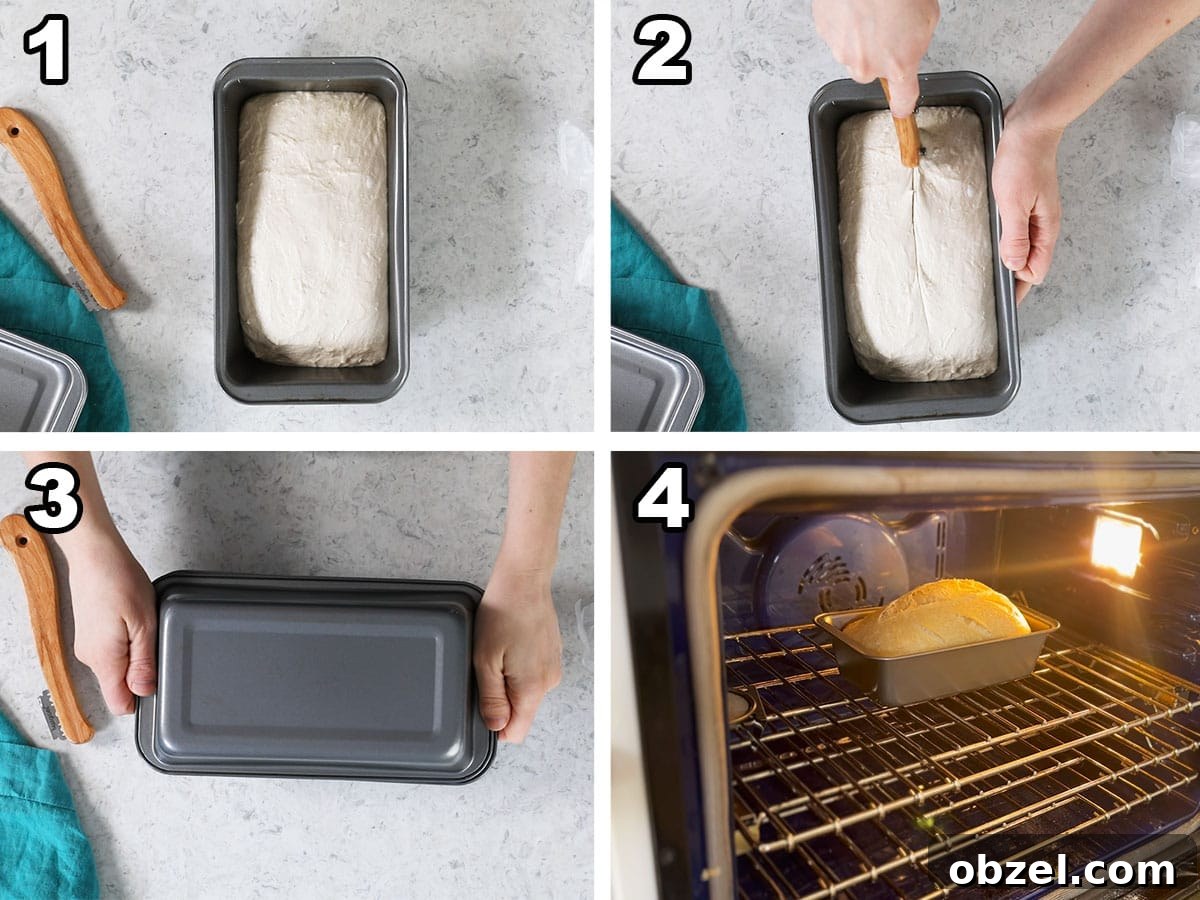
- Score the top of the loaf about 1/4 inch deep down the center.
- Cover the loaf pan with a second loaf pan or a tall foil tent.
- Bake at 450F for 30 minutes covered.
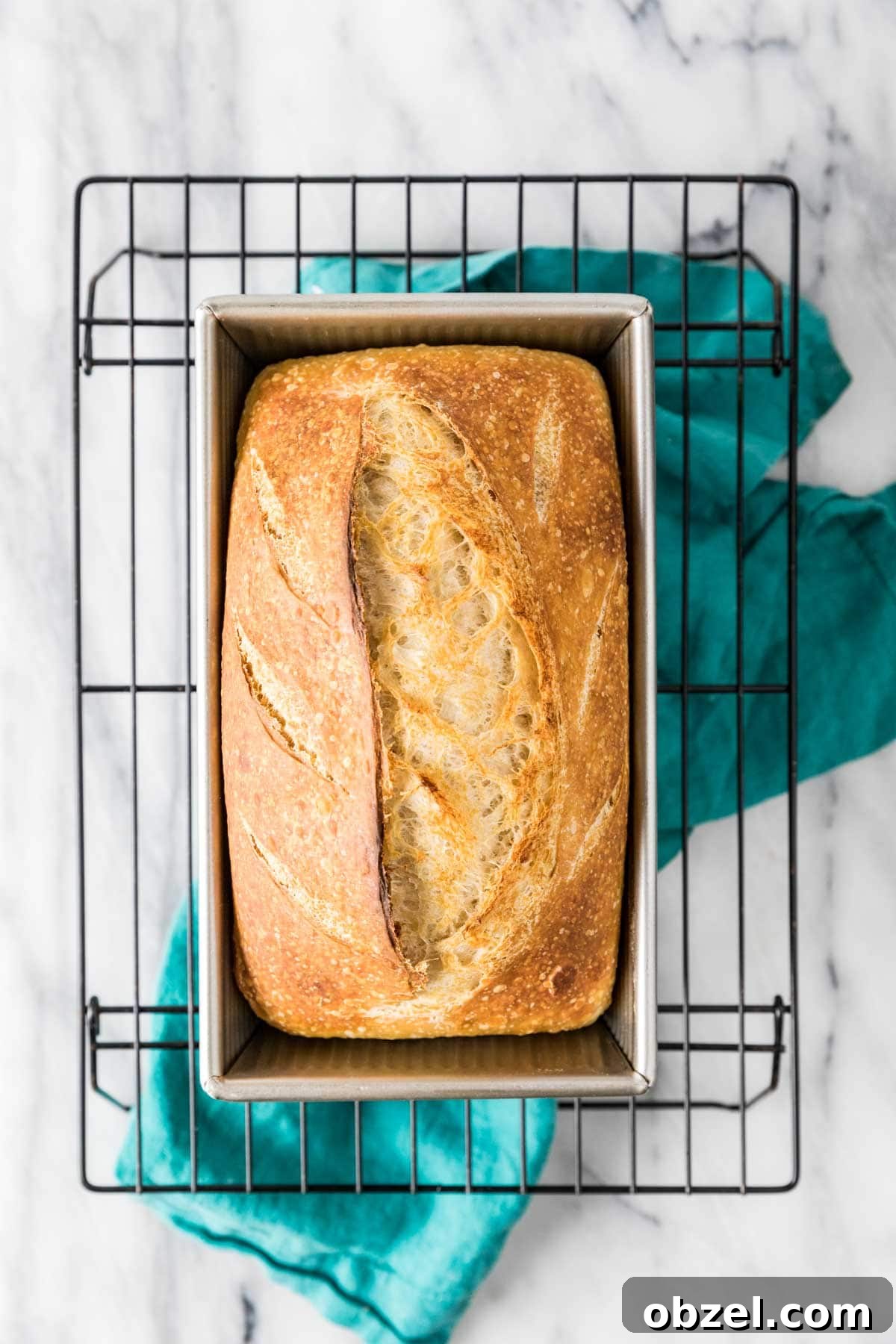
- Remove the cover and bake for another 20 to 23 minutes, or until the center reaches 206F to 208F.
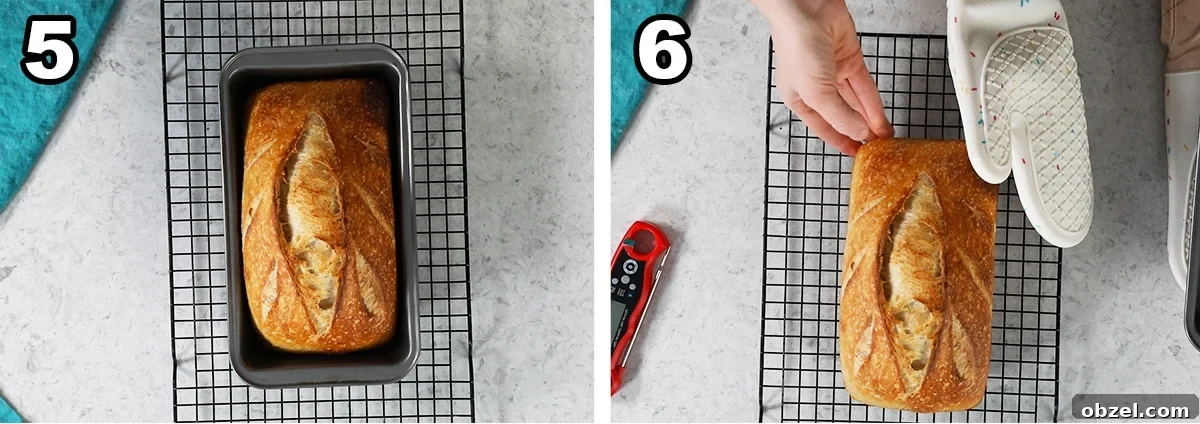
- Let the bread cool in the pan for 10 to 15 minutes.
- Carefully remove the loaf from the pan and transfer it to a cooling rack.
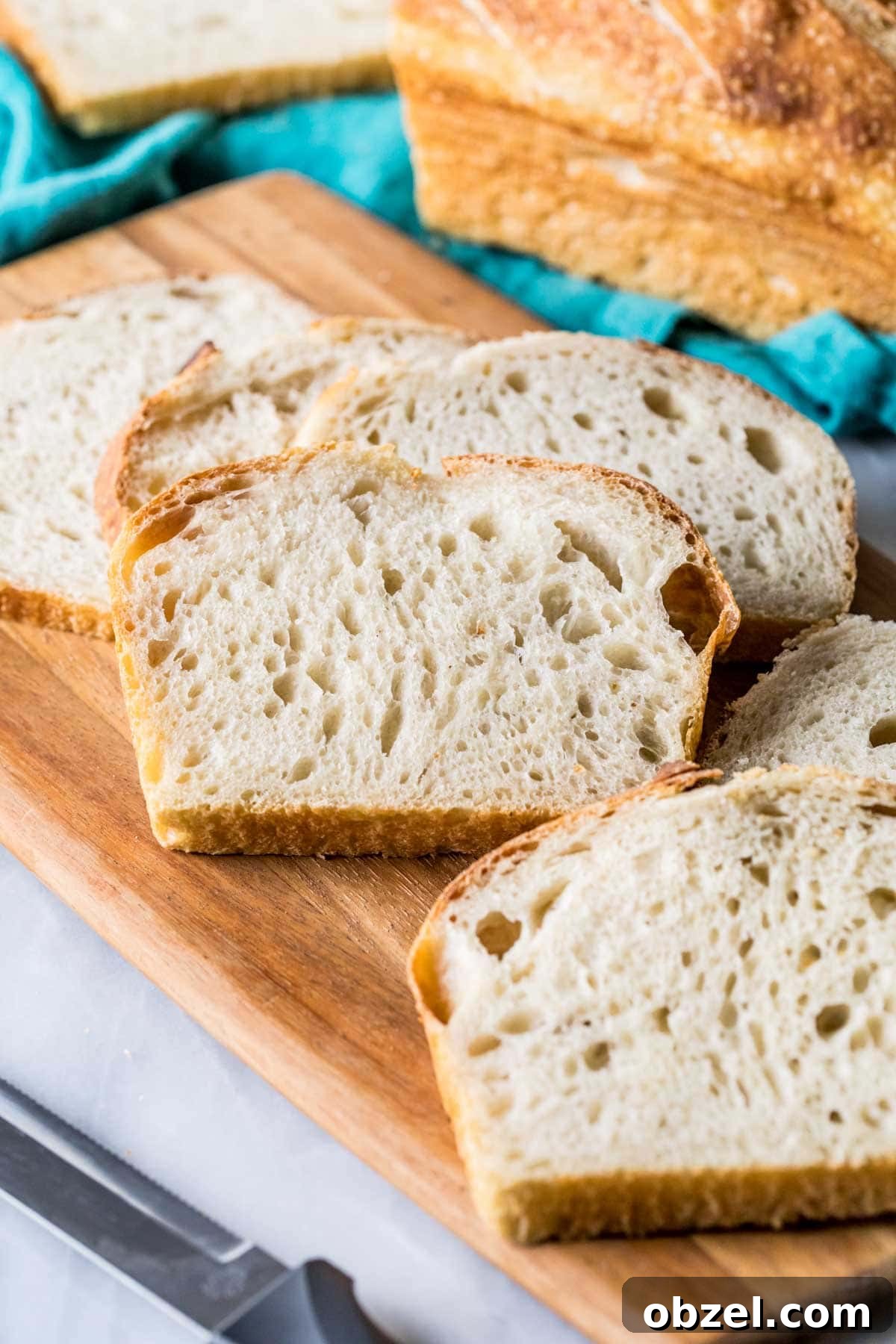
- Allow the bread to cool almost completely before slicing for the best crumb and texture.
TIP: Avoid slicing sourdough bread while it is still hot. The loaf continues to finish setting as it cools, and cutting too early can trap moisture inside, creating a gummy center.
Frequently Asked Questions
Sourdough bread is made through fermentation, which gives it a distinctive flavor and may make it easier for some people to digest than standard white bread. It is still bread, but it is often appreciated for its simple ingredients and traditional preparation method.
Traditional sourdough bread is not gluten free because it is made with wheat flour. Some people who are sensitive to gluten may find fermented sourdough easier to tolerate, but it is not suitable for anyone who must avoid gluten completely.
Yes. After shaping the dough, place it in a floured banneton or a bowl lined with a floured towel. Refrigerate overnight, then turn the dough out onto parchment paper, place it in a Dutch oven, score it, cover, and bake as directed. A larger Dutch oven may produce a flatter loaf and may require a slightly shorter baking time.
Some of my favorite things to serve with sourdough bread:

Short Rib Ragu

Vegetable Soup Recipe

Actually the Best Meatloaf Recipe

Tomato Soup Recipe
This sourdough bread recipe is simple enough for new bakers but satisfying enough to become a regular part of your kitchen routine. It makes a dependable loaf with great flavor, a sturdy crust, and a soft crumb that works for almost any meal.
Enjoy!
Sourdough Bread Recipe
Equipment
-
Mixing bowls
-
2 loaf pans
-
Bench scraper, optional
-
Bread lame or sharp knife, optional
Ingredients
- ⅔ cup (150 g) active sourdough starter, bubbly and recently fed
- 1 ⅓ cups (315 g) warm water, about 90F
- 1 ½ Tablespoons (18 g) olive oil
- 3 ⅔ cups (450 g) bread flour
- 2 teaspoons (13 g) table salt
- Oil or butter for greasing the pan
- Additional flour for dusting the work surface
Instructions
Make the dough
-
In a large mixing bowl, stir together the sourdough starter, warm water, and olive oil.
-
Add the bread flour and sprinkle the salt over the top. Mix with clean hands or a wooden spoon until the dough is shaggy and no dry flour remains. Do not overmix.
-
Cover the bowl and let the dough rest undisturbed for one hour.
Stretch & Fold
-
Gather the dough into a rough ball.
-
Wet your hands, lift one side of the dough, stretch it upward, and fold it over itself. Turn the bowl 90 degrees and repeat until you have made four folds.
-
Cover and rest the dough in a warm place for 30 minutes.
-
Repeat the stretch-and-fold process every 30 minutes as the dough rises.
-
Continue until the dough has increased in size by about 80%. This usually takes 4 to 6 hours, depending on room temperature.
Forming the Dough
-
Lightly grease a 9×5 loaf pan with oil or butter.
-
Turn the risen dough onto a lightly floured surface.
-
Gently press the dough into a rectangle. Fold the right side toward the center, then fold the left side over it.
-
Starting from a short end, roll the dough tightly into a loaf. Tuck the ends underneath and place it in the prepared pan.
-
Cover the pan tightly and refrigerate for 12 to 48 hours.
Baking
-
Remove the dough from the refrigerator and preheat the oven to 450F (230C). Let the dough rest while the oven heats, at least 30 to 35 minutes.
-
Score the center of the loaf about 1/4 inch deep with a sharp knife or bread lame. Cover with a second loaf pan or a tall aluminum foil tent.
-
Bake on the center rack for 30 minutes covered. Remove the cover and bake for another 20 to 23 minutes, until golden brown and the center reaches 206F to 208F.
-
Cool in the pan for 10 to 15 minutes, then transfer to a wire rack. Let the loaf cool for at least one to two hours before slicing.
Notes
Cleaning note
Do not rinse sourdough starter or dough scraps down the sink, as they can cause clogs. Scrape extra dough into the trash before washing bowls and utensils.
How to bake in a Dutch oven
After shaping, place the dough in a floured banneton or a bowl lined with a floured kitchen towel. Cover and refrigerate overnight. The next day, turn the dough onto parchment paper, lower it into a Dutch oven, score it, cover with the lid, and bake as directed.
To bake the same day
After shaping and placing the dough in the pan, preheat the oven to 450F. Let the dough rest uncovered while the oven heats, then score, cover, and bake as directed. The flavor and texture will be best if the dough rests overnight in the refrigerator.
Storing & freezing
Store the cooled bread in an airtight container at room temperature for up to one week.
To freeze a whole loaf, wrap it tightly in plastic wrap, then in foil. Thaw at room temperature before unwrapping.
For easy use, slice the bread before freezing and store the slices in a freezer-safe bag with as much air removed as possible.
Nutrition
Nutrition information is automatically calculated and should be used only as an approximation.
Like this? Leave a comment below!