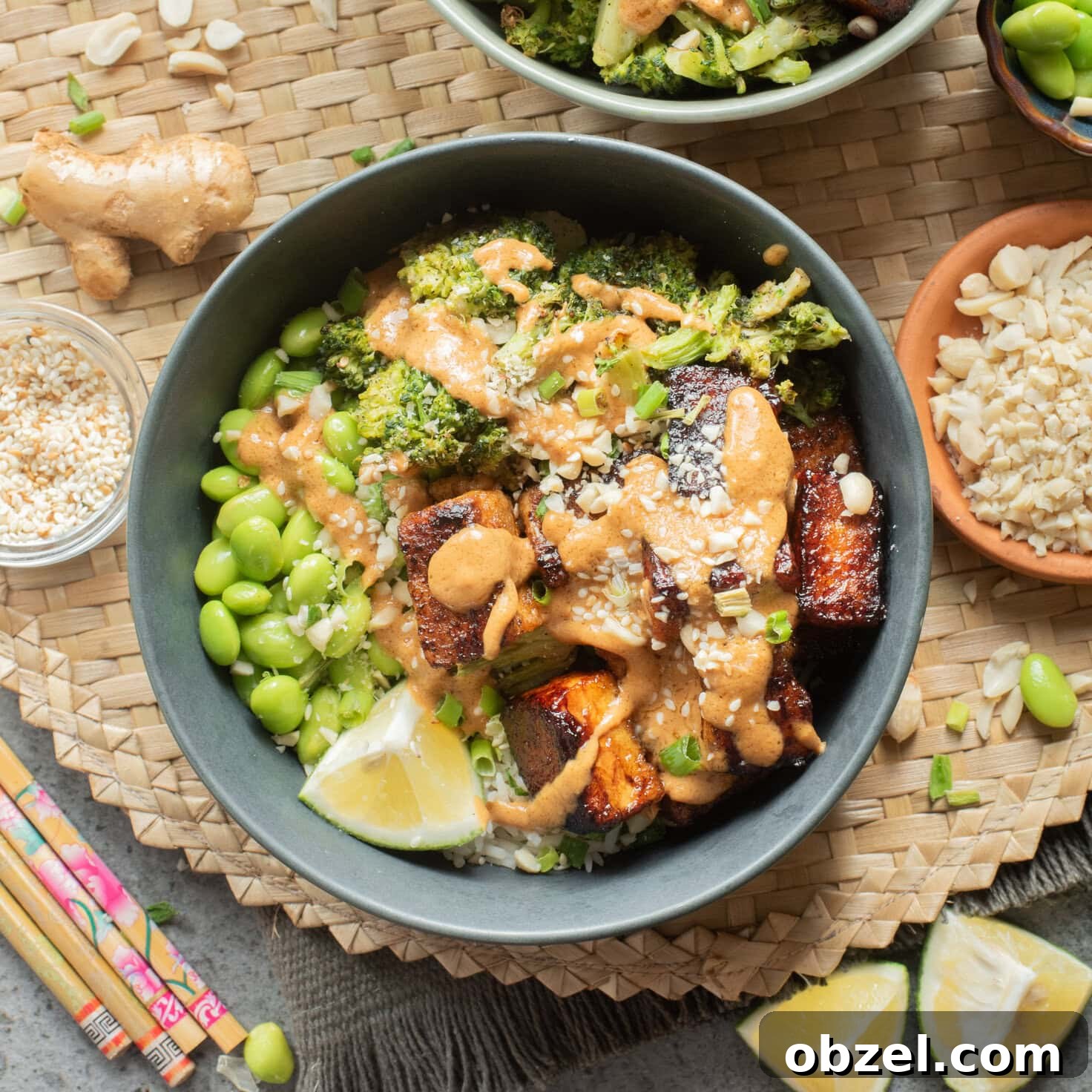
This crispy Thai peanut tofu bowl is all about tofu with real crunch. Instead of baking it, the tofu is pan-fried until golden, then finished with a quick soy sauce lacquer that gives it a glossy, savory coating. Served with roasted broccoli, jasmine rice, edamame, and a creamy ginger-lime peanut sauce, it makes a satisfying vegan dinner in about 45 minutes. Use tamari instead of soy sauce to make it gluten-free.
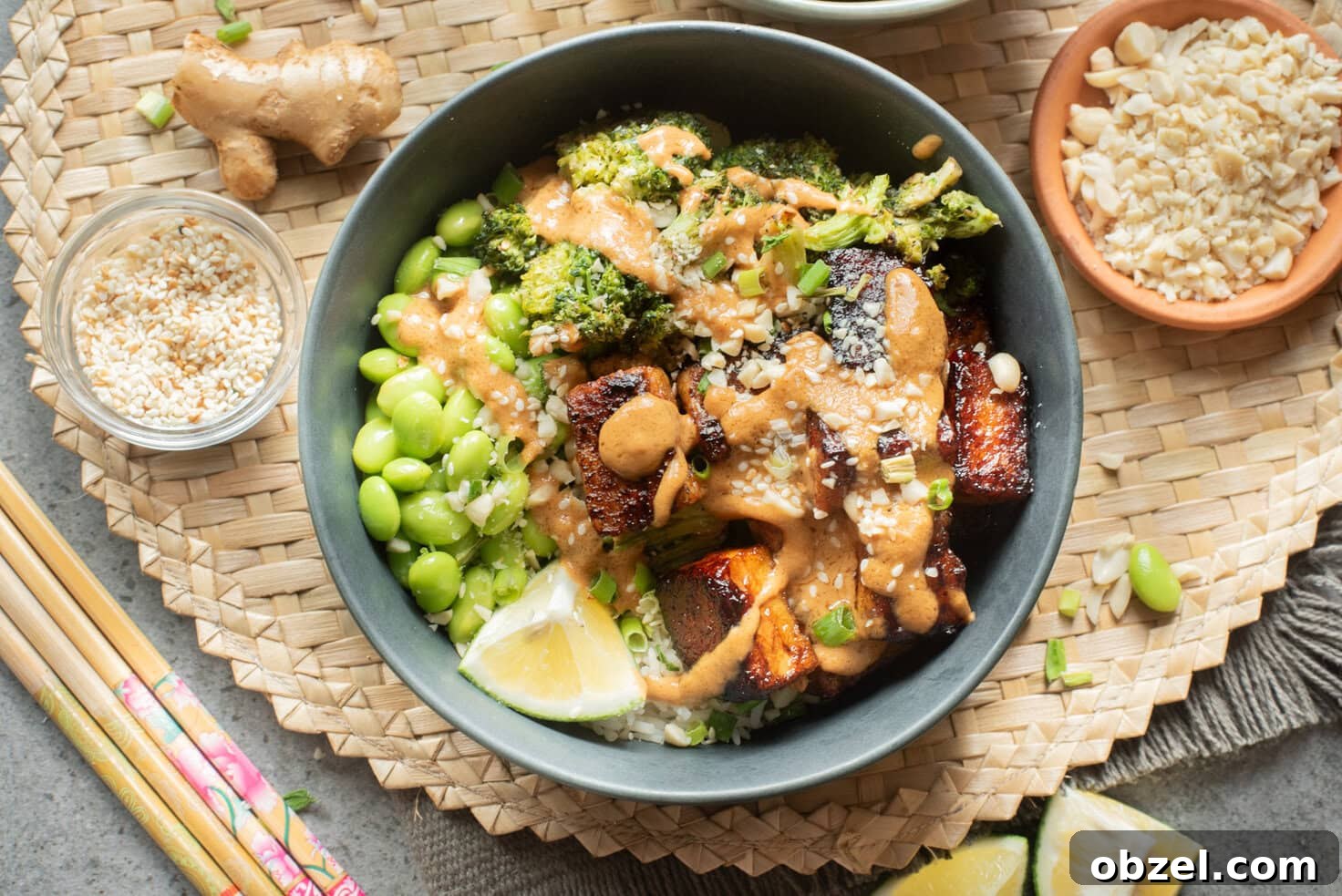
The takeout peanut tofu bowl I started making at home

This crispy peanut tofu bowl started as the kind of meal I wanted when I was craving takeout but still wanted something fresh, filling, and easy to make at home. The base is simple: rice, roasted vegetables, edamame, crispy tofu, and a bold peanut sauce. The part that makes it special is the tofu technique.
After testing both baked and pan-fried tofu, pan-frying was the clear winner. Baked tofu can turn chewy on the outside and slightly hollow in the center. Pan-fried tofu, especially when coated lightly with cornstarch, develops a crisp crust while staying tender inside. The key is patience. Once the tofu hits the pan, let it sit for 3 to 4 minutes before turning it. When the crust forms properly, the cubes release more easily and brown evenly.
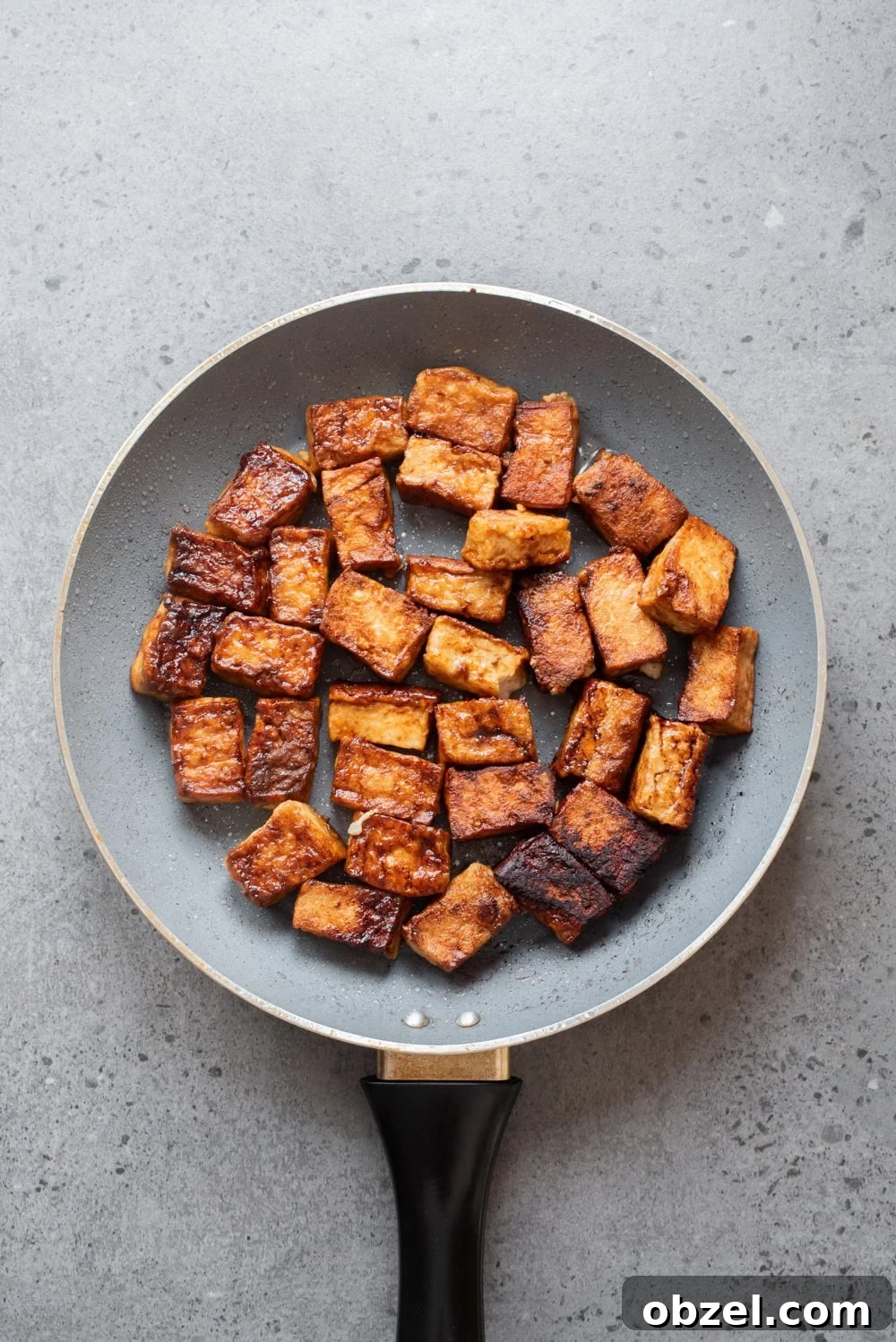
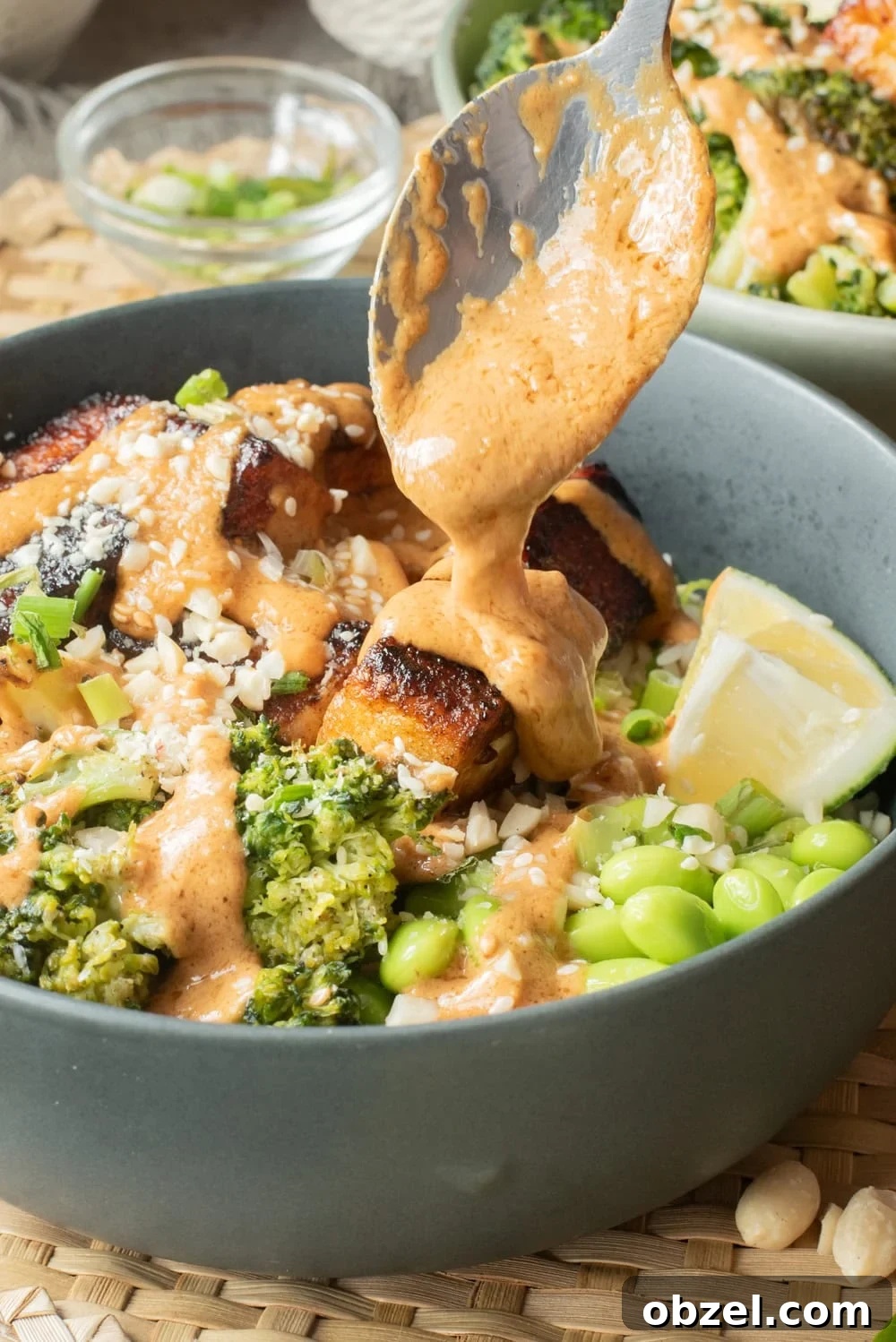
The final soy sauce lacquer is a small step with a big payoff. A tablespoon of soy sauce is added directly to the hot pan during the last minute of cooking. It sizzles, reduces quickly, and coats the tofu in a shiny, deeply savory layer. That coating also helps the peanut sauce cling to the tofu instead of sliding off.
The rest of the bowl comes together while the tofu cooks. Broccoli roasts in the oven until the edges are browned and lightly charred, the rice provides a soft base, and edamame adds color and substance. The peanut sauce is whisked in one bowl with pantry-friendly ingredients, fresh ginger, and lime juice for brightness. It is rich, tangy, savory, and easy to adjust with warm water until it reaches the right pourable consistency.

Key ingredients and why they matter
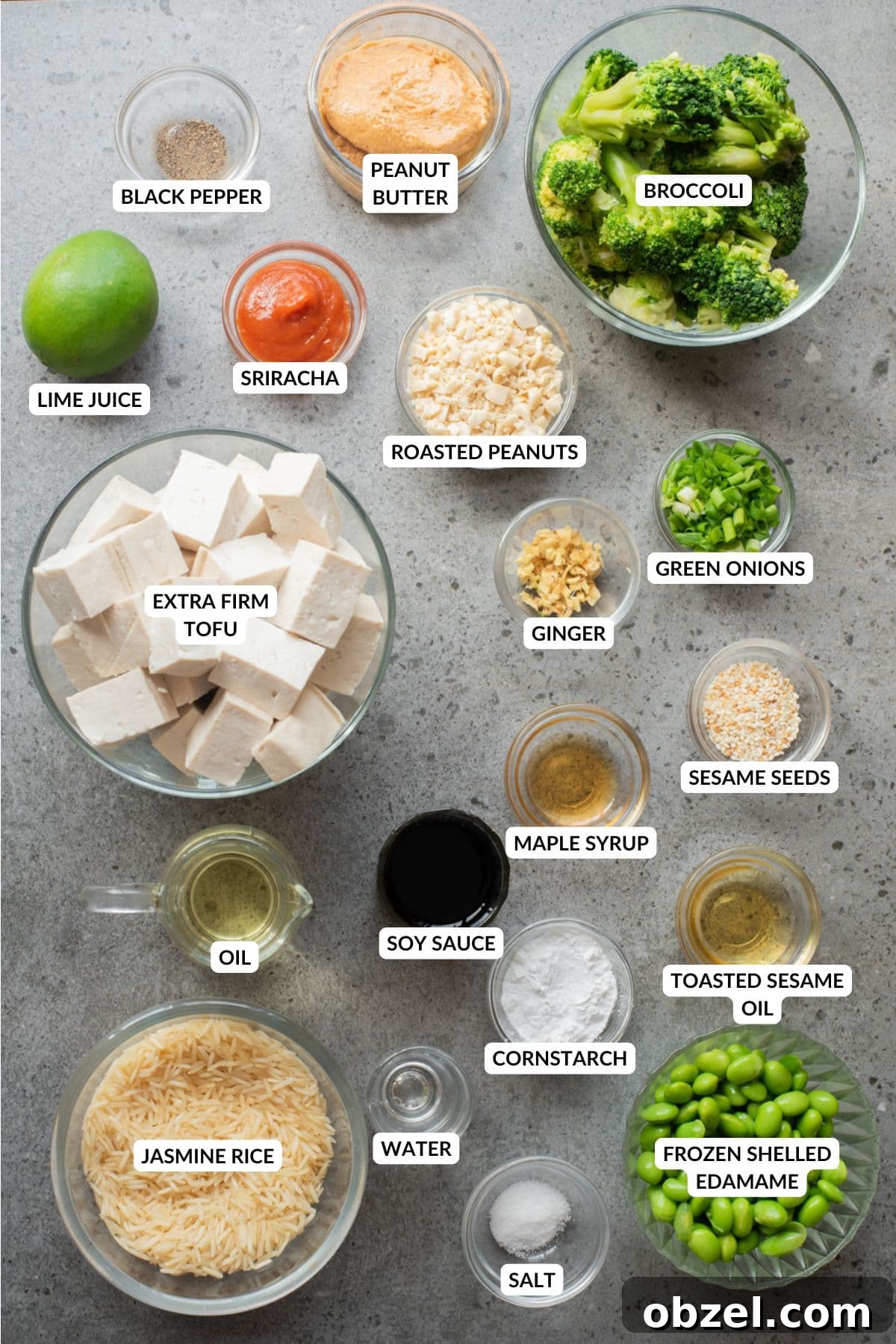
Full ingredient list and detailed instructions are included in the recipe card below.
- Extra-firm tofu works best because it holds its shape and crisps well. Press it first, then pat it dry again right before cooking to remove surface moisture.
- Cornstarch creates a light coating that turns crisp in the pan and helps the tofu stand up to the peanut sauce.
- Soy sauce is used in two ways: first to season the tofu before frying, then again at the end to create the glossy lacquer. Use tamari if you need the bowl to be gluten-free.
- Natural creamy peanut butter forms the base of the sauce. Since different brands vary in thickness, add warm water gradually until the sauce drizzles easily.
- Fresh ginger and lime juice keep the peanut sauce balanced. They add brightness and prevent the sauce from tasting too heavy.
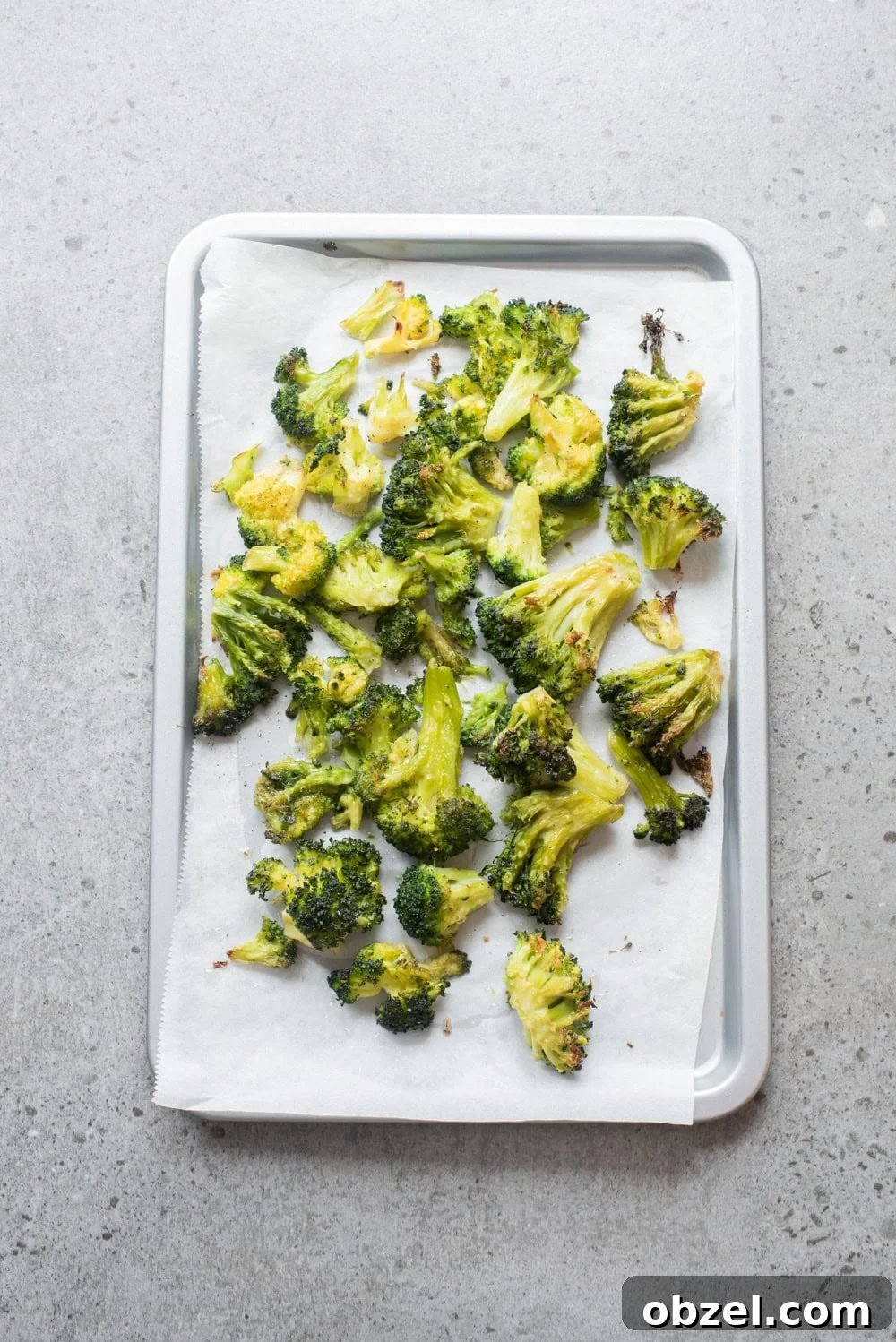
- Broccoli roasts at high heat until the edges are deeply browned. Spread it out on the sheet pan so it roasts instead of steaming.
- Edamame adds color, texture, and plant-based protein with very little effort. Thaw it from frozen and warm it briefly if desired.
Shruthi’s Top Tips
Tips and testing notes
- Press the tofu for at least 20 minutes. Removing excess water helps the tofu brown and crisp instead of steaming.
- Pat the tofu dry again before frying. Even pressed tofu can release moisture as it sits.
- Cook the tofu in two batches. Two blocks will crowd the pan if cooked all at once, and crowded tofu will not crisp properly.
- Do not move the tofu too soon. Let each side form a crust before turning. If it sticks, it likely needs another minute.
- Thin the peanut sauce slowly. Add warm water one tablespoon at a time until it is smooth and pourable.
- Start the rice and broccoli first. They take longer than the sauce, and the timing works well when they are underway before the tofu hits the pan.
How to make crispy tofu with peanut sauce
Prep: Heat the oven, start the rice, press the tofu, and pat it dry. Having these pieces ready makes the recipe move smoothly.
- Roast the broccoli until the florets are tender and the edges are browned. Spread them out well on the pan.
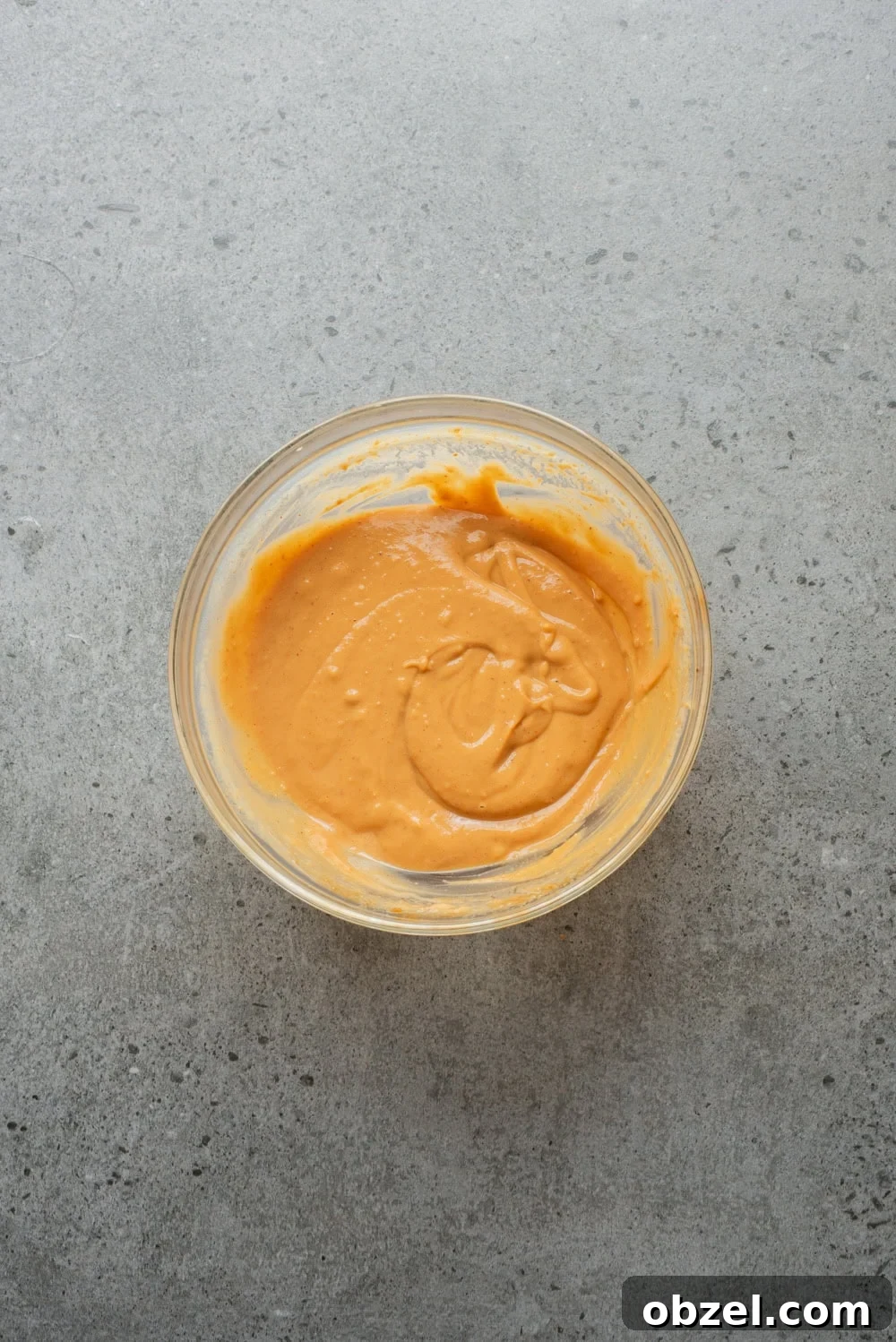
- Whisk together the peanut sauce ingredients until smooth. Add warm water gradually until the sauce ribbons off a spoon.
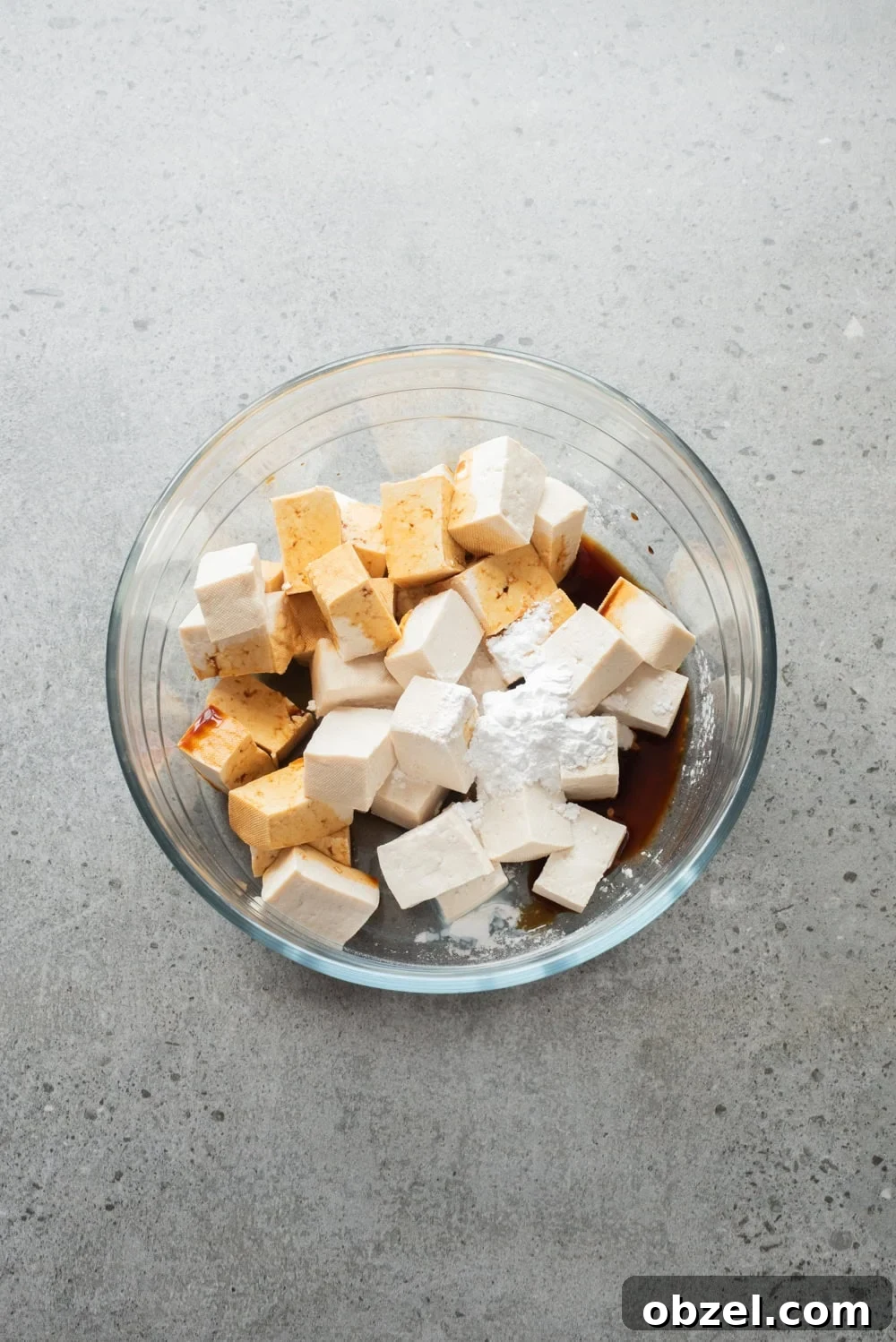
- Toss the pressed tofu with soy sauce, then coat it evenly with cornstarch.
- Pan-fry the tofu in batches until all sides are golden and crisp.
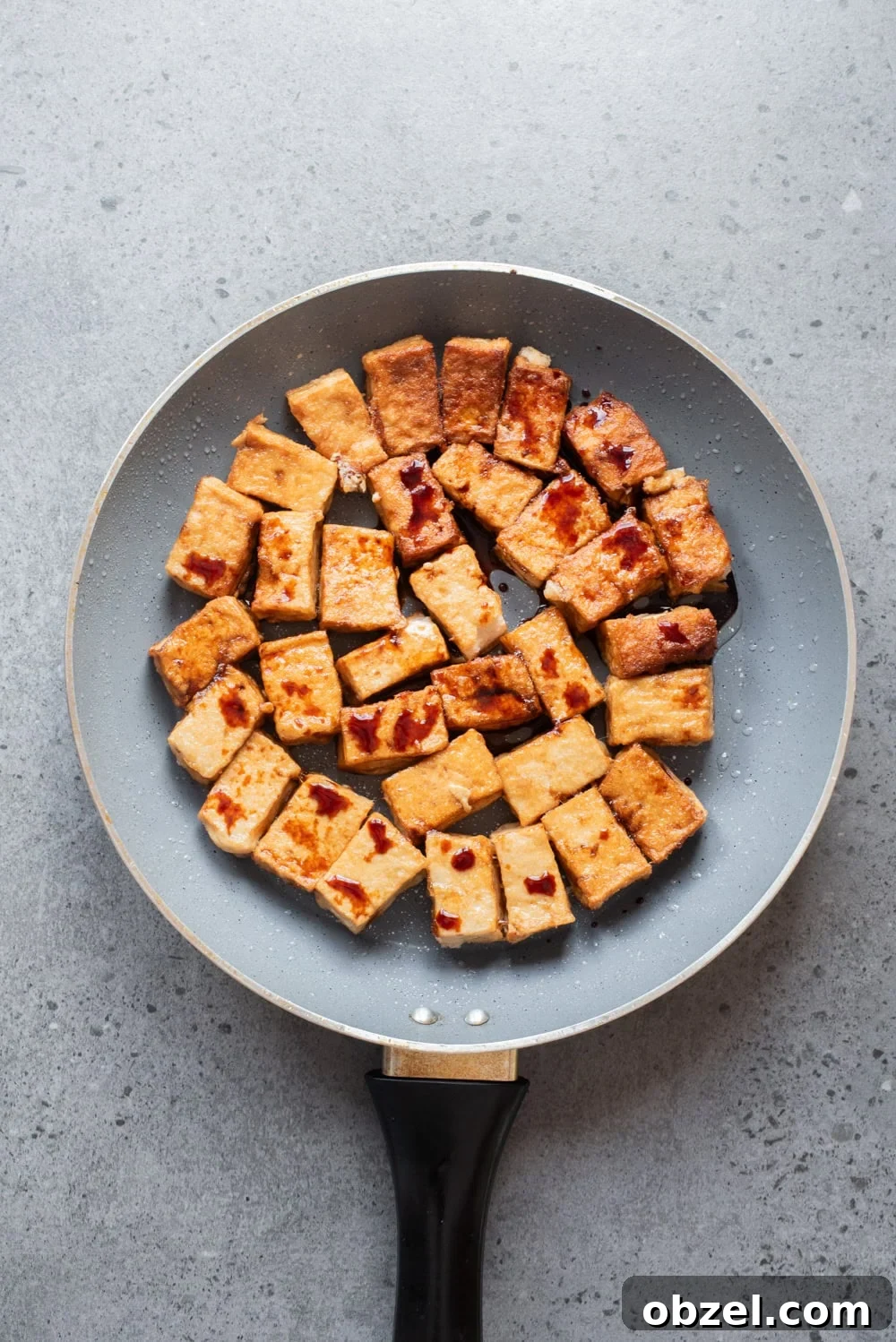
- Add soy sauce directly to the hot pan and toss briefly until the tofu turns glossy and caramelized.
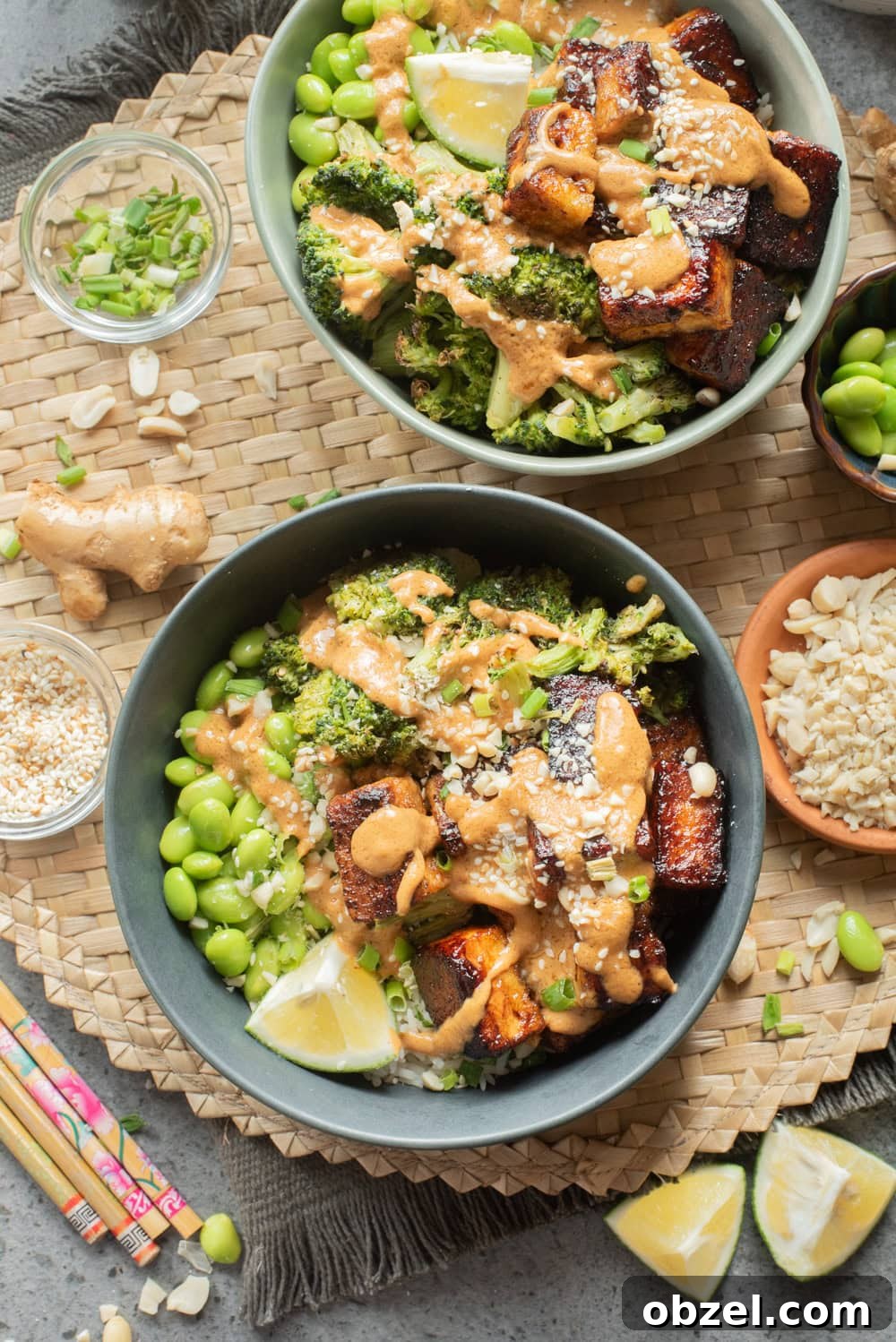
- Assemble the bowls with rice, broccoli, edamame, crispy tofu, and a generous drizzle of peanut sauce.
How to serve peanut tofu bowl
Serve these crispy peanut tofu bowls warm, with extra peanut sauce on the side. The sauce is one of the best parts of the recipe, and it tends to disappear quickly. Lime wedges add freshness right before eating, while chopped peanuts bring extra crunch. If you enjoy heat, chili crisp can be served alongside the bowls and added to taste.
This is a great meal prep bowl because the components hold well when stored separately. Keep the tofu, rice, vegetables, edamame, and sauce in separate containers, then assemble just before serving. The tofu is best when re-crisped, but the bowl is also good cold if you are packing it for lunch.
Variations
- Use quinoa instead of jasmine rice if you want a different grain base. Rice noodles also work well for a noodle-style bowl.
- Add more vegetables such as red bell pepper, snap peas, shredded purple cabbage, or carrots.
- Use sunflower seed butter instead of peanut butter for a nut-free version, and skip the chopped peanut garnish.
- Use tamari throughout instead of soy sauce to make the recipe gluten-free.
- Freeze and thaw the tofu before pressing if you prefer a more porous texture that soaks up the soy lacquer more deeply.

Storage and reheating suggestions
Store the bowl components separately for up to 4 days. Keep the peanut sauce in a jar in the refrigerator and stir in a splash of warm water before serving if it thickens. Re-crisp the tofu in a dry skillet over medium heat for 2 to 3 minutes, or warm it in a 375°F oven for 5 to 8 minutes. The broccoli reheats well in the oven, microwave, or skillet. Assemble the bowls warm or cold depending on your preference.
Crispy Peanut Tofu Bowls
Equipment
-
1 large non-stick pan or cast iron skillet
-
1 sheet pan
-
1 medium saucepan
Ingredients
For the tofu:
- 2 14-oz blocks extra-firm tofu, pressed and patted dry
- 2 tablespoons cornstarch
- 1 tablespoon soy sauce, or tamari for gluten-free
- 2 tablespoons neutral oil, for frying
- 1 tablespoon soy sauce, for the final lacquer
For the peanut sauce:
- ½ cup creamy peanut butter, no added sugar or oil
- 2 tablespoons soy sauce, or tamari for gluten-free
- 2 tablespoons fresh lime juice, from 1 to 2 limes
- 1 tablespoon maple syrup
- 1 tablespoon fresh ginger, grated
- 2 cloves garlic, grated
- 4 tablespoons warm water, to thin as needed
For the bowls:
- 1 large head broccoli, about 1.5 lb, cut into medium florets
- 2 tablespoons neutral oil
- ½ teaspoon salt
- 1½ cups frozen shelled edamame, thawed
- 3 cups cooked jasmine rice
- 4 lime wedges, for garnish
- 2 teaspoons chopped peanuts, for garnish
- 1 teaspoon chili crisp, optional, for serving
Instructions
-
Heat the oven to 425°F. Press the tofu blocks under something heavy for 20 minutes. Cook the rice while the tofu presses.
-
Toss the broccoli with 2 tablespoons oil and salt on a sheet pan. Spread the florets out in a single layer. Roast for 18 to 22 minutes, until the edges are browned and lightly charred.
-
Whisk the peanut butter, soy sauce, lime juice, maple syrup, ginger, garlic, and warm water in a bowl. Add the water gradually until the sauce is smooth and pourable.
-
Cut each pressed tofu block into 16 cubes. Pat the cubes dry again, then toss with 1 tablespoon soy sauce. Add the cornstarch and toss until evenly coated.
-
Heat 2 tablespoons oil in a large non-stick or cast iron skillet over medium-high heat. Add half the tofu in a single layer. Let it cook undisturbed for 3 to 4 minutes, then turn and cook until golden on all sides, about 8 to 10 minutes total. Transfer to a plate and repeat with the second batch.
-
Return all the tofu to the pan. Add 1 tablespoon soy sauce directly to the hot pan and toss for 30 to 60 seconds, until the tofu is glossy and lightly caramelized.
-
Assemble the bowls with jasmine rice on the bottom, broccoli and edamame around the sides, crispy tofu on top, and peanut sauce drizzled generously over everything. Serve with lime wedges, chopped peanuts, and chili crisp if using.
Notes
- Pressing and drying the tofu are essential for the crispiest texture.
- Let the tofu sit in the pan before flipping so the crust can form properly.
- The final soy sauce addition creates a glossy coating and helps the peanut sauce cling to the tofu.
- If the peanut sauce thickens in the refrigerator, stir in warm water a little at a time before serving.
- Store components separately for up to 4 days and re-crisp tofu in a skillet or oven before assembling.
Nutrition
Nutrition information is automatically calculated and should be used as an approximation.