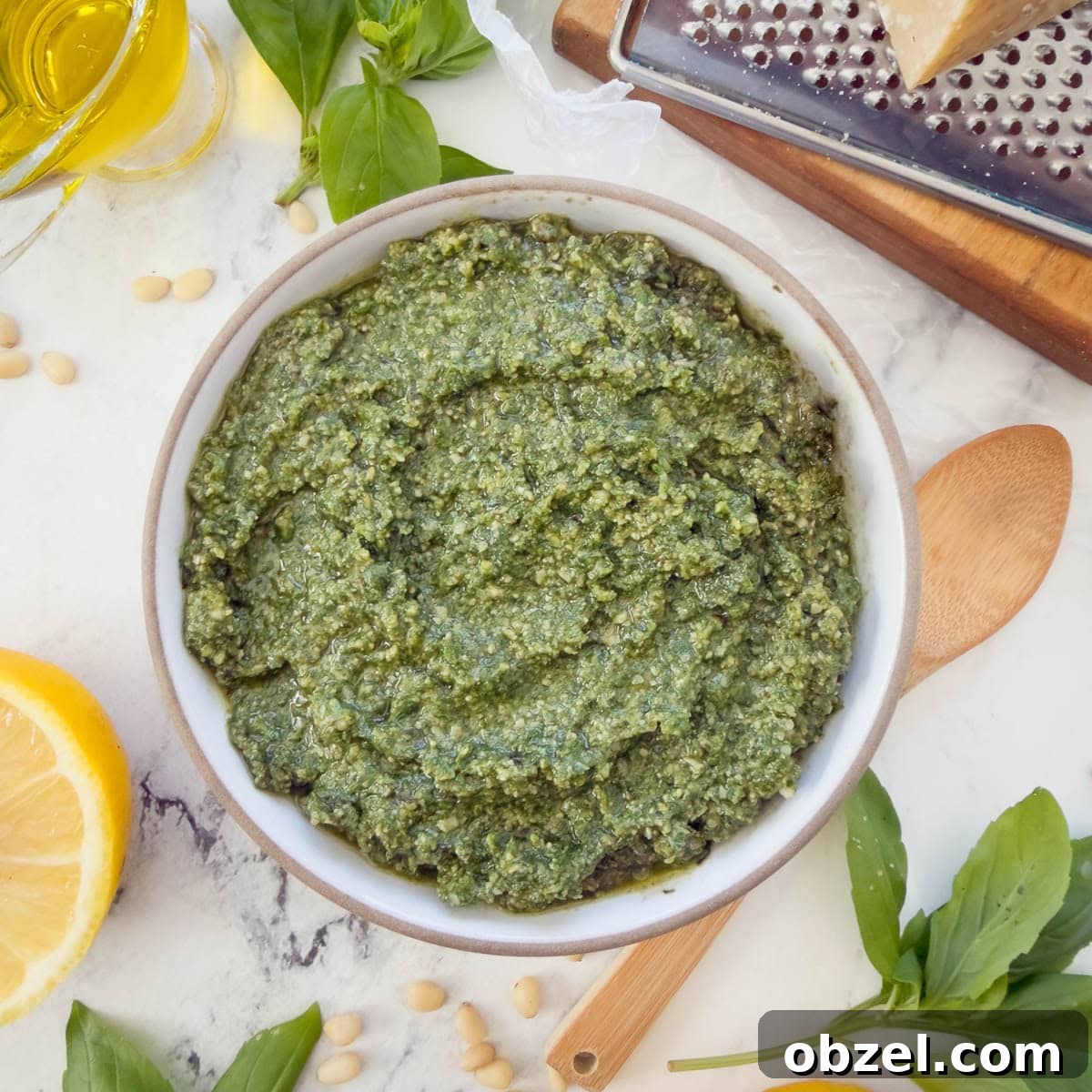
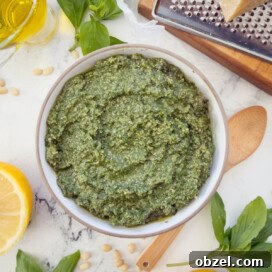
Pesto alla Genovese is the classic Italian basil pesto from Genoa, a fresh and aromatic sauce that can turn the simplest meal into something memorable. Made with basil, garlic, pine nuts, Parmigiano-Reggiano, and extra virgin olive oil, this traditional green sauce is bold, savory, and wonderfully versatile. Use it with pasta, spoon it over chicken or fish, swirl it into soup, or freeze it in small portions so you can enjoy the taste of summer basil long after the season ends.
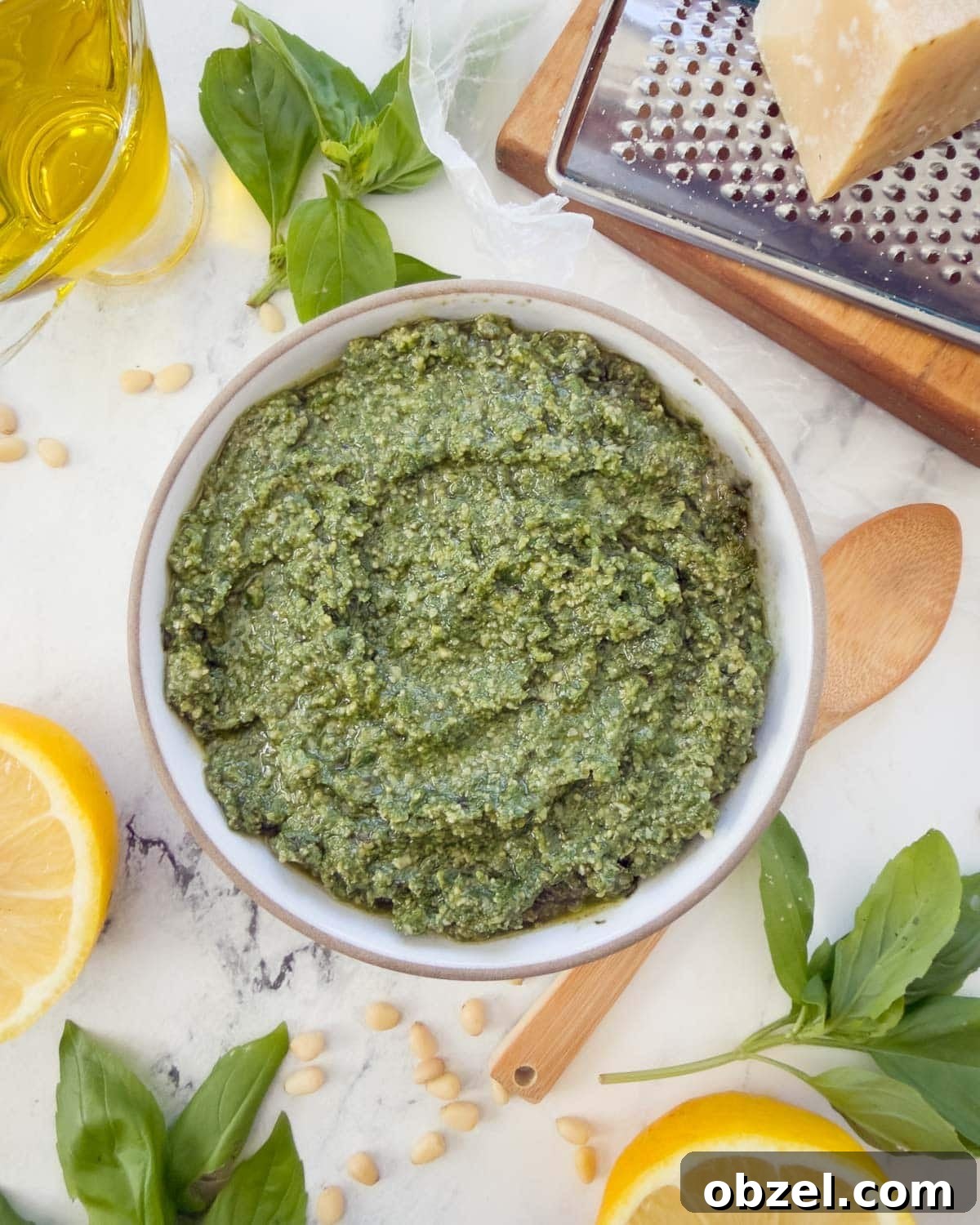
Authentic pesto Genovese is traditionally prepared with a mortar and pestle. The word pesto comes from the Italian verb meaning “to pound,” which describes the original method of crushing basil, garlic, nuts, cheese, and oil into a fragrant paste. While that technique is beautiful and time-honored, it can be slow and is best suited to small batches. For everyday cooking, a food processor makes homemade basil pesto quick, easy, and consistent while still delivering fresh flavor and a vibrant green color.
Pesto alla Genovese Recipe Snapshot
- Classic Italian flavor – This basil pesto is fragrant, savory, and packed with the unmistakable taste of fresh basil.
- Fast and simple – A food processor makes the sauce in minutes with very little effort.
- Versatile – Toss it with pasta, spoon it over grilled chicken or salmon, stir it into risotto, drizzle it on vegetables, or swirl it into soup.
- Fresher than store-bought – Homemade pesto has a brighter flavor and lets you control the ingredients.
- Great for make-ahead meals – Freeze pesto in small portions and use it whenever you need a quick flavor boost.
This pesto alla Genovese recipe is a reliable staple for simple weeknight dinners, summer entertaining, and meal prep. Once you have a jar in the refrigerator or a few cubes in the freezer, you can add fresh basil flavor to almost anything.
Ingredients You’ll Need
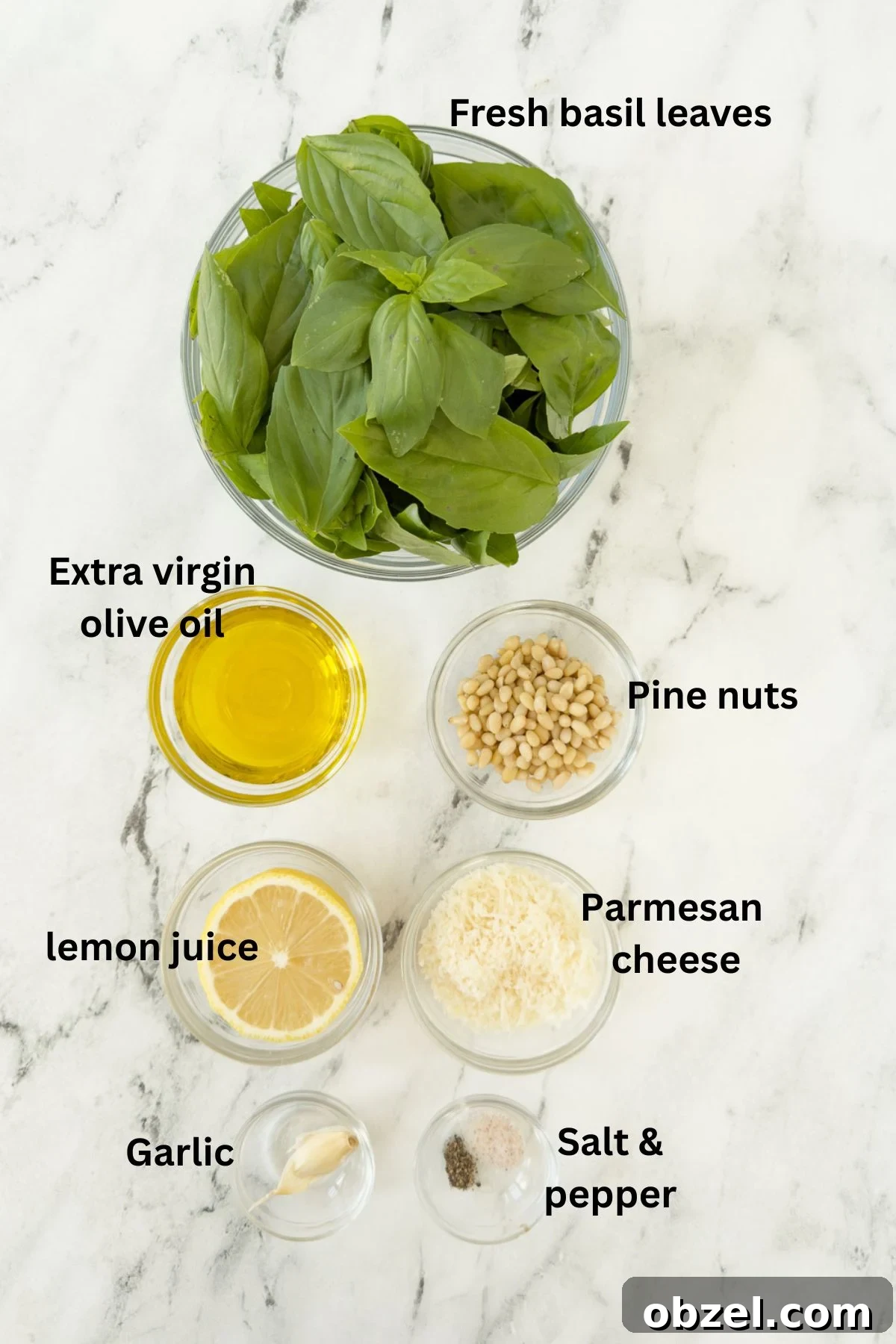
- Fresh basil – The main ingredient in pesto alla Genovese. Use fresh leaves only and remove the stems for the best texture and flavor.
- Olive oil – Good-quality extra virgin olive oil gives the pesto richness and a smooth, silky consistency.
- Pine nuts – The traditional nut for classic basil pesto. They add a buttery texture and mild, nutty flavor.
- Cheese – Parmigiano-Reggiano is the classic choice. Grating it from a block gives the best flavor, though pre-grated cheese can work when time is short.
- Garlic – Use fresh garlic cloves. A little goes a long way, so keep it balanced rather than overpowering.
- Lemon juice (optional) – A small squeeze adds brightness and helps balance the richness of the cheese, nuts, and oil.
- Spinach (optional) – A small amount can help support the green color without changing the pesto too much.
Salt and pepper are added to taste. Exact measurements are included in the recipe card below.
Substitutions and Variations
- Cheese options – Parmigiano-Reggiano is classic, but Pecorino Fiore Sardo is also traditional in pesto alla Genovese. Grana Padano offers a similar nutty flavor, while Pecorino Romano is sharper and saltier.
- Herb additions – A little fresh Italian parsley or oregano can be added for a slightly different herbal note, while keeping basil as the main flavor.
- Nut substitutions – Pine nuts are traditional, but walnuts, almonds, or cashews can also be used. For a nut-free version, raw sunflower seeds are a practical alternative. The flavor will change slightly, but the sauce will still be delicious.
Chef’s Tip – The Trick to Bright Green Pesto is Blanching
For a vivid green pesto that keeps its color longer, blanch the basil leaves in boiling water for 5-10 seconds, then immediately transfer them to an ice bath. Drain well and pat completely dry before using. This brief blanching helps preserve the basil’s chlorophyll, keeping the pesto brighter in the refrigerator. It is an extra step, but it is worth it when presentation matters.
How to Make Pesto alla Genovese
Homemade pesto is quick to make. A food processor is the easiest tool for creating a smooth, vibrant basil sauce. A blender can also work, but use short pulses. Over-blending can warm the basil, dull the flavor, and make the pesto more likely to darken.
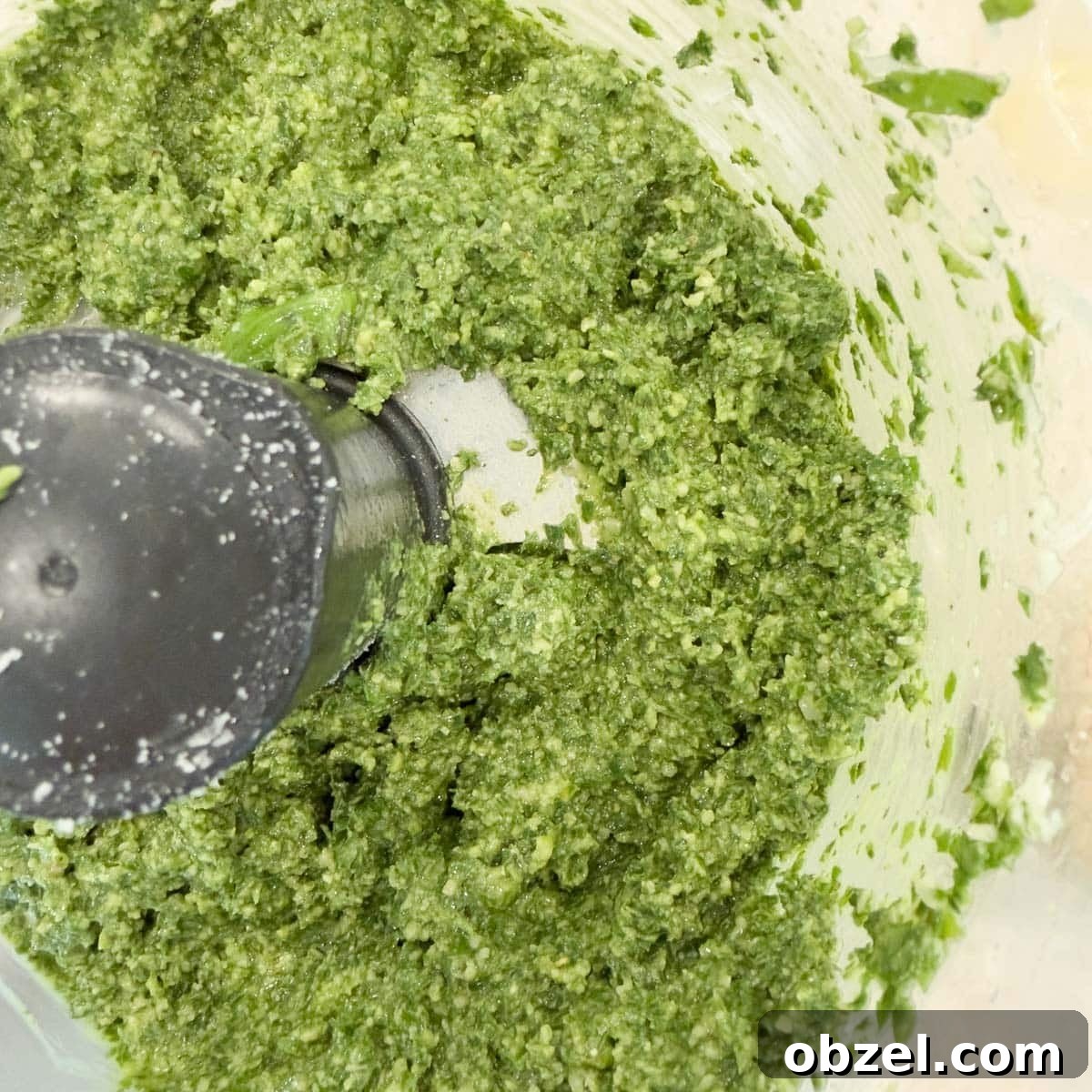
- With the food processor running, drop the garlic through the feed tube to mince it. Add the basil, pine nuts, cheese, olive oil, lemon juice if using, salt, and pepper. Pulse until the pesto reaches your preferred texture, either slightly rustic or smooth and creamy. Taste and adjust the seasoning as needed.
Chef’s Tip: If the pesto is too thin, add a little more basil, cheese, or nuts. If it is too thick, loosen it with a drizzle of olive oil, a squeeze of lemon juice, or a small splash of water.
Serving Suggestions
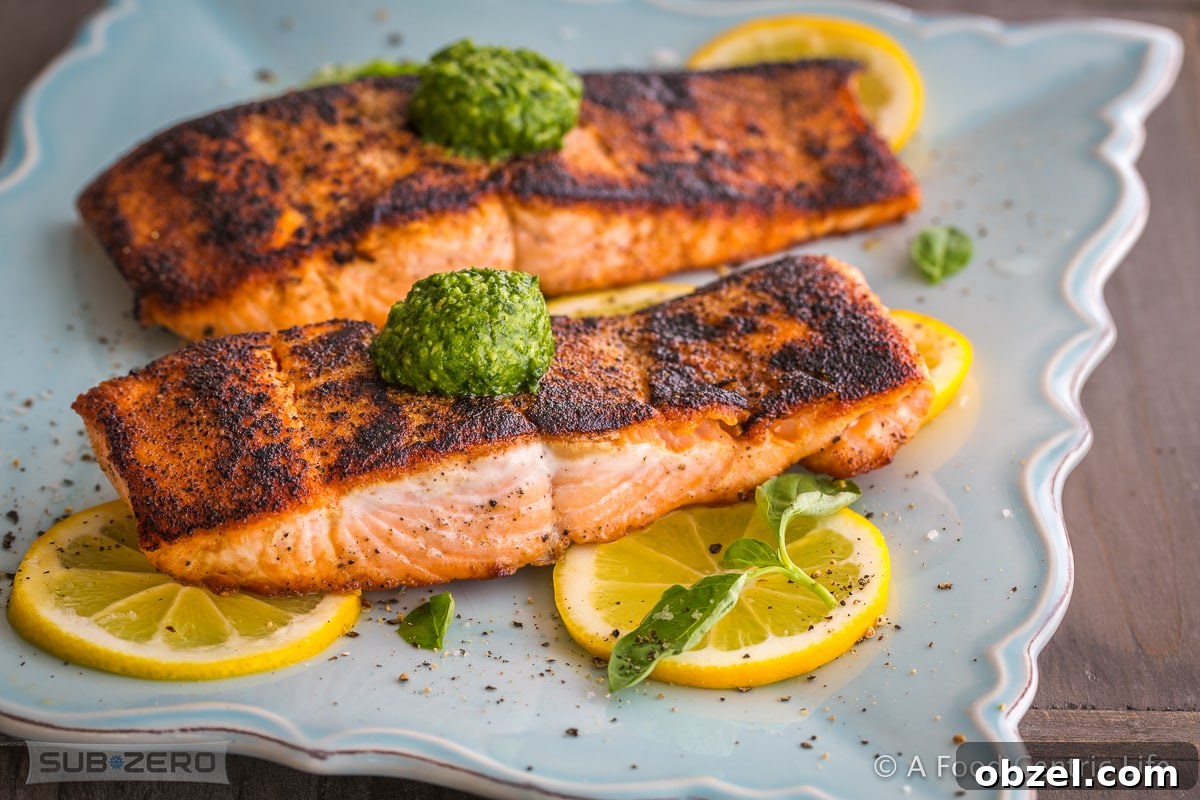
Pesto alla Genovese is best known as a pasta sauce, but it can do much more. Serve it close to room temperature so the basil, garlic, cheese, and olive oil flavors are at their best.
- Appetizers – Spoon a small amount onto deviled eggs, roasted portobello mushrooms, or mix it with Greek yogurt for a quick vegetable dip.
- Vegetables – Toss with roasted potatoes, green beans, grilled zucchini, or spoon over sliced tomatoes and mozzarella.
- Proteins – Serve over grilled chicken, seared salmon, shrimp, white fish, or simple roasted meat.
- Soups – Swirl into tomato soup, minestrone, or vegetable soup just before serving.
- Sandwiches – Spread on turkey sandwiches or panini, or mix with mayonnaise for a quick pesto aioli.
- Sides – Stir into mashed potatoes, warm rice, risotto, or grain bowls.
- Sauces – Warm gently with a splash of cream for an easy pesto cream sauce, especially good with salmon or pasta.
Storing & Freezing Basil Pesto
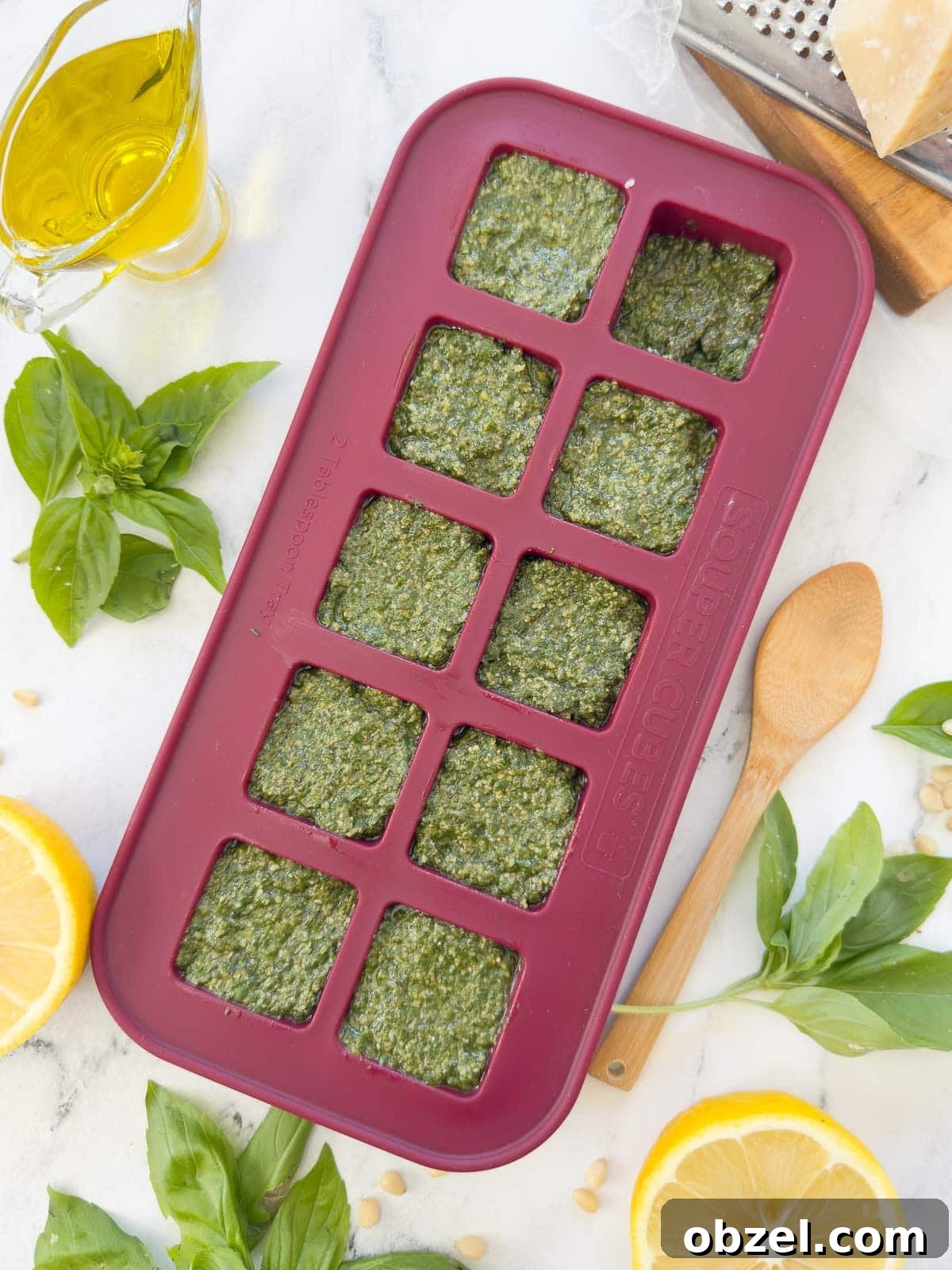
Homemade pesto is at its brightest and most aromatic on the day it is made. Store leftovers in a small airtight container that fits the pesto closely. For added protection, pour a thin layer of olive oil over the surface before sealing the container. This helps slow oxidation and keeps the pesto from turning brown too quickly. Refrigerate for up to 3 days.
To freeze basil pesto, portion it into ice cube trays or small freezer-safe containers in 2-tablespoon amounts. Once frozen solid, transfer the cubes to a freezer bag or airtight container. Frozen pesto keeps well for 2-3 months.
Keeping pesto cubes in the freezer is an easy way to add quick flavor to weeknight meals. Thaw a cube for pasta, stir one into risotto, or add it directly to soup for a fresh basil finish.
Chef’s Tip – Thawing Frozen Pesto
Do not microwave pesto, as high heat can dull the color and weaken the fresh basil flavor. Thaw frozen cubes at room temperature for 15-20 minutes or in the refrigerator for a few hours. For soup or simmering dishes, a frozen cube can be stirred directly into the pot. For pasta or risotto, thaw first so it blends smoothly.
More Recipes With Basil
Fresh basil works beautifully in salads, dips, appetizers, and sauces. These basil-forward ideas are perfect when you have extra leaves to use.
-
Easy Caprese Salad Skewers with Basil Vinaigrette
-
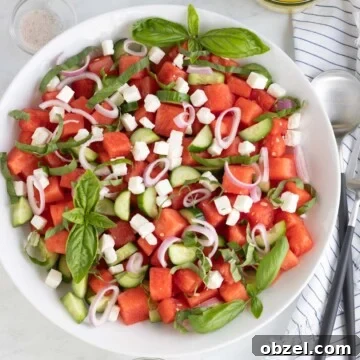
Easy Watermelon Basil Salad with Feta Cheese
-
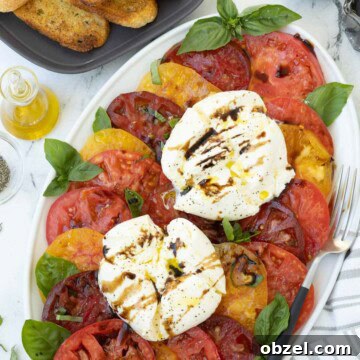
Burrata Caprese with Fresh Tomatoes
-
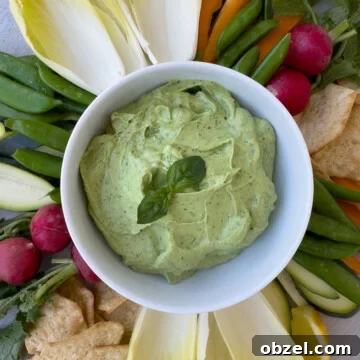
Avocado Dip with Yogurt and Fresh Basil

⭐️Did You Make This Recipe?
If you make this pesto alla Genovese recipe, leave a comment and share how you used it. Your feedback helps other readers and makes it easier for everyone to enjoy this classic Italian basil pesto at home.
📖 Recipe
Pesto alla Genovese (Basil Pesto)
Equipment
-
Food processor or blender
Ingredients
- 2 cups fresh basil leaves, stems removed buy a 4 oz clamshell
- ¼ cup finely grated Parmigiano-Reggiano cheese or use part pecorino
- ¼ cup extra virgin olive oil
- 3 tablespoons pine nuts or walnuts
- 1 garlic clove peeled or microplaned
- ⅛ teaspoon kosher salt
- 2 pinches black pepper optional
Options
- 2-3 teaspoons lemon juice for brightness
- ¼ cup baby spinach leaves or arugula to help preserve color if not blanching
Instructions
Mince the garlic
-
Fit a food processor with the steel blade. With the machine running, drop the peeled garlic through the feed tube and process until minced.
Add the remaining ingredients
-
Add the basil, pine nuts, Parmigiano-Reggiano, olive oil, lemon juice if using, salt, and pepper. Pulse until the pesto is mostly smooth. Process less for a rustic texture or a little longer for a creamier sauce.
Adjust the consistency
-
Taste and adjust as needed. Add more basil, cheese, or nuts if the pesto is too thin. Add olive oil, lemon juice, or a small splash of water if it is too thick.
Notes
Scrape the pesto into a small container with a tight-fitting lid. Refrigerate for up to 3 days or freeze in cubes or jars for longer storage. Two-tablespoon portions are convenient for quick meals.
Nutrition
Calories: 157 kcal
Carbohydrates: 2 g
Protein: 3 g
Fat: 16 g
Saturated Fat: 3 g
Sodium: 175 mg
Fiber: 1 g
Calcium: 102 mg
Iron: 1 mg