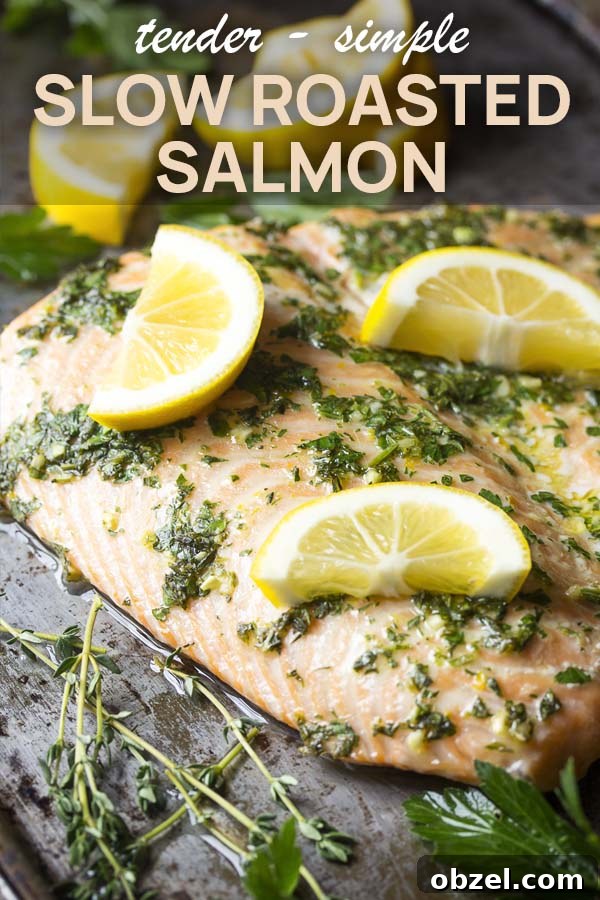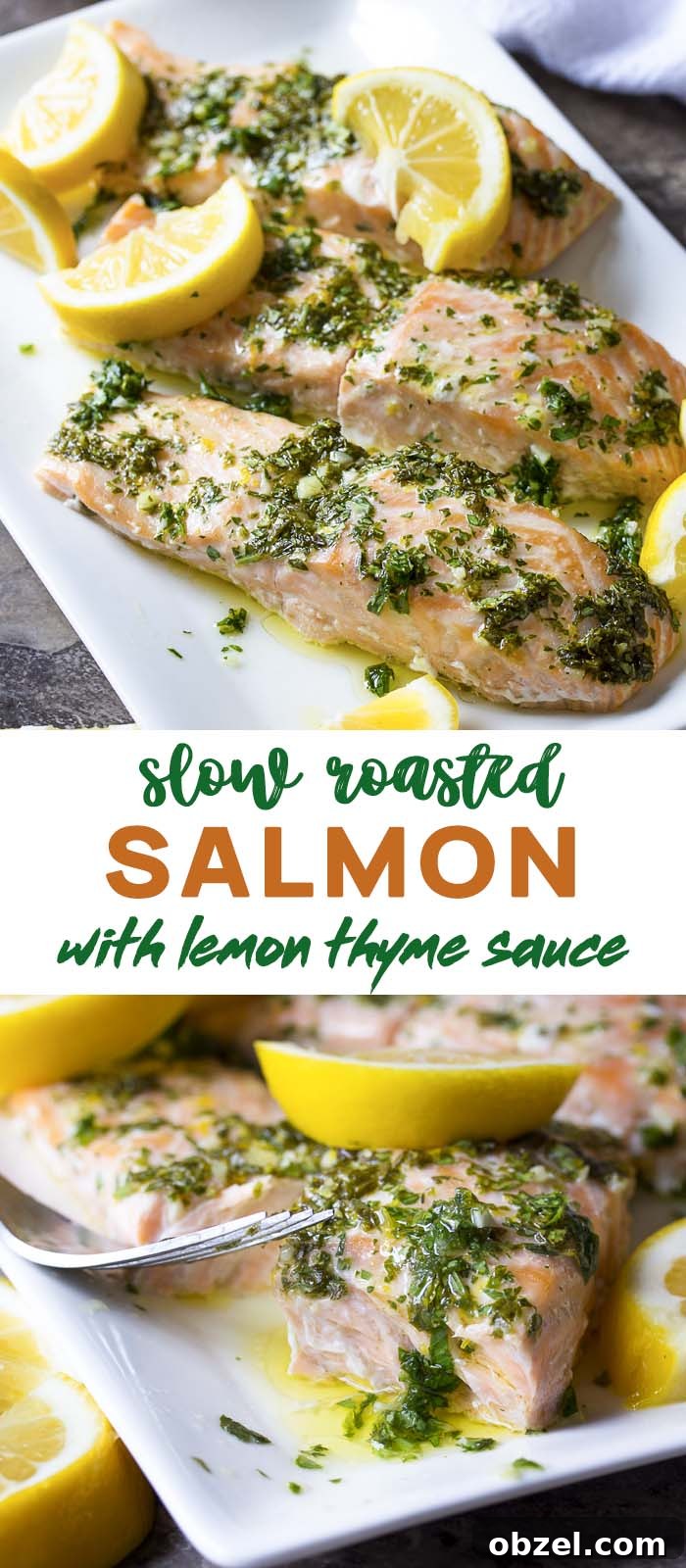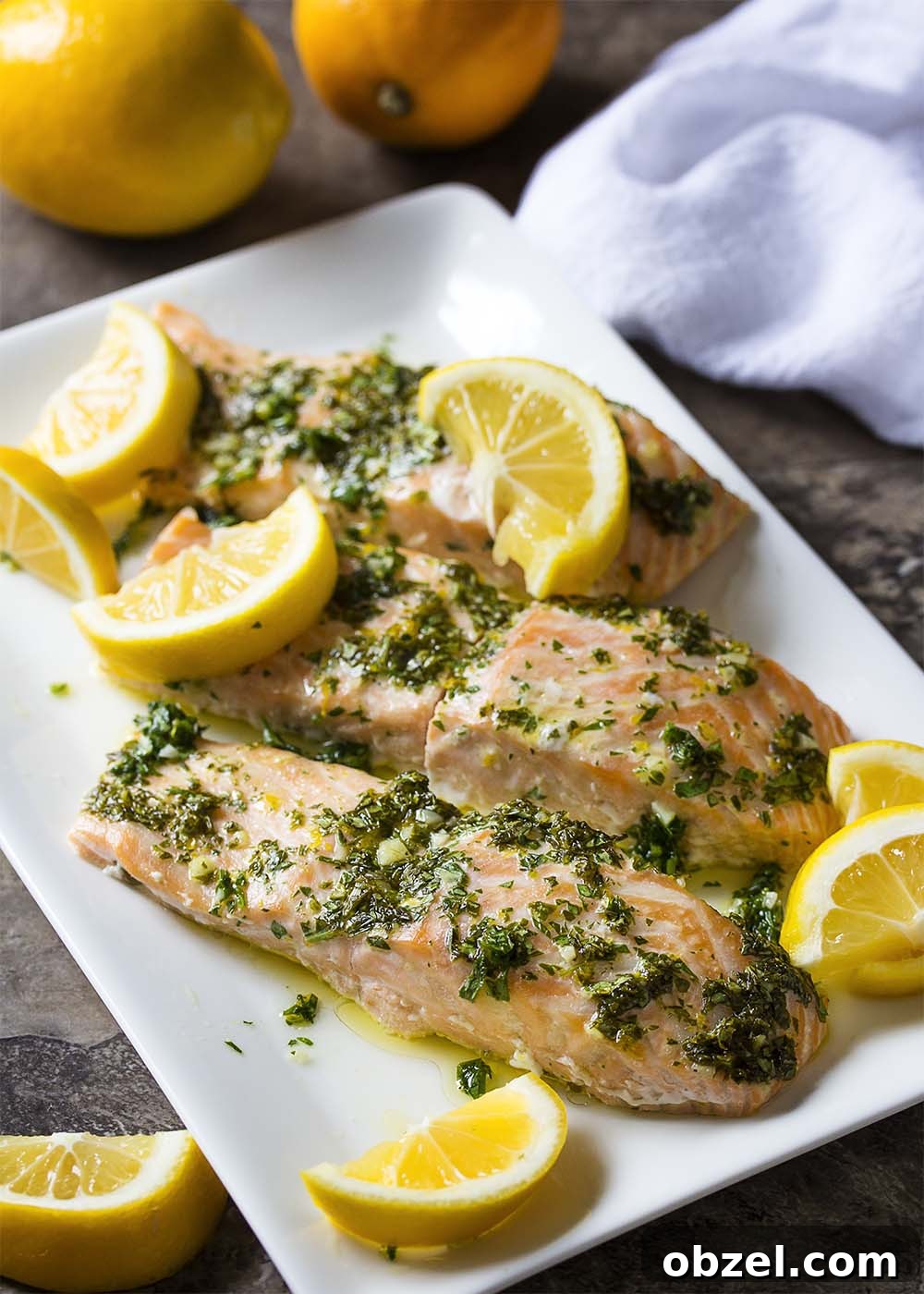
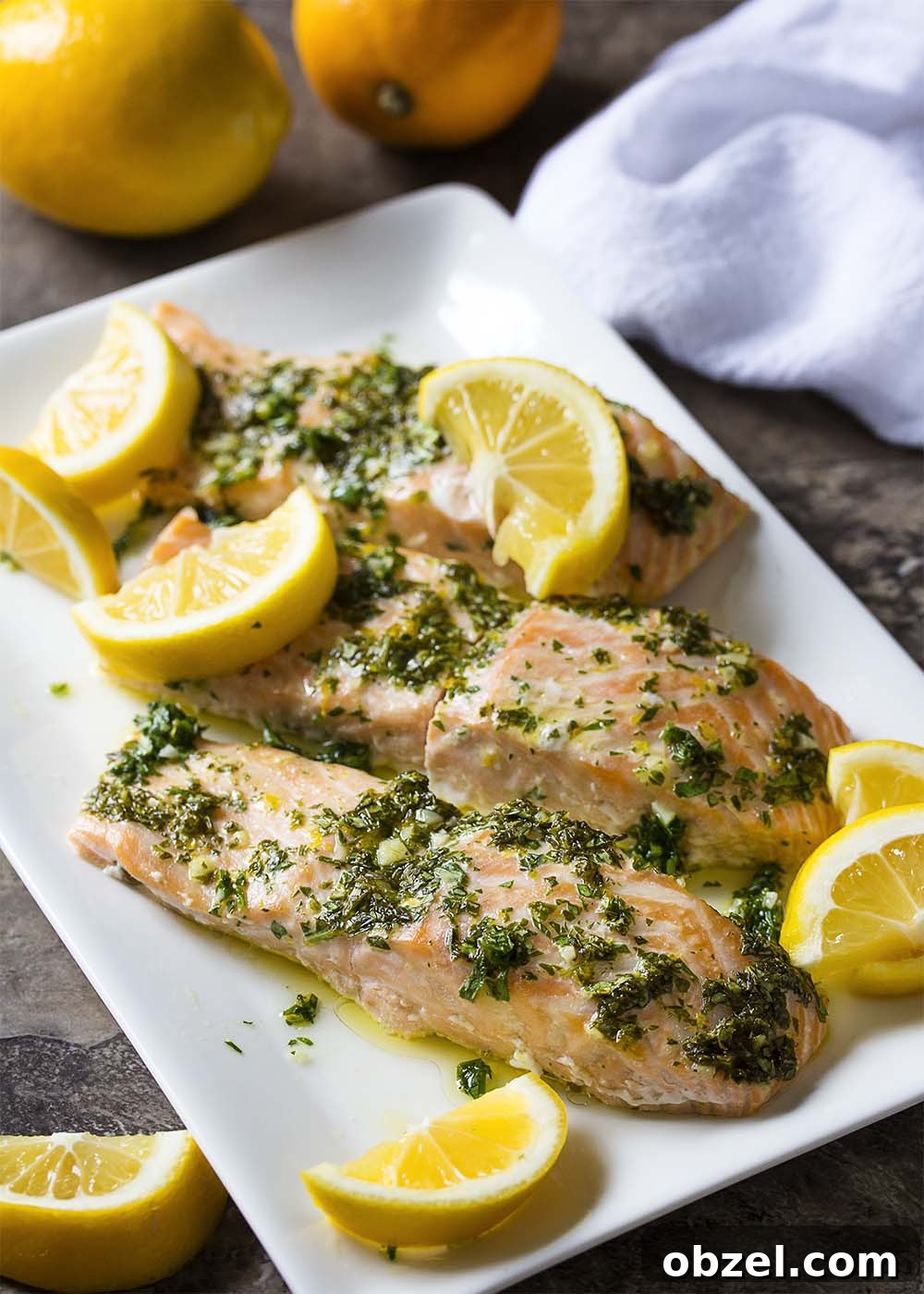
Say goodbye to dry, overcooked fish. This slow roasted salmon is tender, buttery, and perfectly cooked, with a bright lemon herb sauce that makes every bite fresh and flavorful.
Hello, all!
Slow roasted salmon is one of the easiest ways to prepare fish when you want a simple dinner that feels special without requiring much effort. Fast-seared salmon with crisp skin is delicious, but it does need close attention and precise timing. Slow roasting is more relaxed. The oven does the work gently, giving the salmon time to cook evenly from edge to center.
The result is salmon that stays moist, silky, and delicate. Instead of a tough exterior and dry center, you get fish that flakes softly and almost melts in your mouth. This method is especially useful for home cooks who want dependable results without standing over the stove.
This recipe pairs the salmon with a lemon herb sauce made with parsley, thyme, garlic, olive oil, lemon juice, lemon zest, salt, and black pepper. The sauce is fresh, bright, and simple, and it brings out the richness of the salmon without overpowering it. You can serve the fish warm from the oven, at room temperature, or chilled, which also makes it a great option for meal prep, lunches, brunches, and salads.
Benefits to Slow Roasting
- Even cooking. A low oven allows heat to move gently through the salmon, so the center cooks before the outside becomes dry or overdone.
- Tender texture. Slow roasting helps the salmon stay soft and buttery because the fish cooks gradually rather than being shocked by high heat.
- More forgiving timing. Lower heat gives you a wider window to remove the salmon from the oven while it is still perfectly cooked.
- Great for meal prep. Slow roasted salmon tastes wonderful hot, room temperature, or cold. It works well for dinners, lunches, elegant brunch plates, and fresh salmon salads.
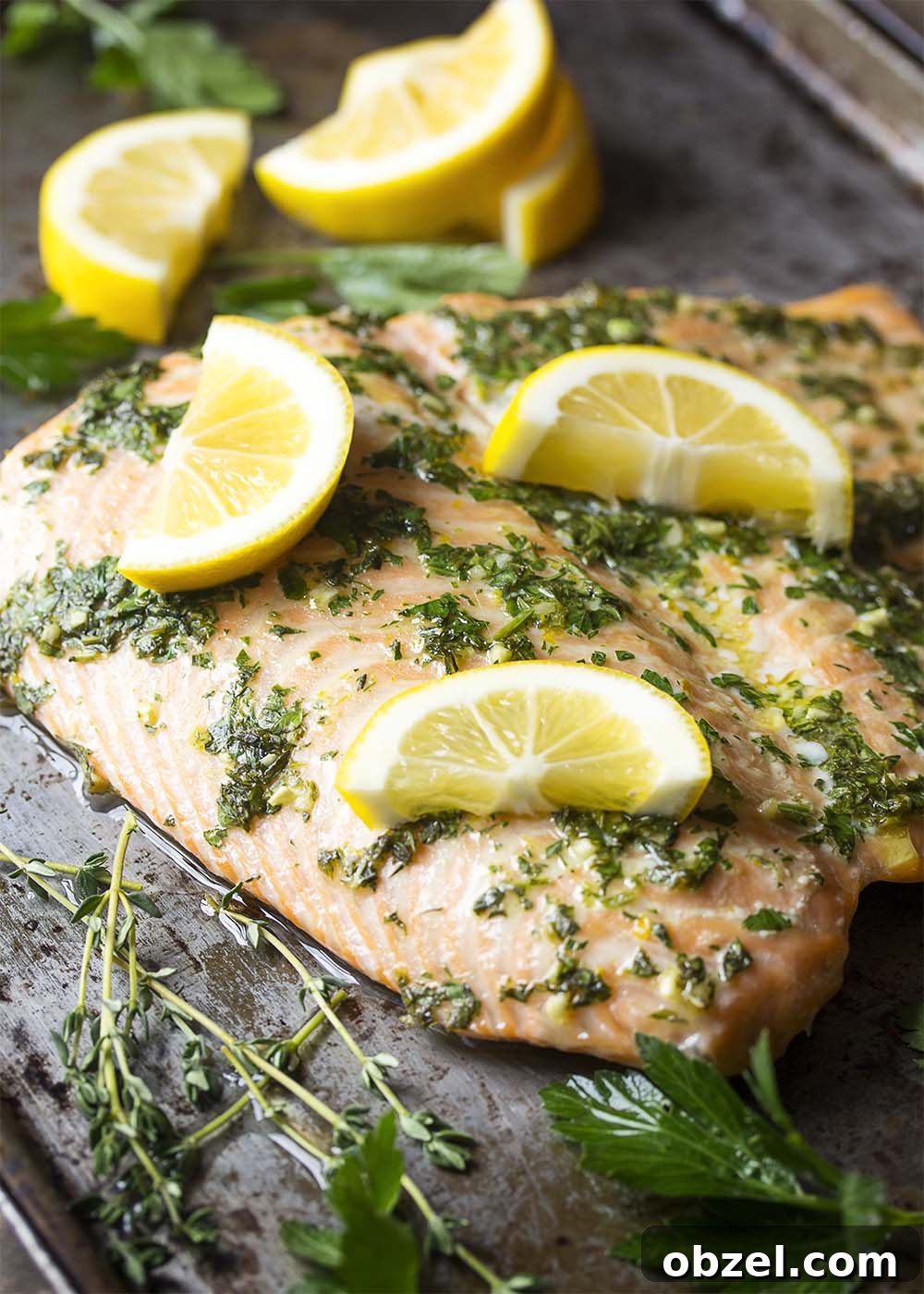
How to Make This
To make slow roasted salmon, start by seasoning the salmon fillet with kosher salt and letting it rest. Then prepare the lemon herb sauce, rub a little of it over the fish, and roast the salmon in a 300F oven until it reaches an internal temperature of 122-125F. Serve it with the remaining sauce and lemon slices.
1. Dry Brine the Fish
The first step to flavorful, tender salmon is a simple dry brine. Sprinkle the fish generously with kosher salt and let it sit before cooking. If you remember in the morning or the night before, you can salt the salmon several hours ahead. This gives the salt more time to season the fish.
If you only have a short amount of time, it is still worth doing. Salt the salmon before you begin preparing the rest of dinner. Even 30 minutes can improve the texture and flavor. This small step helps the finished salmon taste seasoned all the way through rather than only on the surface.
2. Make the Sauce
Prepare the lemon herb sauce before the salmon goes into the oven. This allows you to rub a little of the sauce over the fish before roasting and save the rest for serving.
To make the sauce, stir together lemon zest, lemon juice, chopped fresh parsley, chopped fresh thyme, garlic, kosher salt, black pepper, and olive oil. It takes only a few minutes of chopping and mixing. If you prefer a smoother sauce, you can blend the ingredients instead.
Tip: If you can find Meyer lemons, use them for a slightly sweeter and more complex lemon flavor.
3. Slow Roast
At this point, you can leave the salmon fillet whole or cut it into individual portions. Keep in mind that smaller pieces cook more quickly than a whole fillet.
Line a baking sheet with parchment or foil. If using foil, brush it lightly with olive oil to help prevent sticking. Place the salmon on the prepared baking sheet and rub about 2 tablespoons of the lemon herb sauce over the top.
Roast the salmon in a 300F oven until it reaches 122-125F on an instant-read thermometer. Individual pieces may take about 12-15 minutes, while a whole fillet may take about 18-20 minutes, depending on thickness.
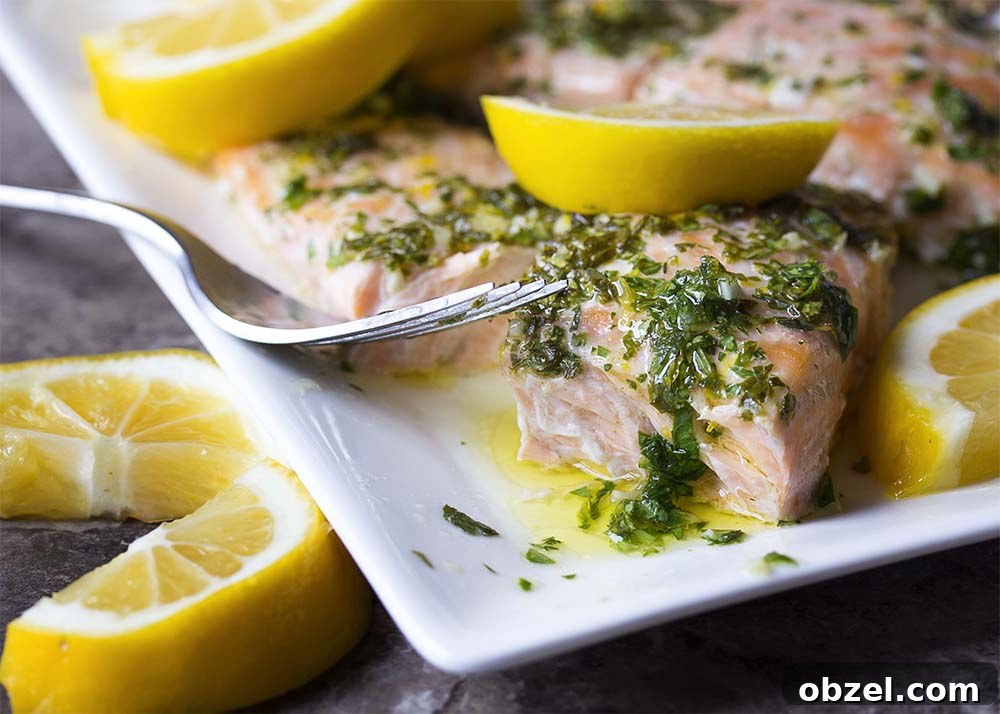
Once cooked, serve the salmon immediately with the remaining lemon herb sauce, or let it cool and enjoy it later at room temperature or chilled.
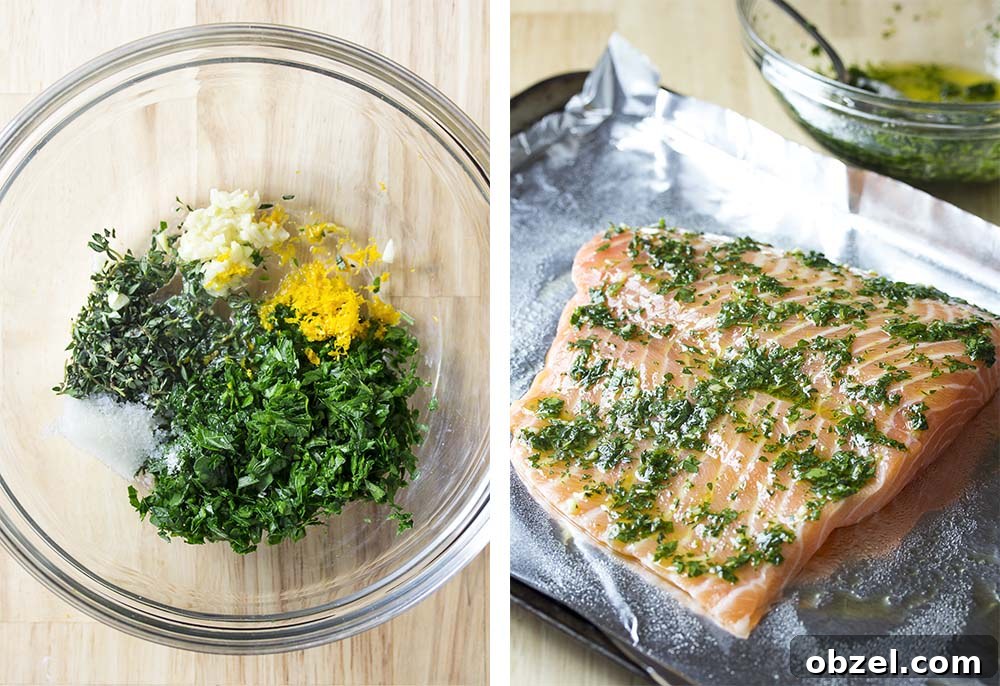
Internal Temperature
For tender, buttery salmon, cook the fish to an internal temperature of 122-125F. This temperature gives you medium-rare salmon with a moist, delicate texture.
Note: If you prefer medium salmon, cook it to about 130F. It will be a little firmer and less tender, but still flavorful.
Wine with Salmon
Salmon is a rich, oily fish, which means it can pair well with either white wine or red wine. For white wine, choose a fuller-bodied option such as a buttery Chardonnay or Pinot Grigio. For red wine, look for a lighter-bodied choice such as Pinot Noir or Gamay Beaujolais.
What to Serve Alongside
This slow roasted salmon is excellent with rice pilaf or crispy roasted potatoes. For vegetables, try a seasonal steamed vegetable such as asparagus, or keep the meal light with a simple green salad. The lemon herb sauce also tastes great spooned over the vegetables or potatoes.
Simple Fish Dinners
- Crispy Seared Salmon
- Grilled Sicilian Swordfish with Oregano
- Pan Seared Cod with Capers and Lemon
- Grilled Spanish Swordfish Kebabs
- Mediterranean Cod with Mixed Vegetables
If you make this slow roasted salmon, serve it with plenty of lemon herb sauce and enjoy the soft, buttery texture that comes from cooking fish gently in a low oven.
– Happy Roasting, Annemarie

Slow Roasted Salmon with Lemon Herb Sauce
30 mins
18 mins
48 mins
Ingredients
- 1 lb salmon fillet, skinless if available
- kosher salt
Lemon Herb Sauce
- 1/4 cup chopped fresh parsley
- 1 tbsp chopped fresh thyme
- 2 cloves garlic
- 3 tbsp olive oil
- 1 tbsp lemon juice
- zest of one lemon
- 1/2 tsp kosher salt
- 1/4 tsp black pepper
- lemon slices
Instructions
-
At least 30 minutes before cooking, or up to one day ahead, sprinkle the salmon generously with kosher salt.
-
Heat the oven to 300F. Line a baking sheet with parchment or foil. If using foil, brush it lightly with olive oil.
-
Place the salmon on the prepared baking sheet. Rub 2 tablespoons of the lemon herb sauce over the fish.
-
Roast for 12-15 minutes for individual pieces or 18-20 minutes for a whole fillet, until the salmon reaches 122-125F on an instant-read thermometer.
-
Serve with the remaining lemon herb sauce and extra lemon slices.
Notes
- Salmon: This recipe uses a fillet that is a little over 3/4 inch thick at the thickest part.
- Lemons: If Meyer lemons are available, use them in place of standard lemons.
- Presentation: For neat individual servings, slice the salmon before cooking. Thin pieces cook faster than a whole fillet.
- Temperature: 122-125F gives medium-rare salmon. For medium salmon, cook to about 130F.