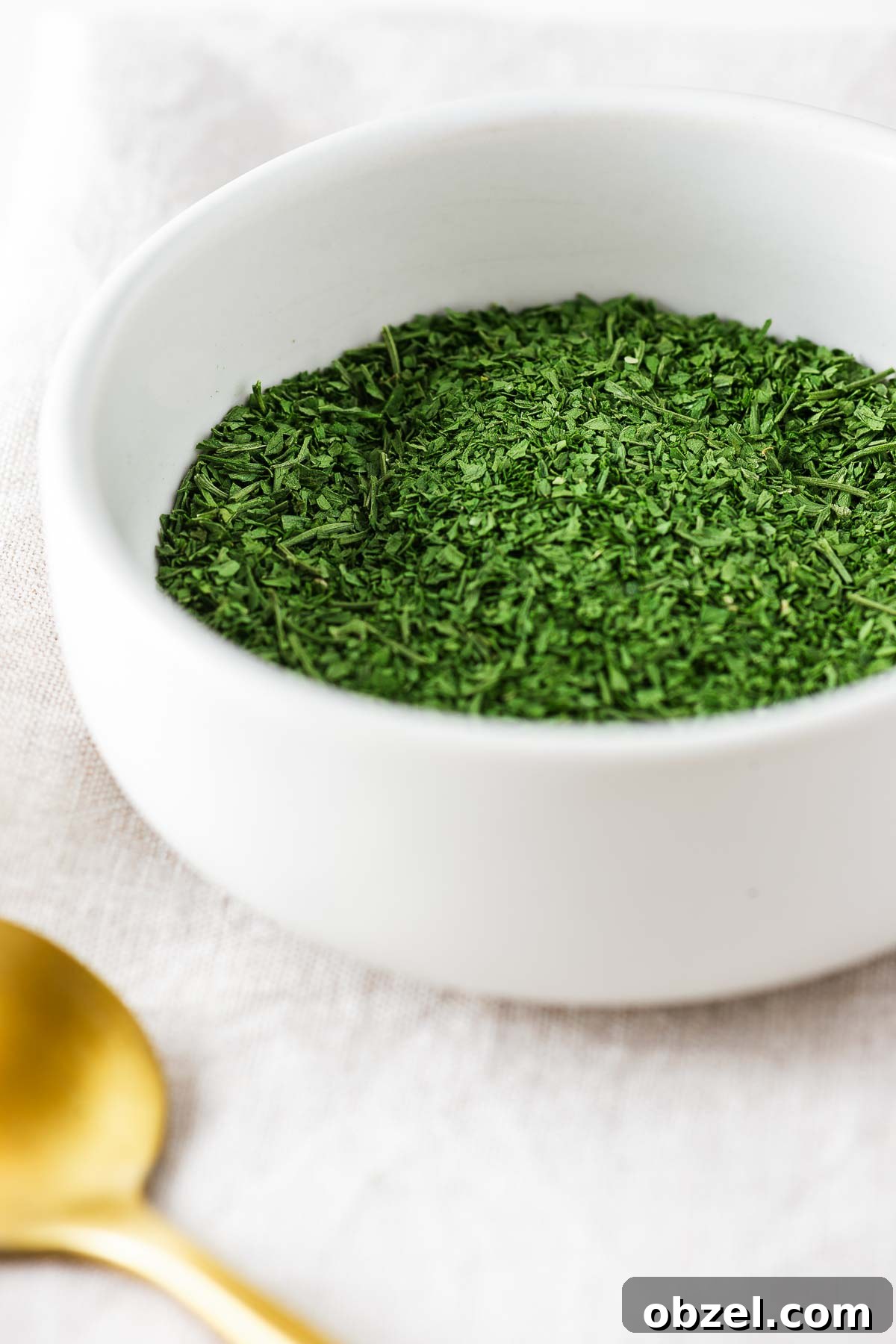
I use fresh herbs all the time, especially in Middle Eastern dishes, and parsley is one of my favourites. When I don’t have parsley growing in the garden, I buy large flat-leaf bunches at the farmers’ market. Often I end up with more than I can use before it wilts, so I dry the excess. Oven-drying parsley is a quick, reliable way to preserve it and avoid waste.
If you want to skip ahead, go straight to the step-by-step instructions for how to dry parsley in the oven. Below you’ll also find tips on alternative drying methods, storage, and ways to use your homemade dried parsley.
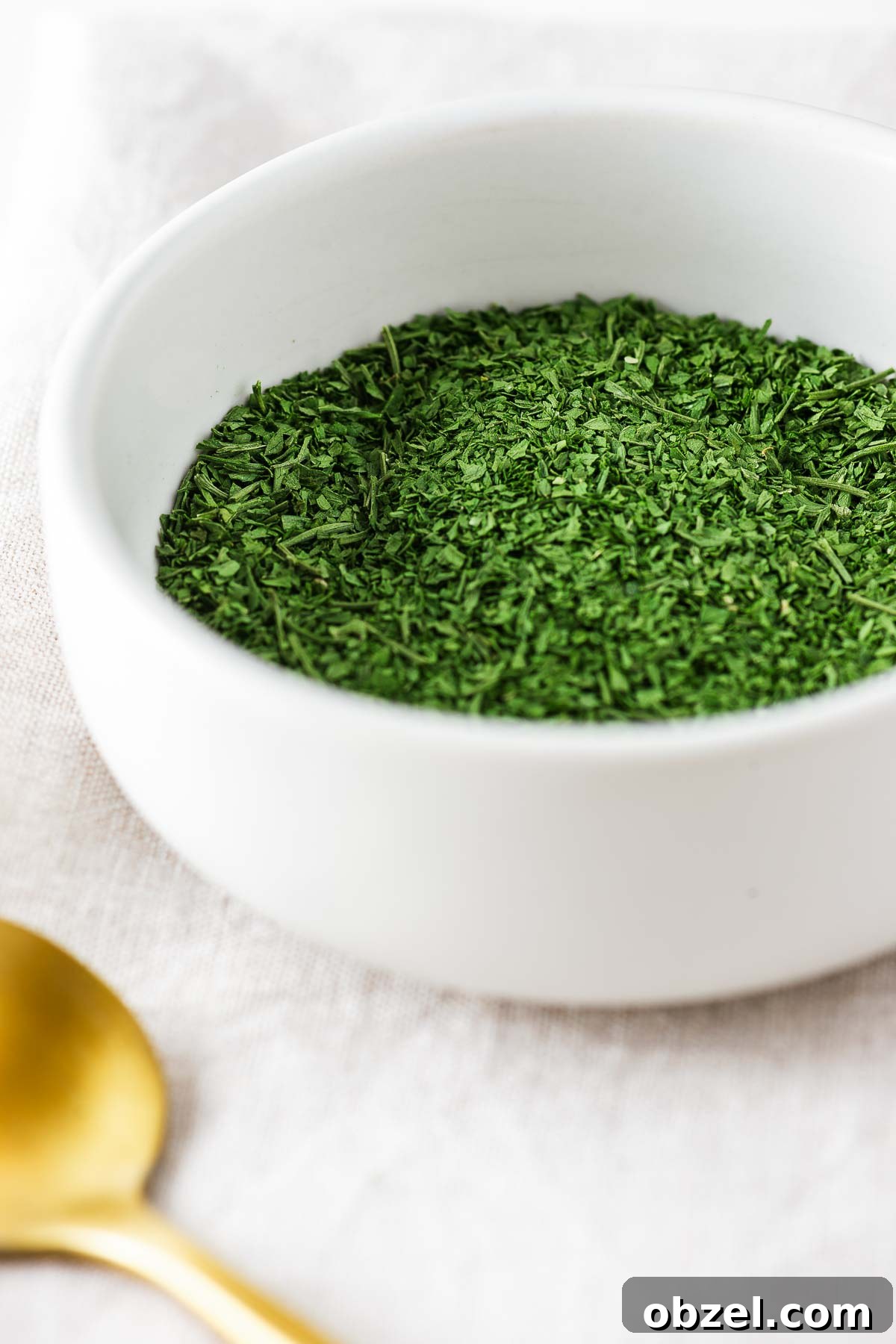
Ingredients & equipment for drying parsley
You don’t need a food dehydrator or any special equipment to dry parsley. All you need is:
- Fresh parsley (flat-leaf or curly)
- A baking tray or cookie sheet
- Parchment paper (optional but helpful)
- A clean towel or salad spinner to remove moisture
- An airtight container for storage
Choose bright green parsley, rinse it thoroughly to remove dirt, and dry it well before drying. You can leave tender stems attached; they add flavour and can be crushed with the leaves later.
Different ways to dry parsley
There are several effective ways to dry parsley at home:
- Oven drying (fast and reliable)
- Air drying (slow, low-tech)
- Air fryer (fast but requires close attention)
- Food dehydrator (ideal if you have one)
- Sun drying (takes days and can fade the leaves)
My preferred method is oven drying because it’s quick and keeps the leaves green when done correctly. Below are summaries of the other methods so you can choose what suits you.
Air drying small bundles of parsley
To air dry, tie small bunches by the stems and place them into a paper bag with a few holes for ventilation, or hang them upside down in a warm, dry, well-ventilated room. Smaller bundles dry faster. Expect anywhere from one to three weeks depending on humidity and temperature.
Use an air fryer to dry parsley
An air fryer works well for small amounts. Spread parsley in a single layer, weigh it down with a rack so the leaves don’t blow around, and set the temperature to about 350°F (180°C). Check after three minutes and then every minute until the leaves crumble easily. Be careful—parsley can burn quickly in an air fryer.
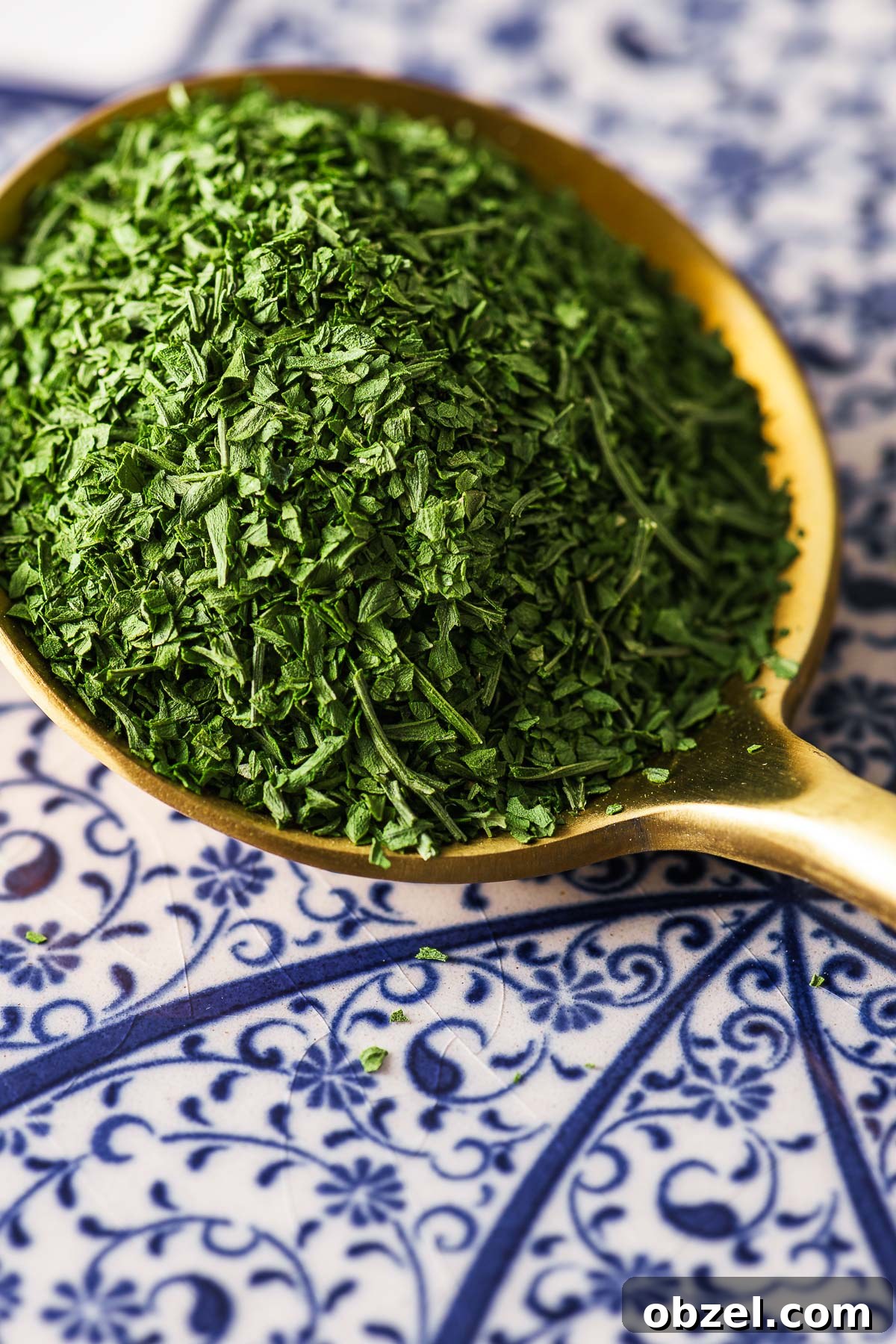
How to dry parsley in the oven
Oven drying is simple and fast. Follow these three steps for consistent results:
- Step 1:Clean the parsley
- Step 2:Arrange the parsley on a baking tray
- Step 3:Bake in a warm oven until crumbly
Step 1: Clean the parsley
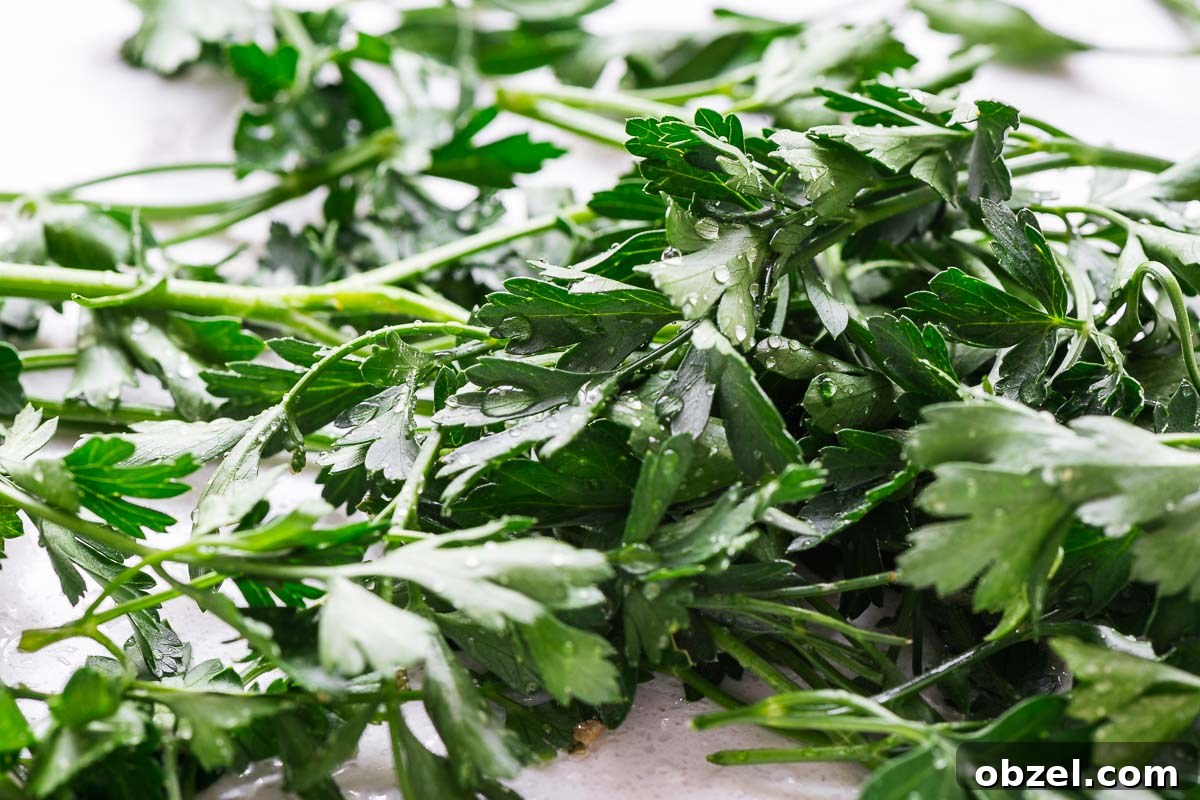
Rinse parsley under cold water to remove grit. Trim away any limp or browned leaves and stems. Use a clean kitchen towel, paper towels, or a salad spinner to remove as much surface moisture as possible—excess water lengthens drying time and can encourage mould.
Step 2: Arrange the parsley on a baking tray
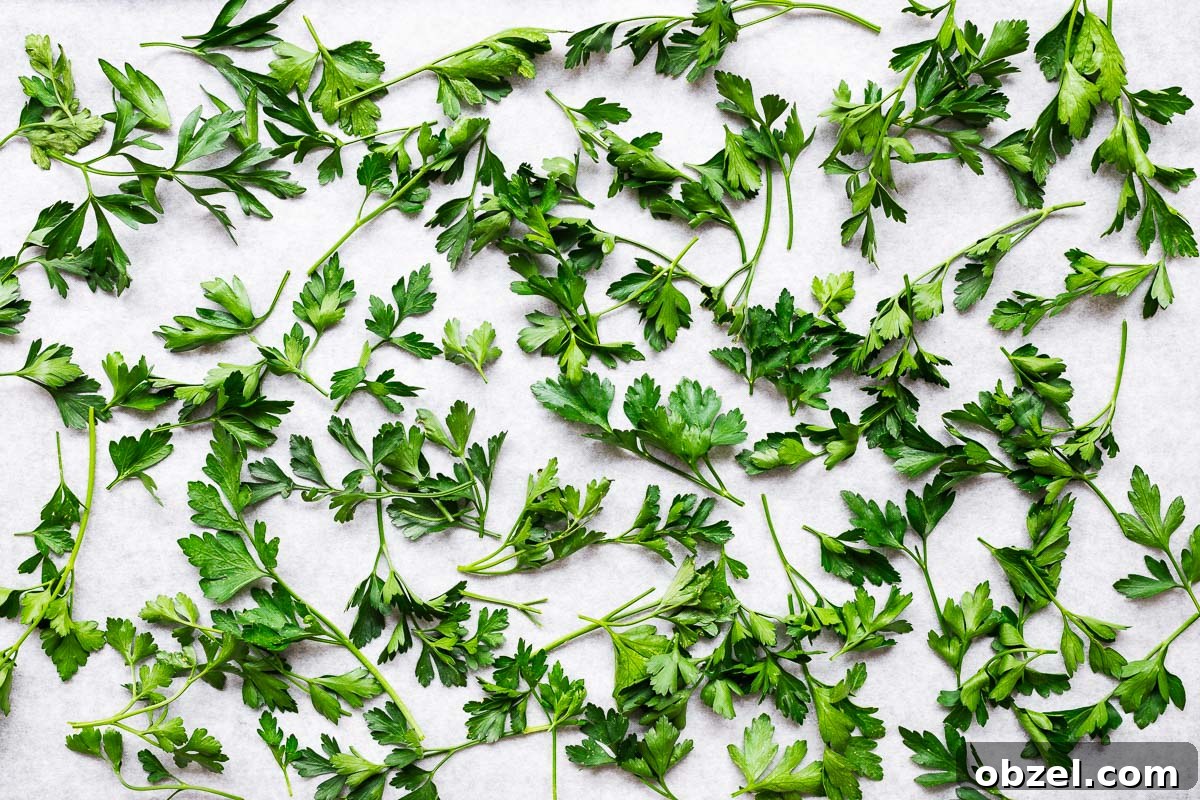
Line a baking sheet with parchment paper and spread the parsley leaves out in a single layer with a little space around each piece. You can include tender stems; they dry along with the leaves and add flavour if crushed later.
Step 3: Bake in a warm oven until crumbly
Preheat the oven to the lowest temperature—about 170°F (75°C) on a fan (convection) setting. If your oven has no fan option, set it to roughly 200°F (95°C). Place the tray in the centre of the oven and check after 15–20 minutes. The parsley is ready when it crumbles easily between your fingertips but still retains a green colour. If it’s still slightly damp, return it for another 5 minutes and recheck frequently to avoid browning.
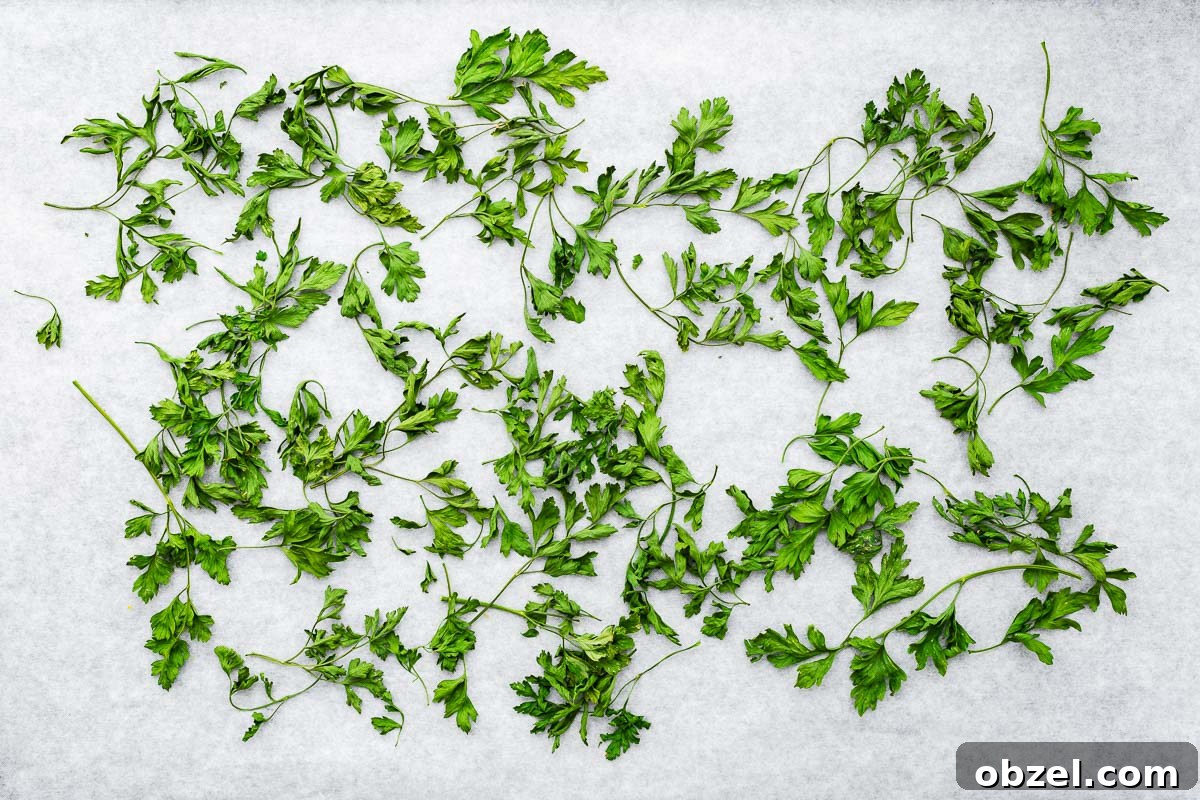
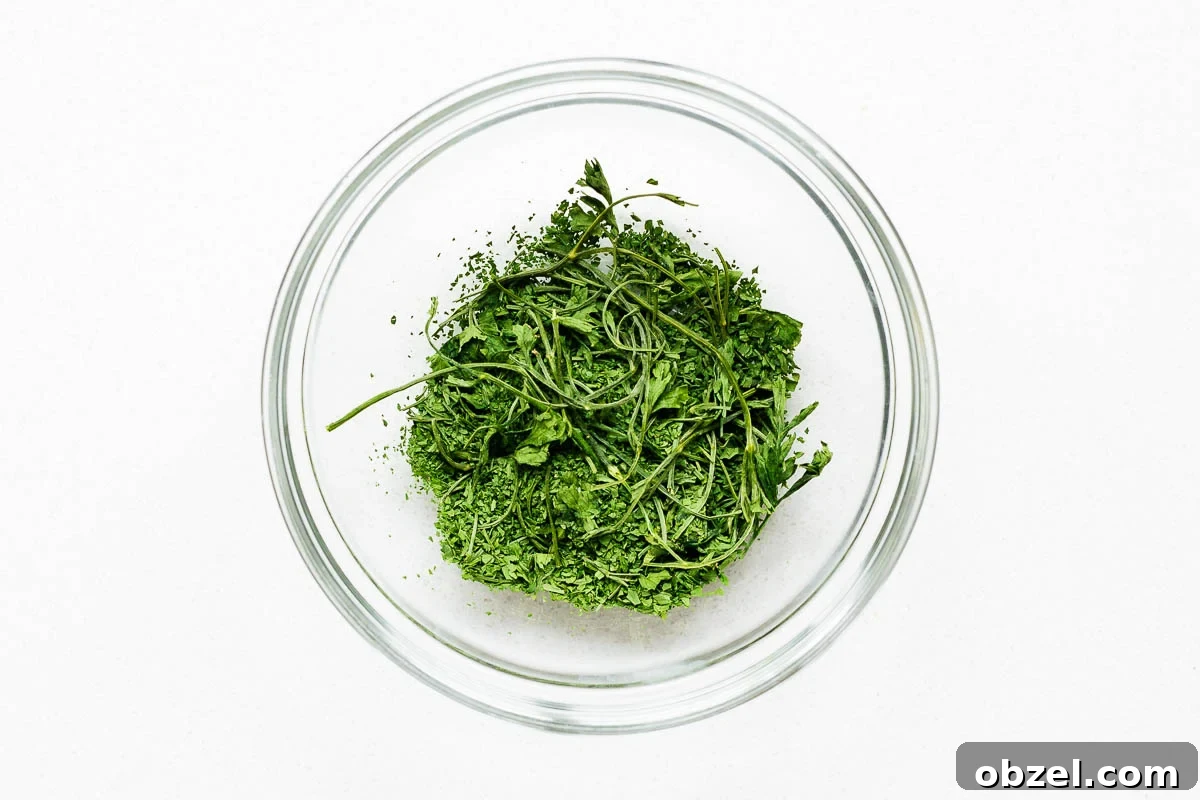
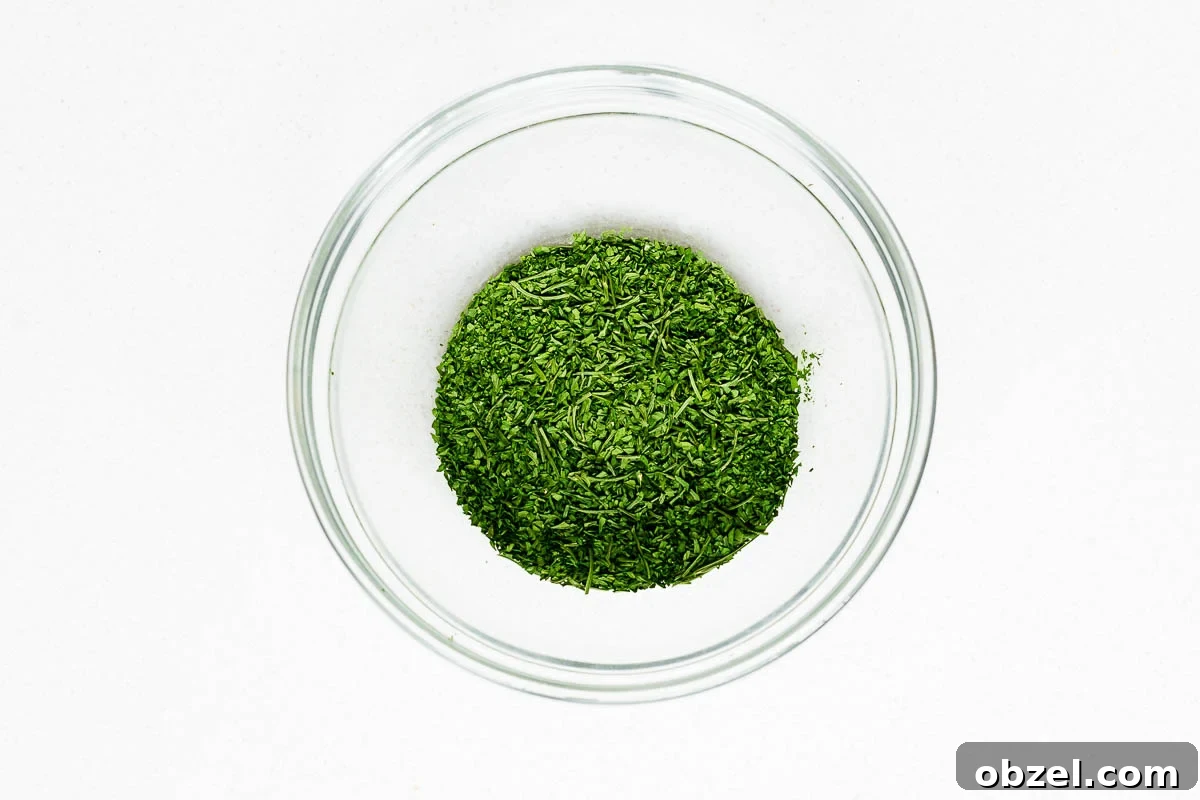
Let the parsley cool, then crumble it with your fingers into coarse flakes. Remove any thick stems that don’t break down. For a finer texture, rub the dried parsley through a mesh strainer or grind it lightly in a mortar and pestle.
How to store dried parsley
Store dried parsley in an airtight jar or container in a cool, dark place. Properly dried parsley will keep its flavour for up to six months. If any pieces feel moist or you notice mould, discard them—thorough drying is key to safe storage.
How to use homemade dried parsley
Dried parsley is versatile: use it wherever you would use store-bought dried parsley. It works well in seasoning blends, salad dressings, dips, soups, stews, and marinades. Remember dried herbs are more concentrated than fresh—use roughly one teaspoon of dried parsley to replace one tablespoon of fresh.
Quick parsley vinaigrette:
- 1½ cups olive oil
- ½ cup wine vinegar (red or white)
- 1 teaspoon dried parsley
- 1 teaspoon Dijon mustard
- ½ teaspoon salt
- 1 clove garlic, minced
Combine in a jar, shake well, and drizzle over greens or new potatoes.
How to Dry Parsley in the Oven
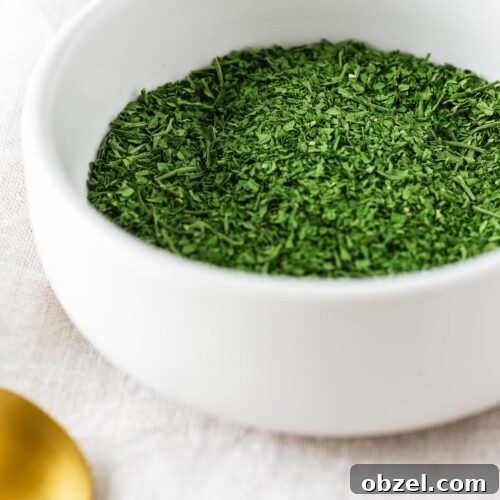
Drying parsley in the oven is an easy way to preserve excess fresh parsley. A small bunch (about 30 g) yields roughly a heaped tablespoon of dried parsley.
Prep time: 5 mins · Cook time: 20 mins · Total: 25 mins
Ingredients
- 1 bunch flat-leaf parsley
Instructions
- Preheat the oven to 170°F (75°C) if using a fan/convection setting, or to the lowest temperature available.
- Wash the parsley, remove any brown bits, and dry thoroughly with a towel or salad spinner.
- Arrange parsley in a single layer on a parchment-lined baking sheet.
- Place in the oven and check after 15–20 minutes. The parsley is done when it crumbles easily and remains green. If still damp, return for 3–5 minute intervals until dry.
- Cool, then crumble with your fingers and remove any large stems. Optionally pass through a fine sieve for a finer texture.
- Store in an airtight container in a cool, dark cupboard for up to six months.
Notes
- This method works with both flat-leaf and curly parsley; flat-leaf tends to have a stronger flavour.
- Ensure parsley is completely dry before storing to prevent mould.
If you enjoyed this method, leave a note about how you used your dried parsley—it’s a great way to get more ideas for preserving and using fresh herbs all year round.