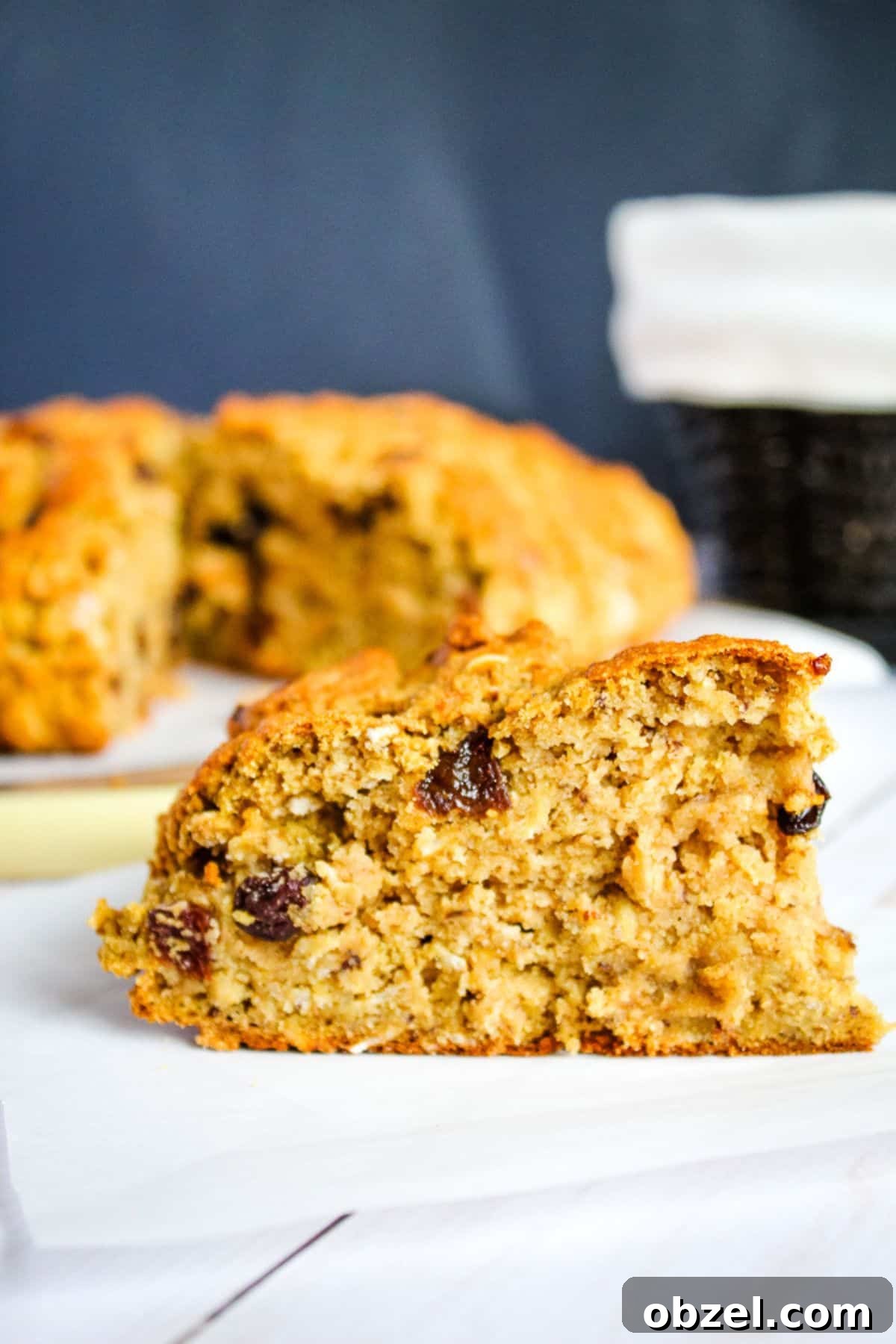
You do not have to be Irish to enjoy a warm loaf of gluten-free Irish soda bread. This rustic quick bread is simple, hearty, and wonderfully practical, especially when you want homemade bread without yeast, kneading, or long rising times. With a few pantry ingredients, you can make a tender, satisfying loaf that is perfect for St. Patrick’s Day or any cozy meal throughout the year.
This is a true quick bread: mix, shape, and bake. Baking soda and dairy-free buttermilk give the loaf its lift, while raisins, oats, and a touch of cinnamon add a classic, comforting flavor. The result is a beautifully domed bread with a crisp crust, a soft crumb, and just enough sweetness to make every slice feel special.
Table of Contents
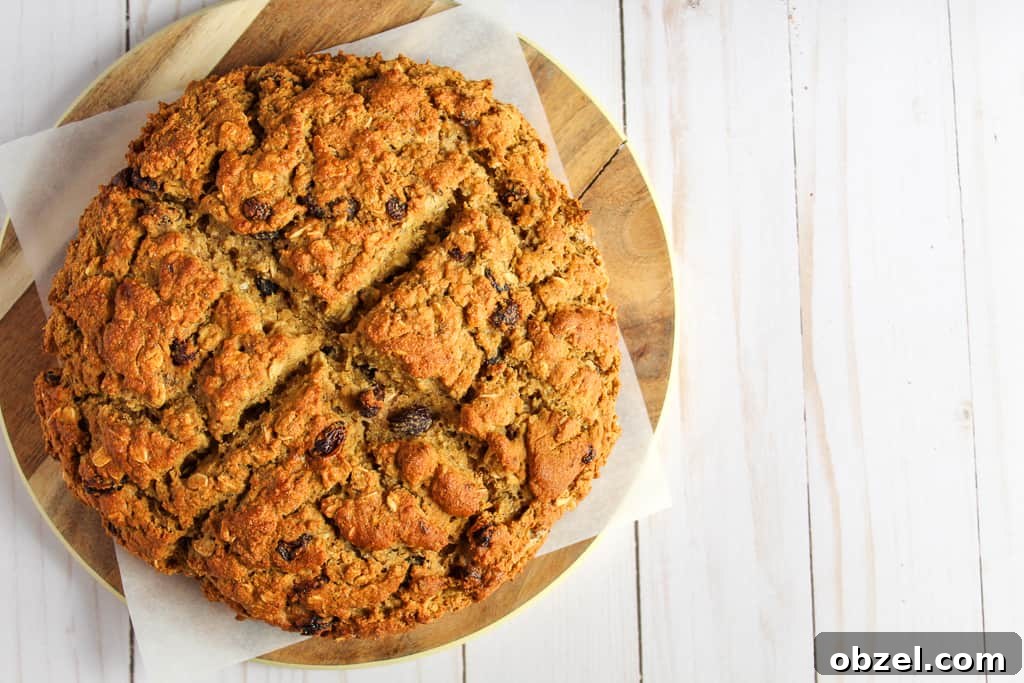
Whether you are baking to honor Irish tradition or simply need a reliable gluten-free bread recipe, this loaf is easy to love. It has a gently sweet flavor, a hearty texture, and raisins for a familiar soda bread touch. Serve it warm with butter, enjoy it with soup, or slice it for breakfast with jam or honey.
What is Traditional Irish Soda Bread?
Irish soda bread is a rustic quick bread traditionally made with simple, affordable ingredients. Instead of yeast, it relies on baking soda and buttermilk to help the loaf rise. That means there is no proofing time and no complicated bread-making process.
Classic soda bread is known for its firm crust and dense but tender crumb. Before baking, the top is usually scored with a deep cross, which helps the loaf expand as it bakes and gives it its familiar appearance. This gluten-free version keeps the same quick-bread spirit while using a blend of gluten-free flours, oats, and flaxseed for structure and texture.
The bread is best served warm, especially with butter or alongside hearty soups, stews, corned beef, cabbage, or a simple breakfast spread.
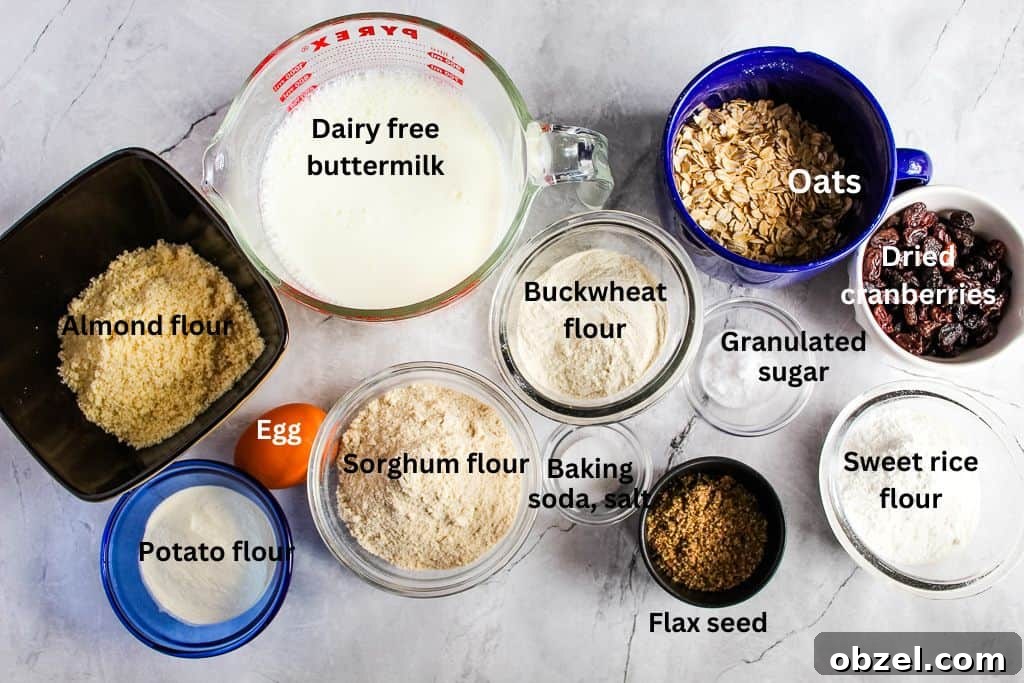
Ingredients & Substitutions
- Gluten-free flours: This recipe uses potato flour, light buckwheat flour, almond flour, sweet rice flour, and sorghum flour.
- Flaxseed: Flaxseed helps improve the texture and structure of the loaf. Chia seed or whole psyllium husk may also be used, though results can vary.
- Rolled oats: Oats add a hearty bite. Use certified gluten-free oats if needed.
- Granulated sugar: A small amount of sugar adds light sweetness without making the bread taste like cake.
- Cinnamon: Cinnamon adds warmth and pairs well with raisins.
- Baking soda: This is the leavening agent that gives Irish soda bread its name.
- Salt: Salt balances the flavor of the bread.
- Raisins: Raisins add sweetness and a traditional touch. Cranberries or golden raisins can also work.
- Dairy-free buttermilk: This is made by combining plant-based milk with white vinegar or lemon juice.
- Egg wash: The egg and water mixture gives the top of the loaf a golden finish. It can be omitted if preferred.
For the most consistent results, use the exact flours listed in the recipe. Gluten-free flours behave differently from one another, so changing the blend may affect the final texture.
Exact measurements and full instructions for this gluten-free Irish soda bread are included in the recipe card below.
Printable Gluten-Free Irish Soda Bread Recipe Card
Ingredients
- ¼ cup potato flour (45 grams)
- ⅓ cup light buckwheat flour (55 grams)
- ⅔ cup almond flour (70 grams)
- ½ cup sweet rice flour (80 grams), plus more for dusting the baking sheet
- ¾ cup sorghum flour (100 grams)
- ½ cup raisins
- 2 tbsp whole flaxseed
- 1 cup rolled oats (90 grams)
- 3 tbsp granulated sugar
- ½ tsp cinnamon
- 2 tsp baking soda
- 1 tsp salt
- 2 cups dairy-free buttermilk (2 cups plant-based milk + 2 tbsp white vinegar or lemon juice)
- 1 egg, for brushing on top
- 1 tbsp water, for brushing on top
Instructions
- Preheat the oven to 375°F. Grease a baking sheet with vegan butter or pan spray, then dust it lightly with sweet rice flour.
- Make the dairy-free buttermilk by mixing 2 cups of plant-based milk with 2 tbsp white vinegar or lemon juice. Stir and let it sit for about 5 minutes.
- In a large bowl, whisk together the potato flour, buckwheat flour, almond flour, sweet rice flour, and sorghum flour. Add the raisins and stir until coated in flour.
- In a medium bowl, combine the flaxseed, oats, sugar, cinnamon, baking soda, and salt. Add this mixture to the flours and stir well.
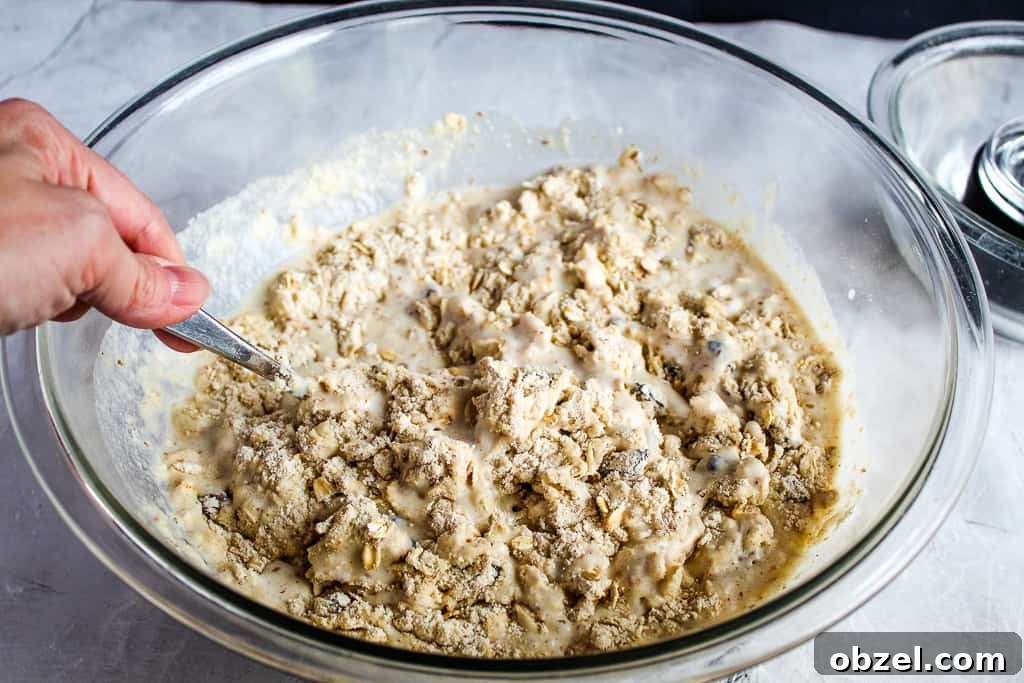
- Pour in the dairy-free buttermilk and mix gently until the dough is moist and fully combined.
- Scrape the dough onto the prepared baking sheet. Shape it into a round loaf about 10 inches wide and 3 inches tall. Cut a deep cross into the top with a sharp knife.
- Whisk the egg with 1 tbsp water, then brush the mixture over the top of the loaf.
- Bake for 50 to 60 minutes, until the crust is deep brown and the bottom sounds hollow when tapped.
Notes
- For best results, weigh the ingredients that include gram measurements.
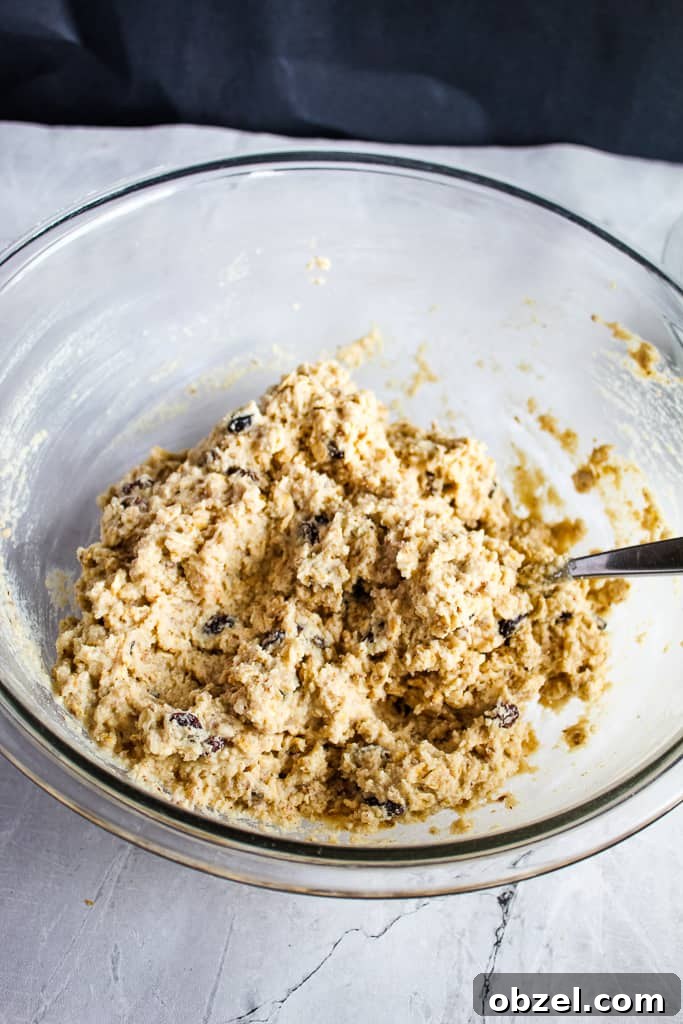
- The dough will look more like thick batter than traditional bread dough.
- Use a rubber spatula or slightly damp hands to shape the loaf.
- Let the bread cool on the pan for 5 minutes before transferring it to a wire rack.
Nutrition
Step-by-Step Method
This bread has the cozy flavor of a lightly sweet cinnamon raisin loaf, but with the sturdy texture of soda bread. It is substantial enough for a snack, simple enough for a weekday, and festive enough for a holiday table. For the best gluten-free Irish soda bread, measure carefully and avoid overmixing.
A digital kitchen scale is recommended for measuring the flours. Gluten-free baking is more consistent when ingredients are weighed instead of scooped by volume.
Step 1: Preheat the Oven
Preheat the oven to 375ºF. Grease a baking sheet with vegan butter or pan spray, then dust it lightly with sweet rice flour to help prevent sticking.
Step 2: Make the Buttermilk
Combine 2 cups of plant-based milk with 2 tbsp white vinegar or lemon juice. Stir and set aside for about 5 minutes. The mixture should thicken slightly.
Step 3: Measure & Mix Flour
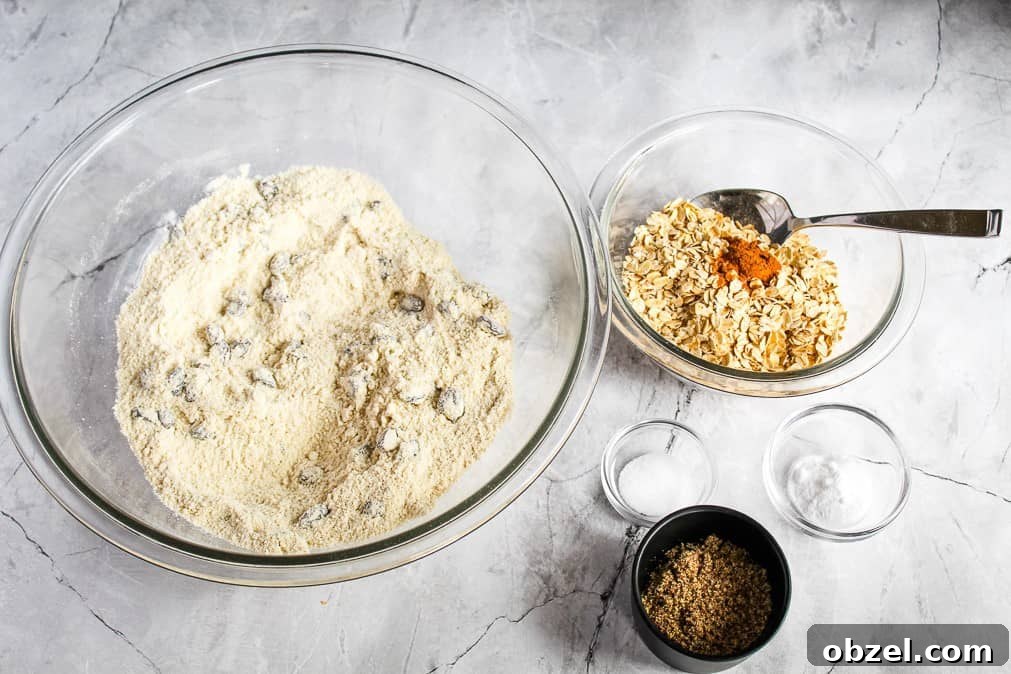
In a large bowl, whisk together 45 grams potato flour, 55 grams light buckwheat flour, 70 grams almond flour, 80 grams sweet rice flour, and 100 grams sorghum flour. Add ½ cup raisins and stir to coat them in the flour. This helps distribute the raisins evenly through the loaf.
Step 4: Prepare the Remaining Dry Ingredients
In a medium bowl, mix 2 tbsp flaxseed, 1 cup rolled oats, 3 tbsp sugar, ½ tsp cinnamon, 2 tsp baking soda, and 1 tsp salt. Add this mixture to the flour bowl and stir until everything is evenly combined.
Step 5: Mix the Wet & Dry Ingredients
Pour the dairy-free buttermilk into the dry ingredients. Use a rubber spatula to mix gently until the dough is fully moistened. Do not overmix. The mixture will be thick and sticky, closer to a heavy batter than a traditional kneaded bread dough.
Step 6: Shape the Dough
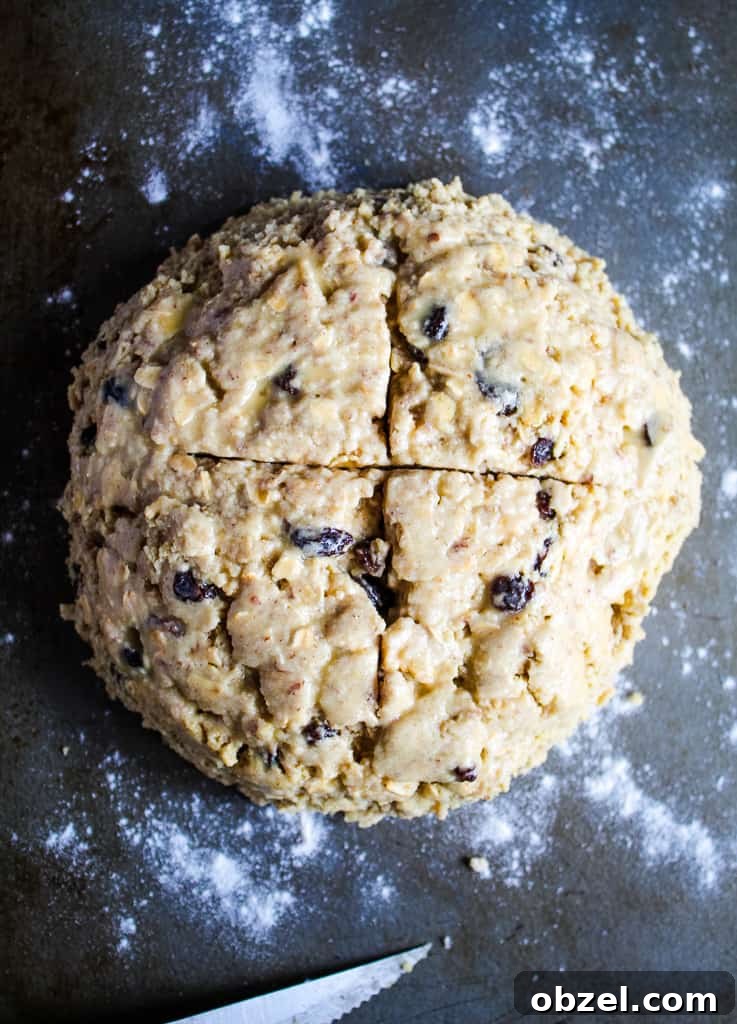
Scrape the dough onto the prepared baking sheet. With a rubber spatula or slightly damp hands, shape it into a round loaf about 10 inches wide and 3 inches tall. Use a sharp knife to cut a deep cross into the top.
Step 7: Egg Wash the Dough
Whisk 1 egg with 1 tbsp water, then brush the mixture over the top of the loaf. The egg wash is optional, but it helps create a more golden, polished crust.
Step 8: Bake
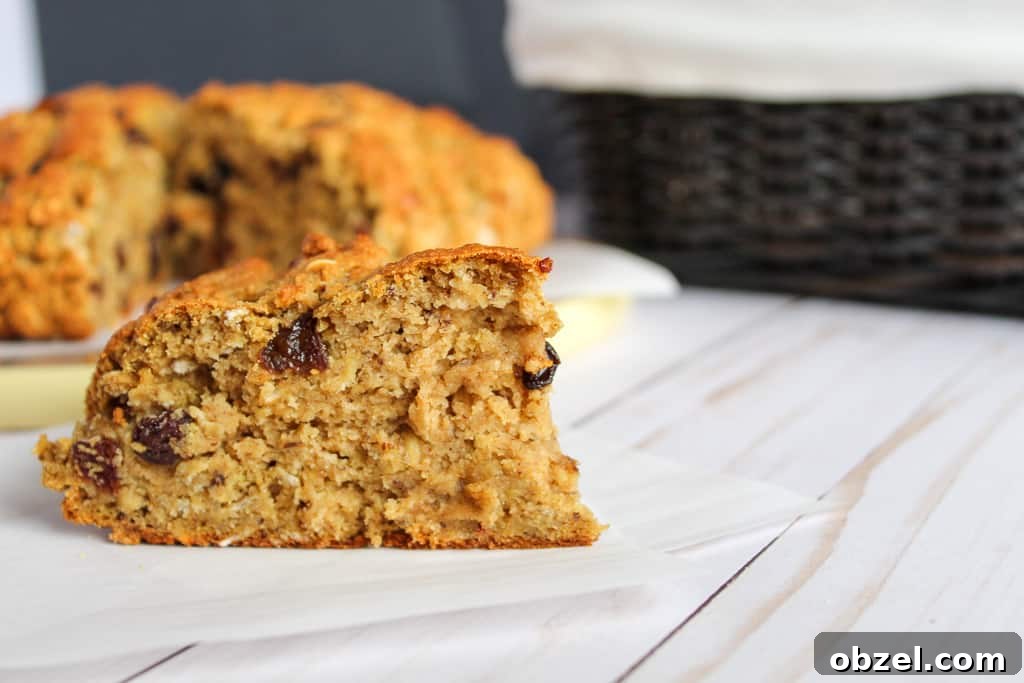
Bake for 50 to 60 minutes, or until the crust is dark brown and the bottom sounds hollow when tapped. Let the loaf rest briefly before moving it to a wire rack to cool.
Common Mistakes & Fixes
Gluten-free quick bread is straightforward, but a few small details can make a big difference. Here are the most common problems and how to avoid them.
The Bread is Dense or Gummy
A dense or gummy loaf may be caused by inactive baking soda, buttermilk that did not react properly, too much moisture, or underbaking. Make sure your baking soda is fresh and that the bread bakes long enough to set in the center.
Quick breads are generally done when the internal temperature reaches 200ºF to 205ºF. If you are unsure, check the center with a kitchen thermometer. Also remember that oven temperatures can vary, so an oven thermometer can help you understand whether your oven runs hot or cool.
Check your baking soda before baking. Add a few drops of vinegar or lemon juice to a small amount of baking soda. If it fizzes quickly, it is active. If it does not react, replace it before making the bread.
Bitter Taste
A bitter or metallic flavor usually means there was too much baking soda or it was not evenly mixed into the dry ingredients. Measure carefully and whisk the dry mixture well before adding the buttermilk.
The Loaf Collapsed
A collapsed loaf can happen when the dough has too much liquid, the batter is overmixed, or the bread is removed from the oven too early. Avoid opening the oven door before the loaf has had time to rise and set. Use the oven light if you want to check on it during baking.
Careful measuring is especially important in gluten-free baking. When gram measurements are provided, weighing the ingredients gives the most reliable outcome.
Serving Ideas
Gluten-free Irish soda bread works well with both sweet and savory toppings. Serve warm slices with butter for a classic option, or pair the bread with corned beef and cabbage, Irish stew, vegetable soup, or a simple dinner spread.
For breakfast, try it with honey, jam, peanut butter, or eggs. Because the loaf is sturdy, it also holds up well on a cheeseboard or as a base for toppings. Slightly stale slices can be toasted, turned into French toast, or cut into cubes and baked into lightly sweet croutons.
Storage & Freezing Guide
Store this bread properly to keep the texture as fresh as possible.
Keep the loaf wrapped in plastic wrap or stored in an airtight container at room temperature for 3 to 4 days. After that, it may become dry or firm. Toasting helps bring back a better texture.
Refrigeration can dry out bread, but if necessary, it can be refrigerated for 3 to 4 days. Toast before serving.
To freeze, let the loaf cool completely. Wrap it tightly in plastic wrap, then place it in a freezer-safe bag or container for up to 2 months. Thaw at room temperature before slicing. You can also freeze individual slices with parchment paper between them, then toast directly from frozen.
Gluten-Free Irish Soda Bread FAQs
Here are answers to common questions about making gluten-free Irish soda bread at home.
Is Traditional Irish Soda Bread Gluten-Free?
Traditional Irish soda bread is not gluten-free because it is typically made with wheat flour. This version is adapted with gluten-free flours to suit gluten-free baking needs.
Why Don’t You Knead Soda Bread?
Soda bread is a quick bread, so it only needs to be mixed until the ingredients come together. In wheat-based quick breads, too much kneading can make the bread tough. In this gluten-free version, kneading is not needed because there is no gluten structure to develop.
How Do I Know When It’s Done Baking?
The loaf should have a deep golden-brown crust and a firm bottom that sounds hollow when tapped. For the most accurate check, use a thermometer. The center should read between 200ºF and 205ºF.
Time to Enjoy
This gluten-free Irish soda bread brings the comfort of a homemade loaf without the time commitment of yeast bread. There is no kneading, no proofing, and no waiting for dough to rise. Once the ingredients are measured, the process is simple and approachable.
The finished bread is rustic, tender, and flavorful, with raisins, oats, and a crisp crust that make it feel both wholesome and special. Serve it for St. Patrick’s Day, bring it to a gathering, or bake it whenever you want a dependable gluten-free quick bread for soups, breakfasts, snacks, or sharing around the table.
More Gluten-Free Quick Bread Recipes
If you enjoy the dense but tender texture of quick bread, try exploring other gluten-free loaves with cozy flavors, simple methods, and everyday ingredients. Quick breads are ideal when you want homemade baking without yeast or long rise times.
- Dairy-Free Brown Bread
- Pumpkin Bread
- Coconut Flour Banana Bread
- Savory Cassava Bread
- Flourless Cornbread
From breakfast slices to dinner sides, gluten-free quick breads are versatile, practical, and perfect for every season.
Did You Try This Recipe?
If you make this gluten-free Irish soda bread, enjoy it warm and share your thoughts in the comments. It is a simple loaf, but it brings plenty of comfort to the table.