Easy Preschool Projects to Do at Home
Keeping preschoolers engaged at home doesn’t require a lot of fancy supplies or complicated plans. Simple, open-ended activities encourage creativity, build fine motor skills, and turn ordinary days into opportunities for play and learning. Below are practical, tested ideas you can set up quickly using common materials.
Play Dough: A Classic Sensory Activity
Play dough is a staple for a reason. It supports hand strength, creativity, and cooperative play. Keep a small play-dough kit that’s easy to pull out:
- A clean tablecloth or placemat to protect surfaces
- Play dough stored in an airtight container to keep it soft
- Tools and toys such as rolling pins, cookie cutters, and plastic knives
Rotate colors and tools occasionally to keep the experience fresh. Encourage children to roll, pinch, and build — and join them sometimes to model new ideas like making a snake or pressing shapes into the dough.
Drawing with a White Crayon on Colored Paper
White crayon on colored paper offers a surprising and satisfying reveal. Give kids a variety of colored construction papers and white crayons or oil pastels. They can draw patterns, write their names, or make hidden messages that appear when paint is brushed over them. This simple twist adds a sensory and exploratory element to drawing.
Paper, Kid Scissors, and a Glue Stick
Sometimes the most open-ended tools are the best. A stack of paper, child-safe scissors, and a glue stick invites cutting, pasting, collage-making, and building. Let children practice snipping straight lines, cutting out shapes, and gluing pieces together to create pictures, faces, or abstract art. This activity strengthens hand coordination and fosters independent decision-making.
The Magic of an Empty Cardboard Box
An empty cardboard box is a blank canvas with endless possibilities. Kids can turn it into a house, a car, a rocket, or a shop. Provide markers, stickers, tape, and scraps of paper and let them transform the box. Cutting, coloring, and taping encourage imaginative play and problem-solving. Always supervise use of tools like scissors or box cutters.
Big-Scale Painting
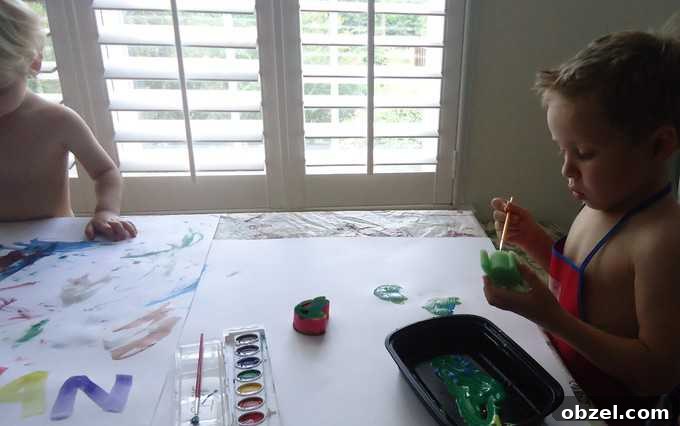
Lay out a large sheet of white paper on the floor or table and provide washable paints and brushes. Cover the area with an apron or old shirt, and let children explore color mixing and large arm movements. Big-scale painting is great for gross motor development and for children who enjoy expressive art. Consider providing rollers, sponges, and stampers for variety.
Reading and Singing Together
Books and songs are essential parts of a preschool routine. Read aloud daily—at bedtime, nap time, or during quiet moments—and choose books with colorful pictures and predictable rhythms. Singing simple songs and rhymes supports language development and memory. Keep a small basket of favorite books and a few song ideas handy for quick shared moments.
Outdoor Play and Neighborhood Time
Fresh air and neighborhood play are powerful for social and physical development. Short errands, backyard play, or visits with nearby families give children a chance to run, climb, and interact with peers. Playdates and casual outdoor time help children practice social skills in a low-pressure setting.
Practical Tips for Parents
- Rotate materials to maintain interest: introduce one or two new items each week.
- Designate a low-mess space for crafts and another for sensory play.
- Use clear storage so kids can see and choose their activities independently.
- Keep expectations flexible — sometimes the process is more valuable than the finished product.
- Supervise activities that involve small parts, scissors, or strong adhesives.
With just a few basic supplies and a bit of planning, you can create a regular rotation of easy, engaging projects that nurture creativity, fine motor skills, and a love of learning. These simple activities are perfect for rainy afternoons, quiet mornings, or anytime you want to turn ordinary moments into meaningful play.