Summary:
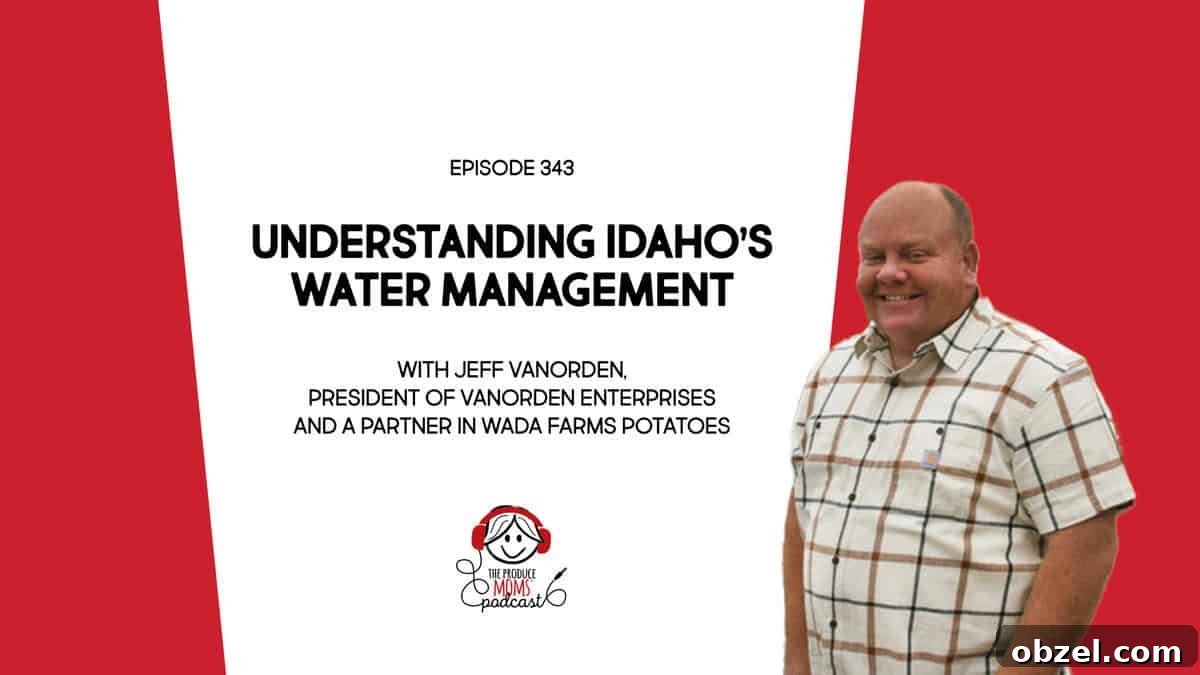
In this episode of the Produce Moms Podcast, host Lori Taylor speaks with third-generation Idaho farmer Jeff VanOrden about the central role water plays in modern agriculture. Their conversation explores how water availability and management shape planting decisions, crop quality, and the long-term viability of farms. Jeff shares his perspective on the practical and regulatory challenges farmers face, including water rights, drought pressures, and the need for measured, sustainable use of resources. The discussion highlights how potato growers in Idaho are adapting to changing conditions through conservation, improved irrigation practices, and careful planning, while also emphasizing the importance of consumer support for local produce. Overall, the episode underscores that responsible water stewardship is essential for sustaining agriculture, rural communities, and a reliable food supply.
Takeaways:
- Water is a crucial resource for agriculture, with particular importance in regions like Idaho where irrigation supports major crops.
- Potatoes are an affordable, versatile food that depends on reliable water supplies for consistent yield and quality.
- Water policy is complex and directly affects how farmers manage land, access irrigation, and plan for the future.
- Farmers are increasingly focused on sustainability and long-term resource management to protect their livelihoods and the environment.
- Drought and fluctuating water availability are ongoing challenges that require adaptive strategies from producers.
- Consumer awareness and support for local produce can influence agricultural practices and policy priorities.
- Effective sustainability involves measuring water use, improving efficiency, and investing in technologies that reduce waste.
- Collaboration among growers, local communities, policymakers, and conservation groups is essential to find balanced solutions for water allocation.
- Idaho potatoes remain an important part of American agriculture and food culture, reliant on well-managed water systems to thrive.
The conversation between Lori and Jeff makes clear that water management is not a single issue but a web of interconnected concerns. Water access affects crop rotation, input choices, and harvest planning. It also plays a role in supply chain reliability—from the field to processing facilities and ultimately to supermarket shelves. Farmers must weigh short-term weather variability against long-term trends and infrastructure limitations, often making difficult decisions about where and how to deploy limited water supplies.
Jeff describes how growers are taking practical steps to protect water resources while maintaining productivity. These measures include adopting irrigation practices that deliver water more precisely, monitoring soil moisture to avoid overwatering, and making incremental investments in technology that improve water-use efficiency. While such changes can require upfront costs and planning, many producers view them as necessary investments in resilience—helping farms remain viable through dry years and regulatory shifts.
Beyond on-farm practices, the episode highlights the role of policy and community-level planning in shaping outcomes for agriculture. Water rights, allocation schedules, and infrastructure maintenance all influence how water is distributed and prioritized. Constructive dialogue among stakeholders—farmers, local officials, conservation groups, and consumers—can help identify practical compromises that balance agricultural needs with environmental protection and urban demands.
Consumer behavior also matters. When buyers understand the resource challenges behind the foods they purchase, they can make choices that support sustainable production. This might mean choosing local or seasonally available produce, reducing food waste, or engaging with community-supported agriculture. In the case of Idaho potatoes, consumer appreciation for the crop helps sustain a market that enables growers to invest in long-term stewardship.
Ultimately, the episode calls for a balanced approach: maintaining productive agriculture while safeguarding water for future generations. The emphasis is on measured action—collecting data, improving efficiency, and working collaboratively—rather than quick fixes. By combining practical farm-level strategies with thoughtful policy and public awareness, communities can strengthen their water security and protect the agricultural systems that feed them.
Chapters:
00:00 Introduction to the Produce Moms Podcast
01:27 The Importance of Water in Agriculture
03:20 Meet Jeff VanOrden: A Third Generation Farmer
10:31 Understanding Water Issues in Idaho
13:50 The Impact of Water Policy on Farming
17:39 Balancing Supply and Demand in Potato Farming
22:35 Sustainability and Water Management
28:45 Closing Thoughts on Water and Agriculture