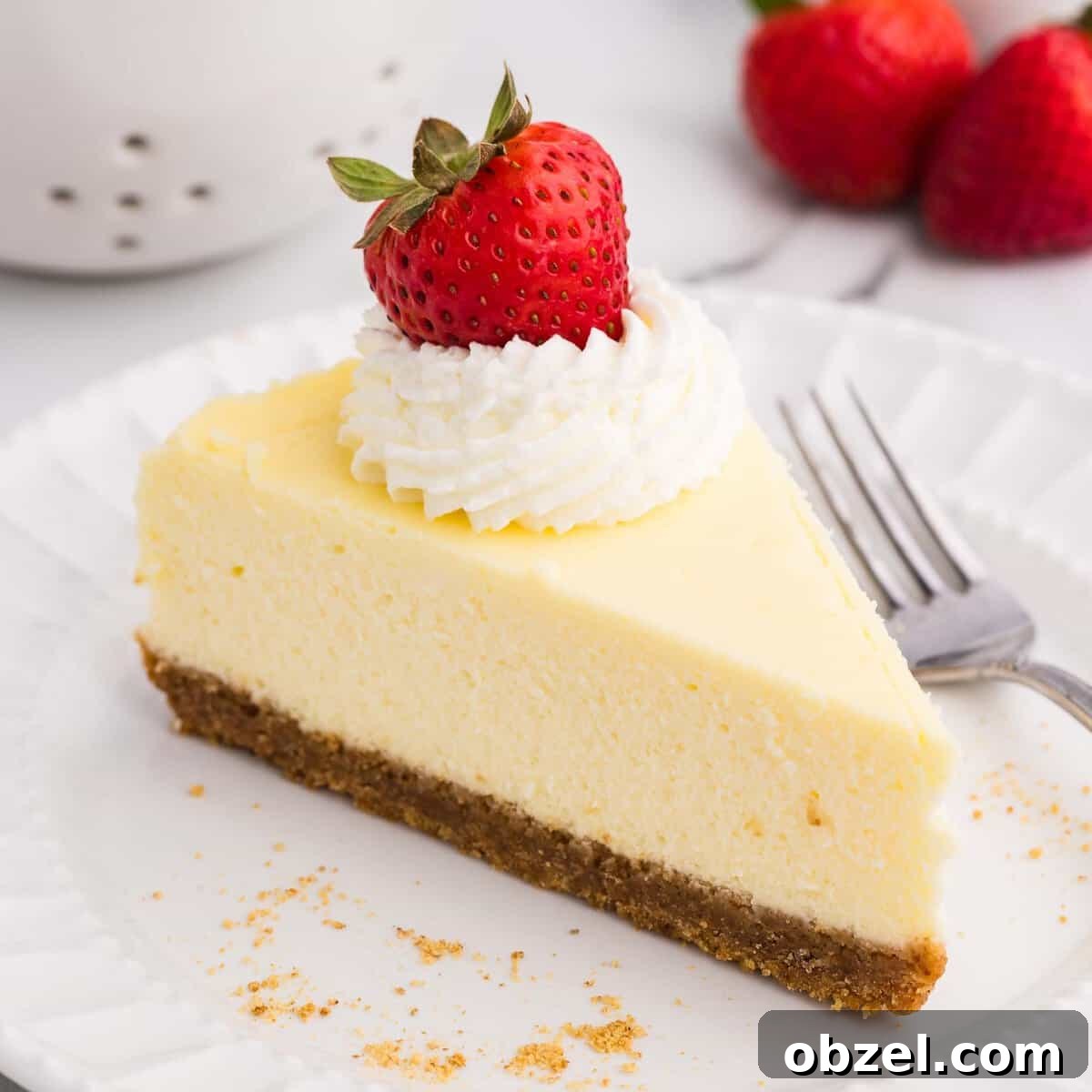
We tested this loaf pan cheesecake recipe more than 15 times to create a smooth, creamy, bakery-style cheesecake with a crack-free top. It bakes in a standard loaf pan, needs no springform pan, and slices beautifully every time.
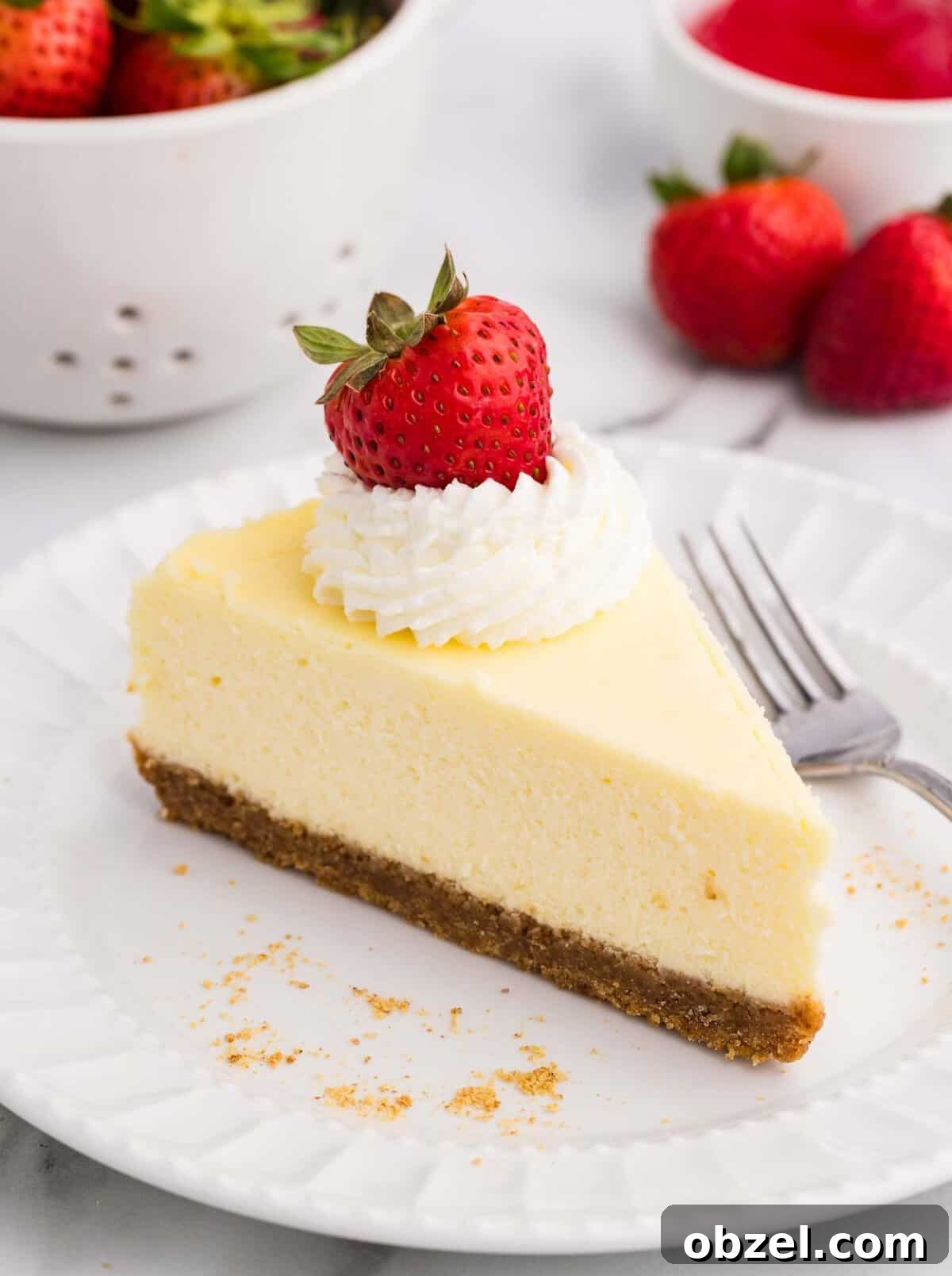
Reader Review ★★★★★
“My husband said it was the best cheesecake he’s ever had. I’ve never made it in a loaf pan before, only in a springform pan. I’m converted. So delicious and creamy!”

Truly the Perfect Cheesecake
A few months ago, I asked my recipe assistant Rachel, a trained pastry chef, to help develop the perfect loaf pan cheesecake. The goal was simple, but getting there took a lot of testing: the cheesecake needed to be thick and tall, creamy but sturdy, and easy to slice without collapsing in the center.
- Thick and tall in a standard loaf pan
- Firm enough to slice, yet rich and creamy
- Smooth, pale, and crack-free on top
- Bakery-style slices without a springform pan
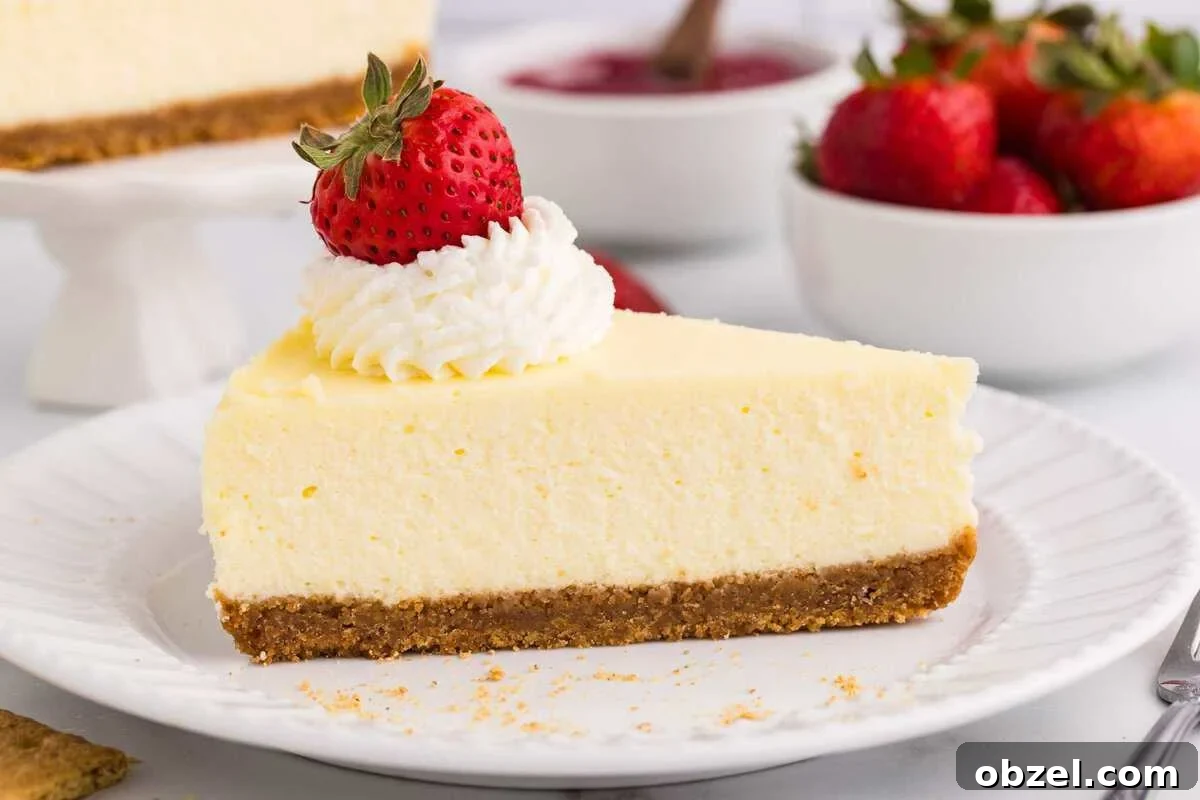
After many rounds of testing, we landed on a method that delivers everything you want in a classic cheesecake: a buttery graham cracker crust, a velvety filling, a clean ivory top, and neat slices that look beautiful on a dessert plate. This small-batch cheesecake is ideal when you want a special dessert without making a full-size cake.
Why You Will Love This Loaf Pan Cheesecake
- No springform pan needed: This cheesecake bakes in a regular 8.5 x 4.5-inch loaf pan.
- Pale, smooth top: The foil trick helps prevent browning, giving the cheesecake a bakery-style finish.
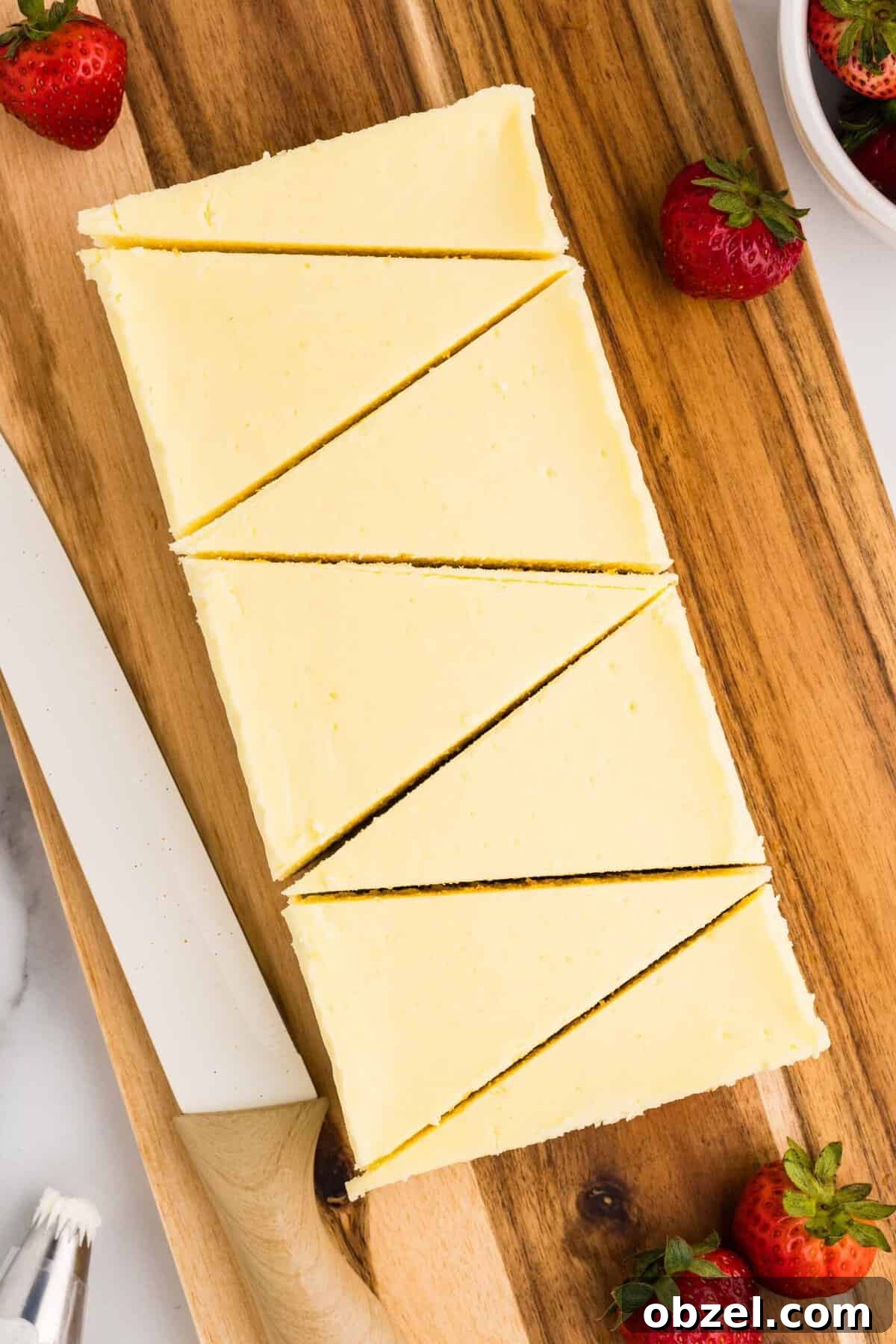
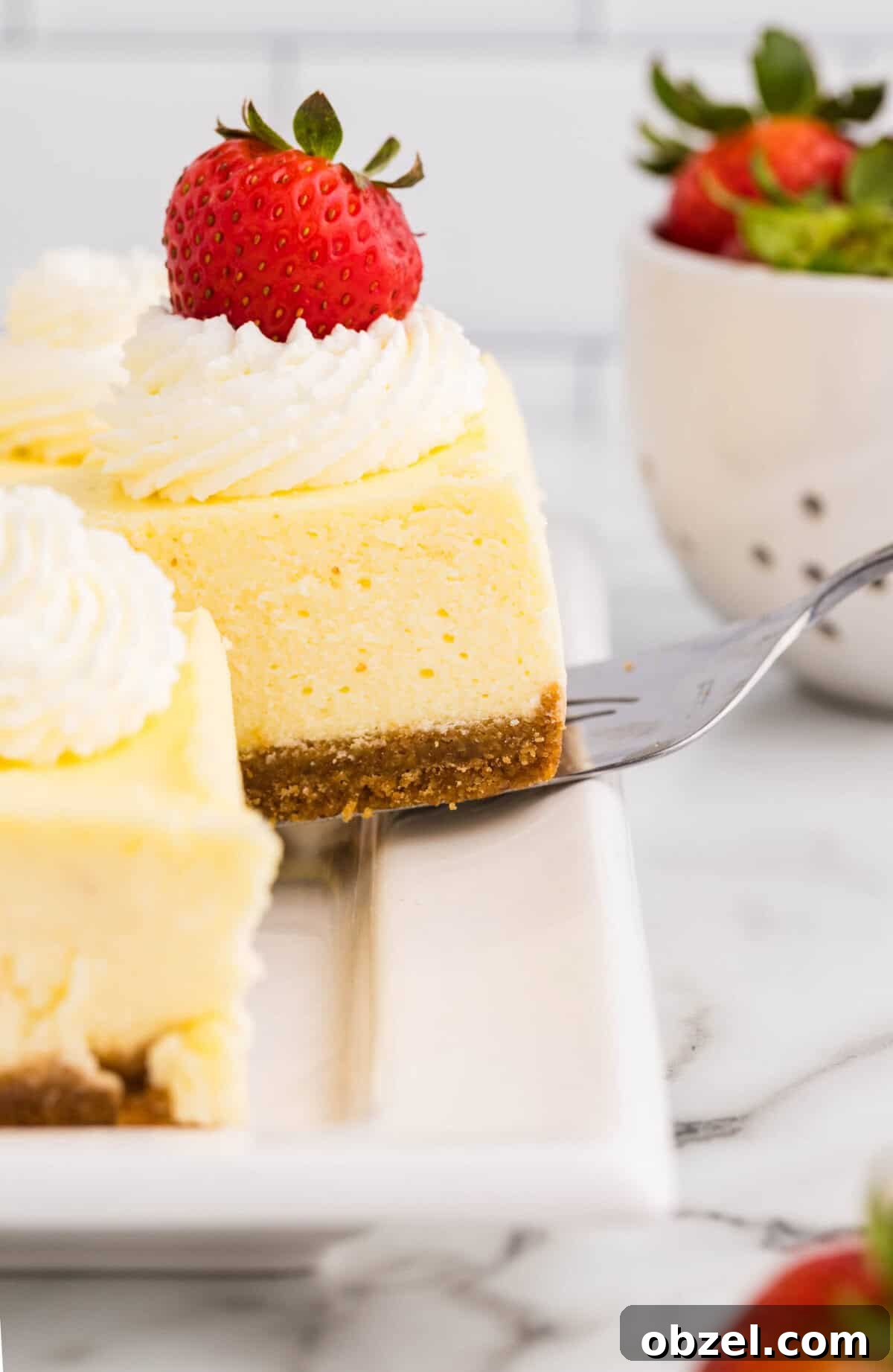
- Clean slices: The filling is creamy but stable, so each piece holds its shape.
- Small-batch size: A loaf pan cheesecake is perfect for small gatherings, birthdays, date nights, or make-ahead desserts.
- Reliable water bath method: The gentle heat helps prevent cracks and keeps the texture silky.
What You Need
Ingredient Notes & Substitutions
Room-temperature ingredients are essential: Cream cheese, sour cream, heavy cream, and eggs should all be at room temperature before mixing. Cold ingredients can create lumps in the batter, and overmixing to remove those lumps may add too much air, which can lead to cracks.
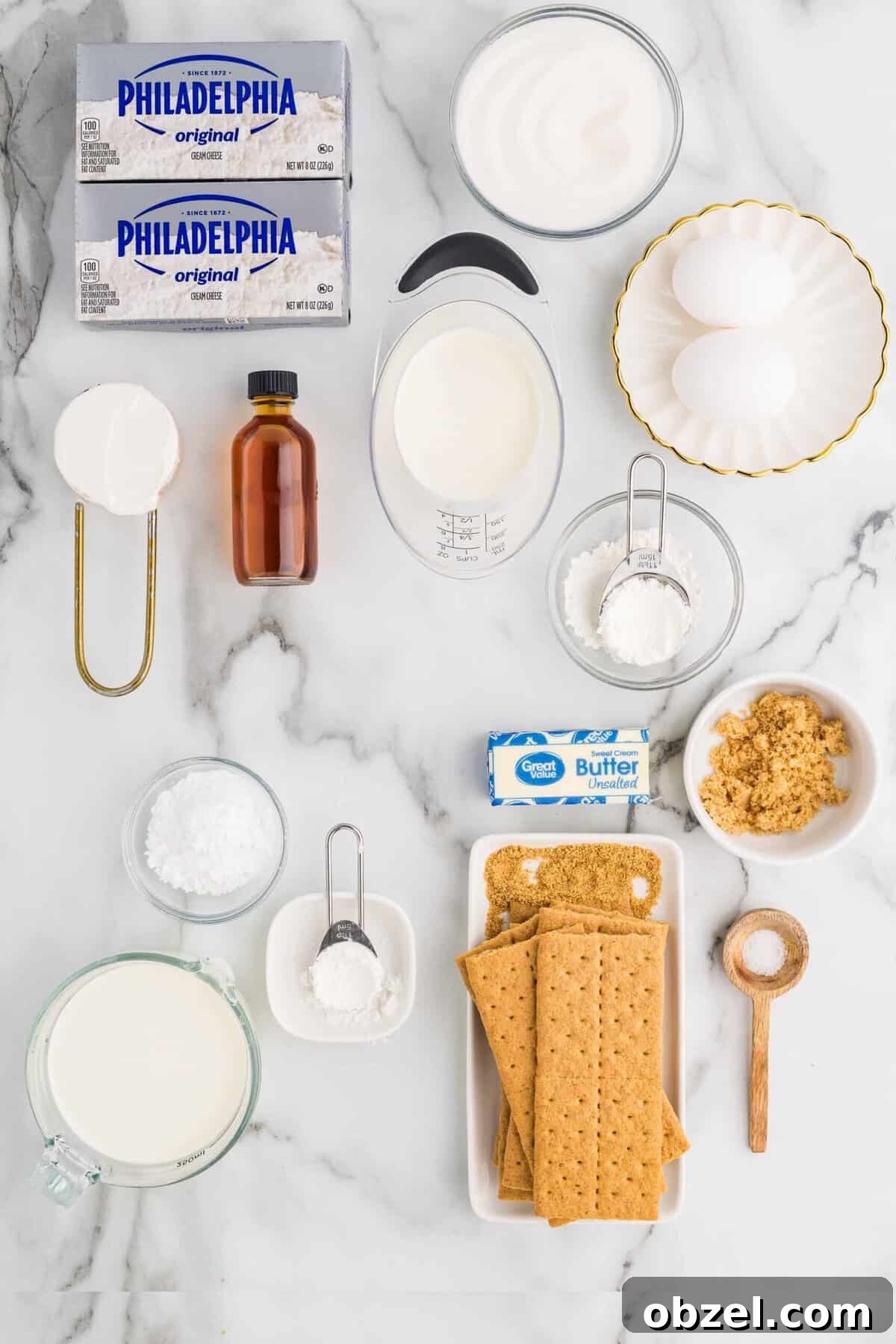
- Full-fat cream cheese: Use brick-style cream cheese, not the spreadable kind in a tub. Let it soften fully for the smoothest batter.
- Cornstarch: A tablespoon in the cheesecake filling helps stabilize the texture so the slices cut cleanly. A teaspoon in the whipped cream helps it stay firm for piping.
- Graham crackers: You will need about 7 full rectangles, or 14 squares, crushed into fine crumbs. Use a food processor or a zip-top bag and rolling pin.
- Sour cream and heavy cream: Together, they create a silky filling that is rich without becoming overly heavy.
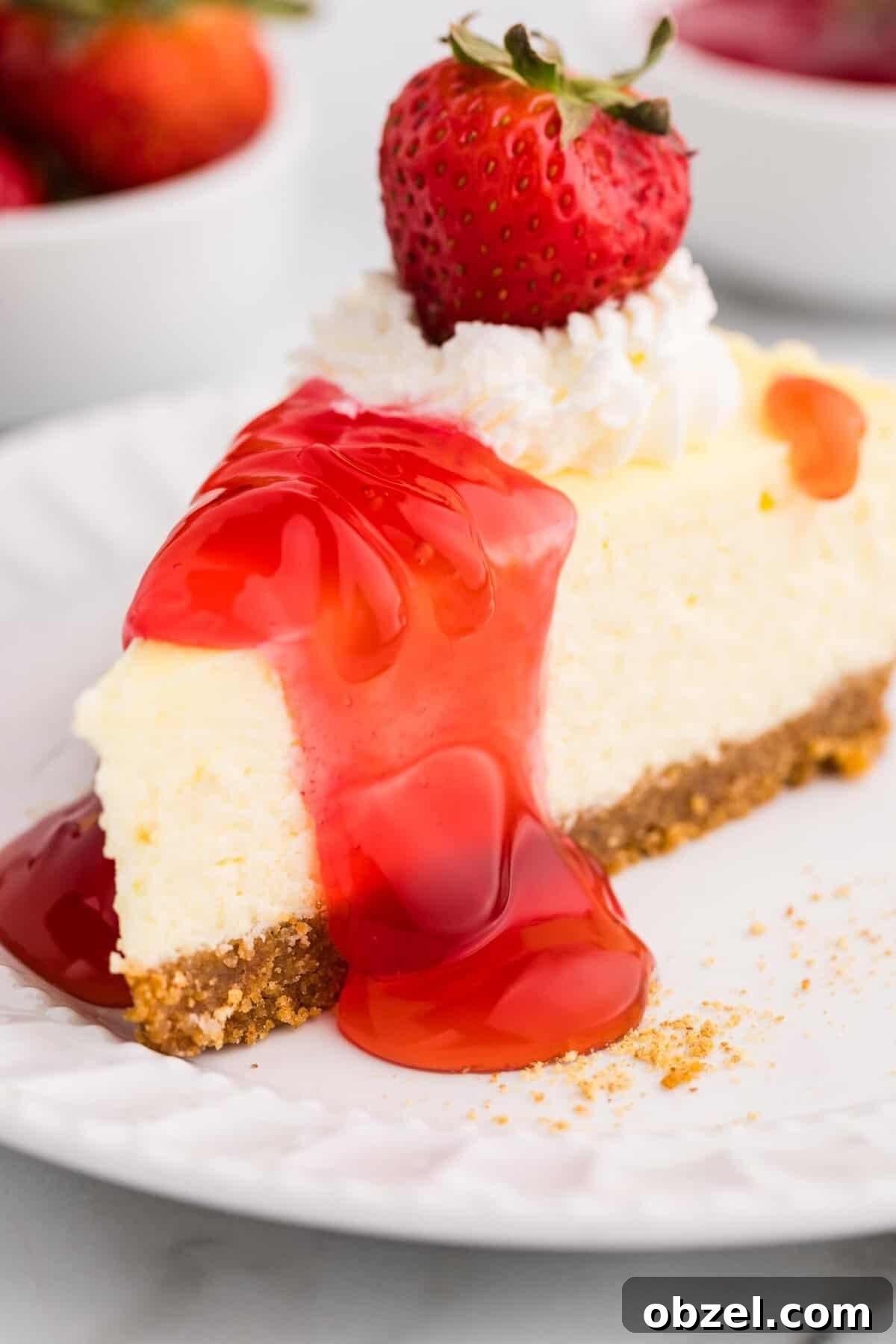
- Fresh strawberries and glaze: Strawberries make a classic topping. Use sliced fresh berries, a simple strawberry glaze, or leave the cheesecake plain.
How to Make Loaf Pan Cheesecake
Prep the Pan & Crust
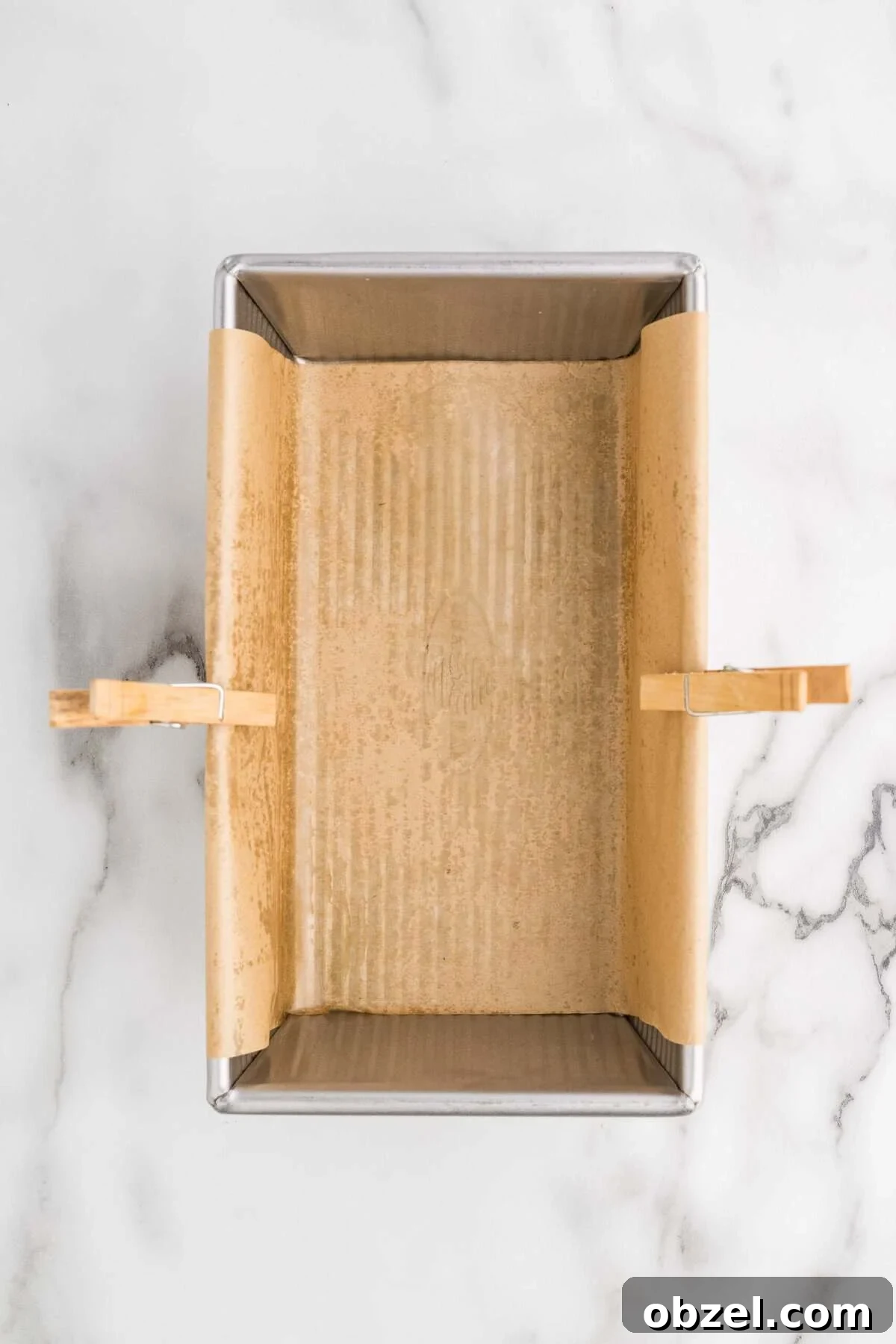
Grease and line an 8.5 x 4.5-inch loaf pan with parchment paper, leaving overhang on the long sides. This makes it easy to lift the chilled cheesecake out of the pan later.
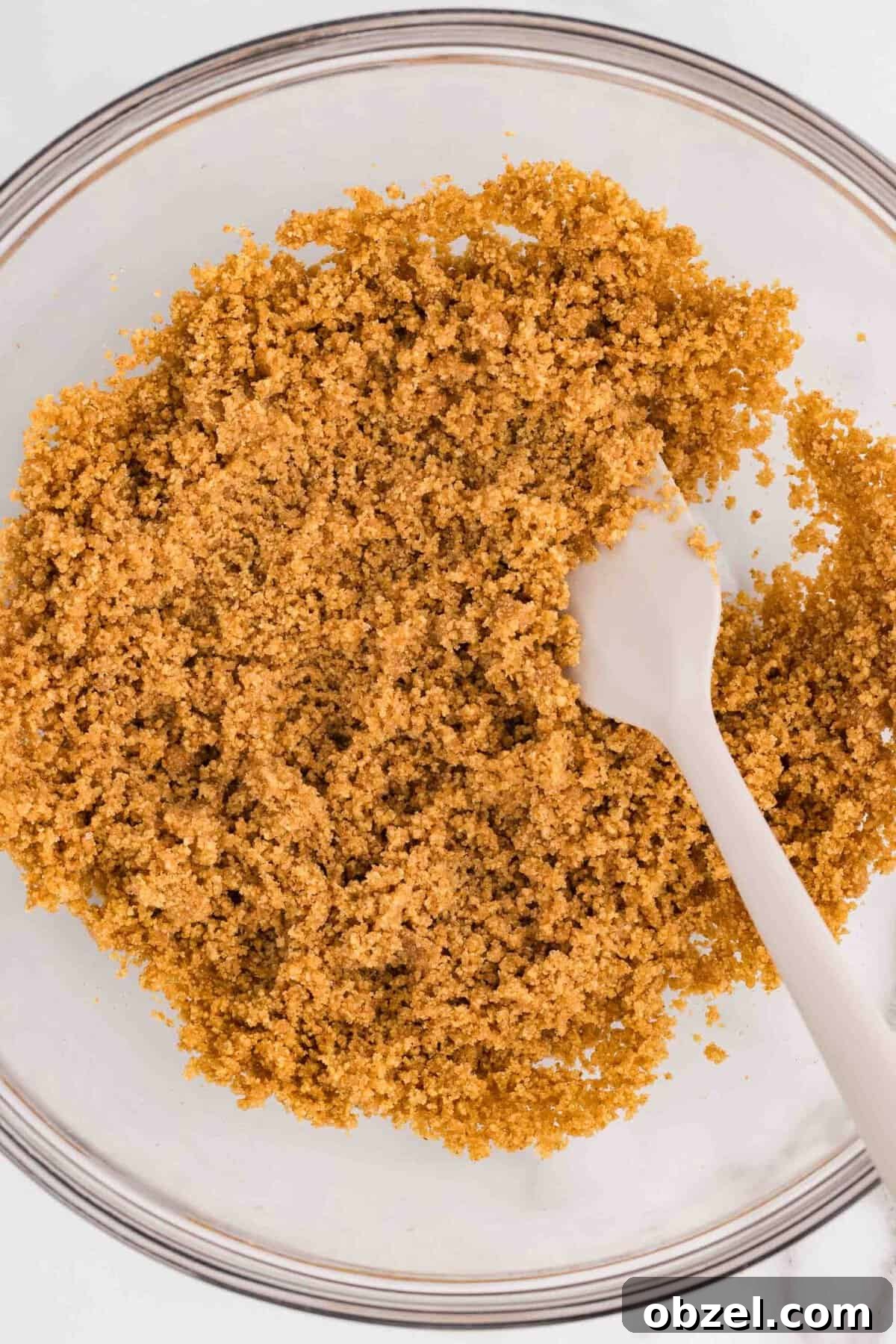
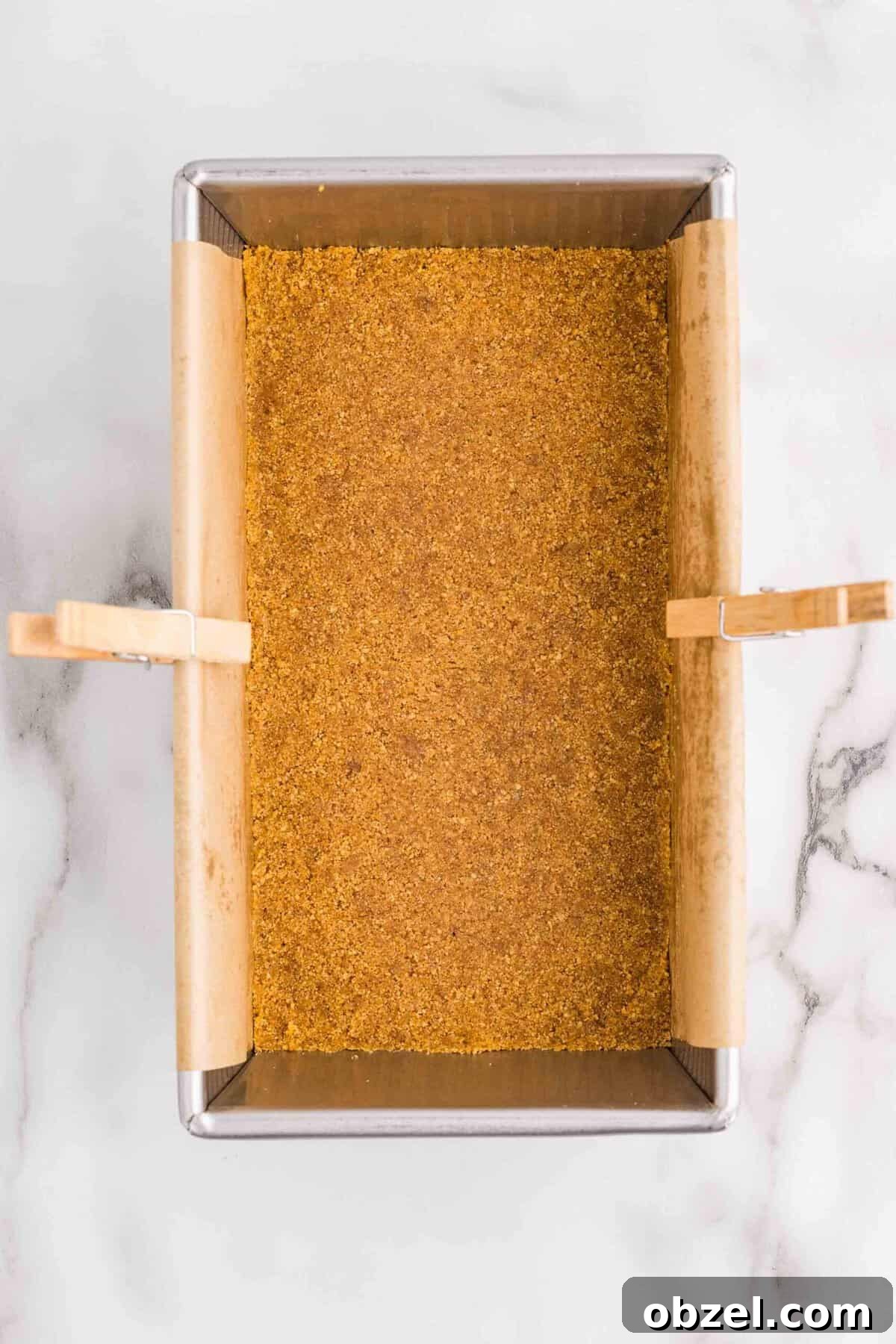
Stir together finely crushed graham crackers, melted butter, brown sugar, and a pinch of salt. Press the mixture firmly and evenly into the bottom of the pan. Bake at 325°F for 12 to 14 minutes, until the crust is set and lightly golden.
Mix the Cheesecake Filling
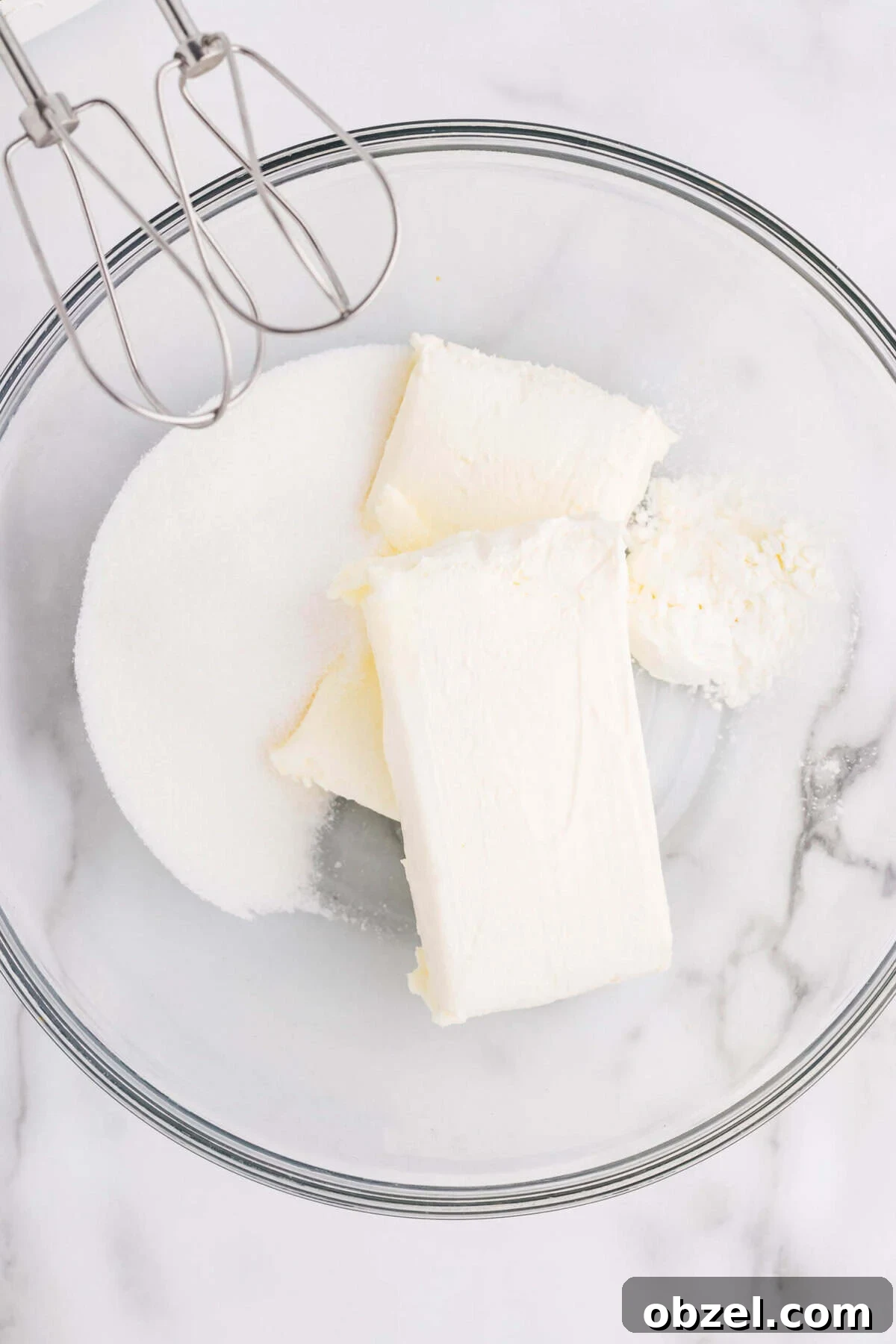
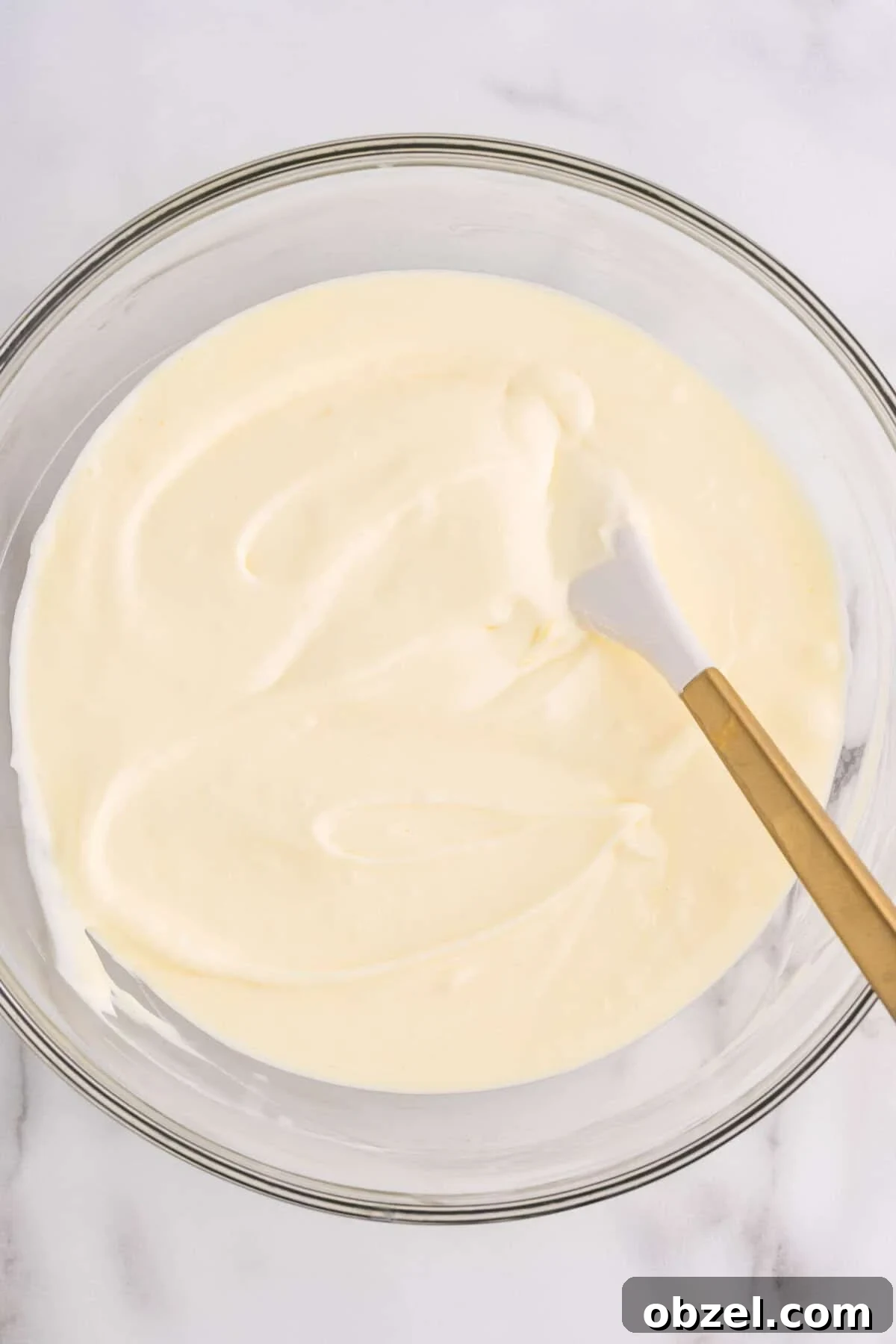
Beat the softened cream cheese, sugar, and cornstarch on low speed until smooth, about 1 minute. Scrape the bowl well. Add the sour cream, heavy cream, and vanilla, then mix just until combined. Add the beaten eggs in two additions, scraping the bowl between each addition.
Keep the mixer on low and avoid overmixing. Too much air in the batter can cause the cheesecake to rise, fall, or crack as it cools.
Set Up the Water Bath
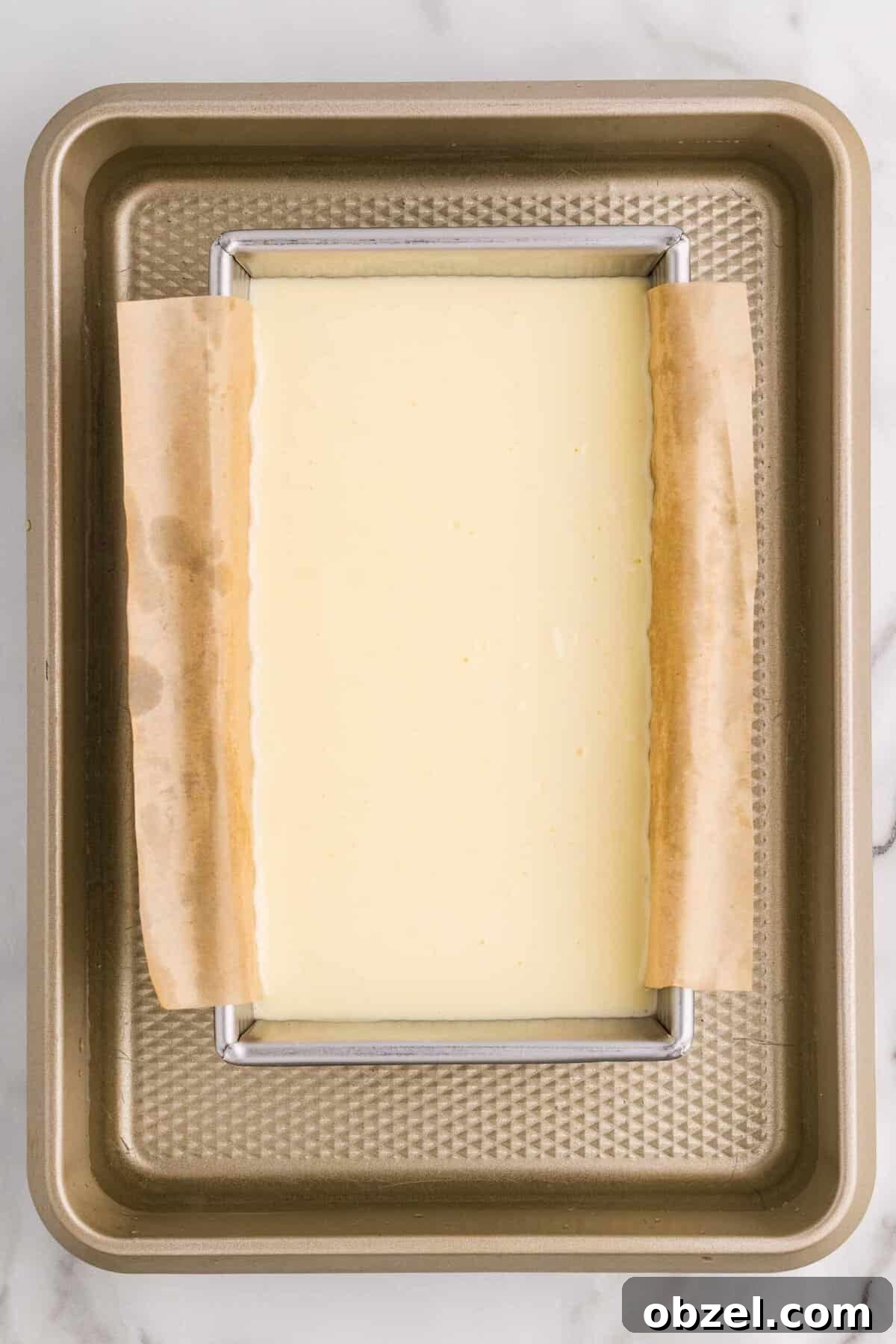
Pour the cheesecake filling over the baked crust and smooth the top. Tap the loaf pan gently on the counter a few times to release trapped air bubbles. Place the loaf pan inside a rimmed 9 x 13-inch baking pan, then fill the outer pan halfway with hot water.
Bake with the Foil Trick
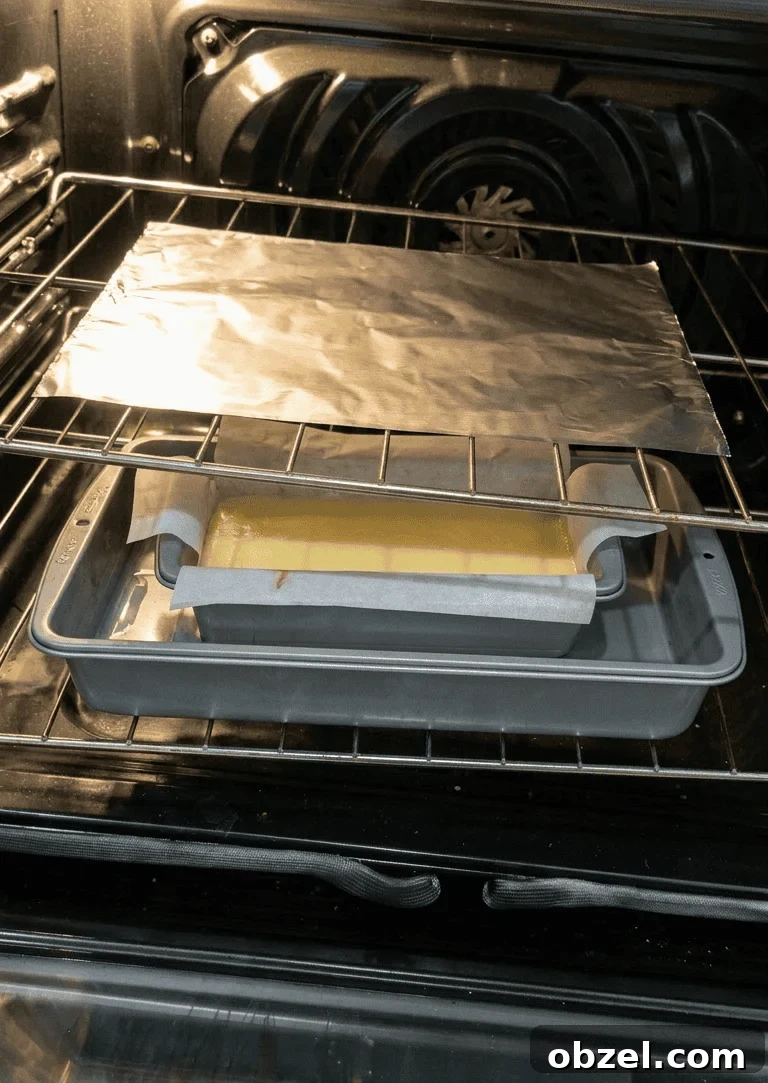
For a pale, smooth top, place a sheet of foil on the oven rack above the cheesecake with the shiny side facing up. This helps reflect heat away from the top and reduces browning.
Bake at 325°F for 60 to 70 minutes. Do not open the oven before the 60-minute mark. The cheesecake is done when the edges look set and the center still has a gentle jiggle, similar to Jell-O.
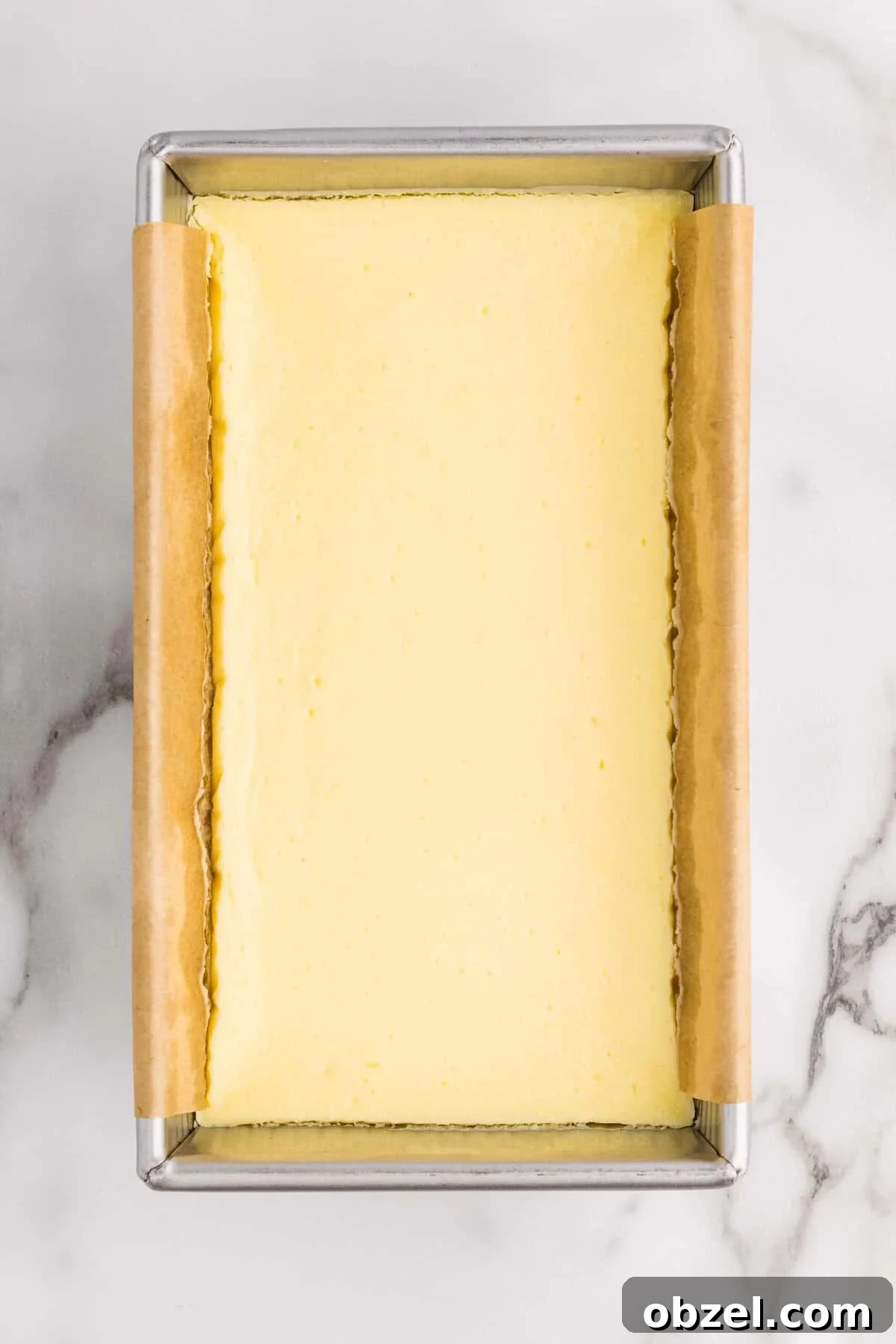
Cool, Chill, and Slice
Cool the cheesecake slowly. Turn off the oven, crack the door, and let the cheesecake cool in the water bath inside the oven for 1 hour. Remove the loaf pan from the water bath, dry the outside, and let it finish cooling at room temperature.
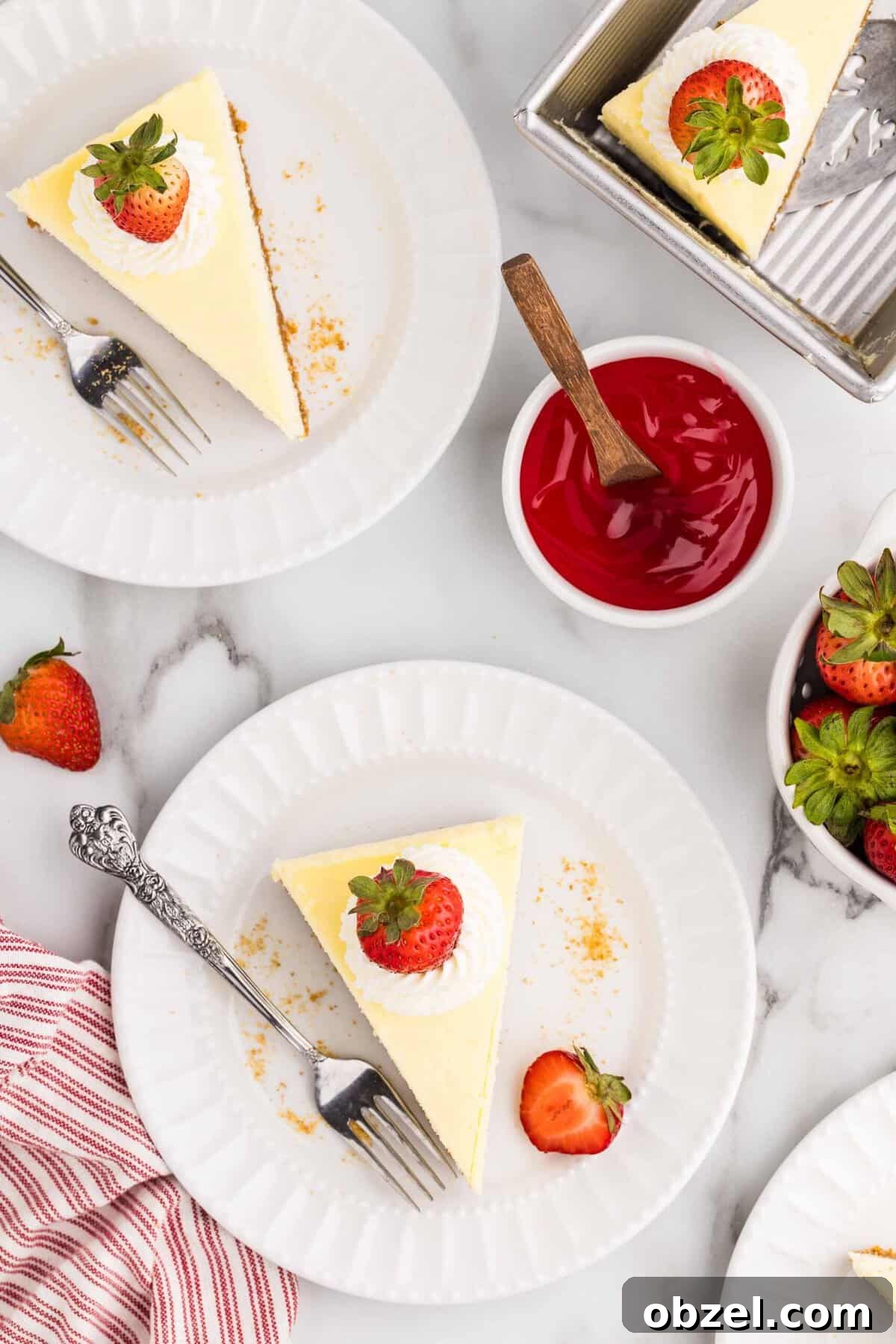
Once fully cooled, cover tightly and refrigerate for at least 4 hours, or overnight for the best texture. When ready to slice, run an offset spatula around the edges, lift the cheesecake out using the parchment, and cut with a long, sharp knife dipped in hot water and wiped dry between every slice.
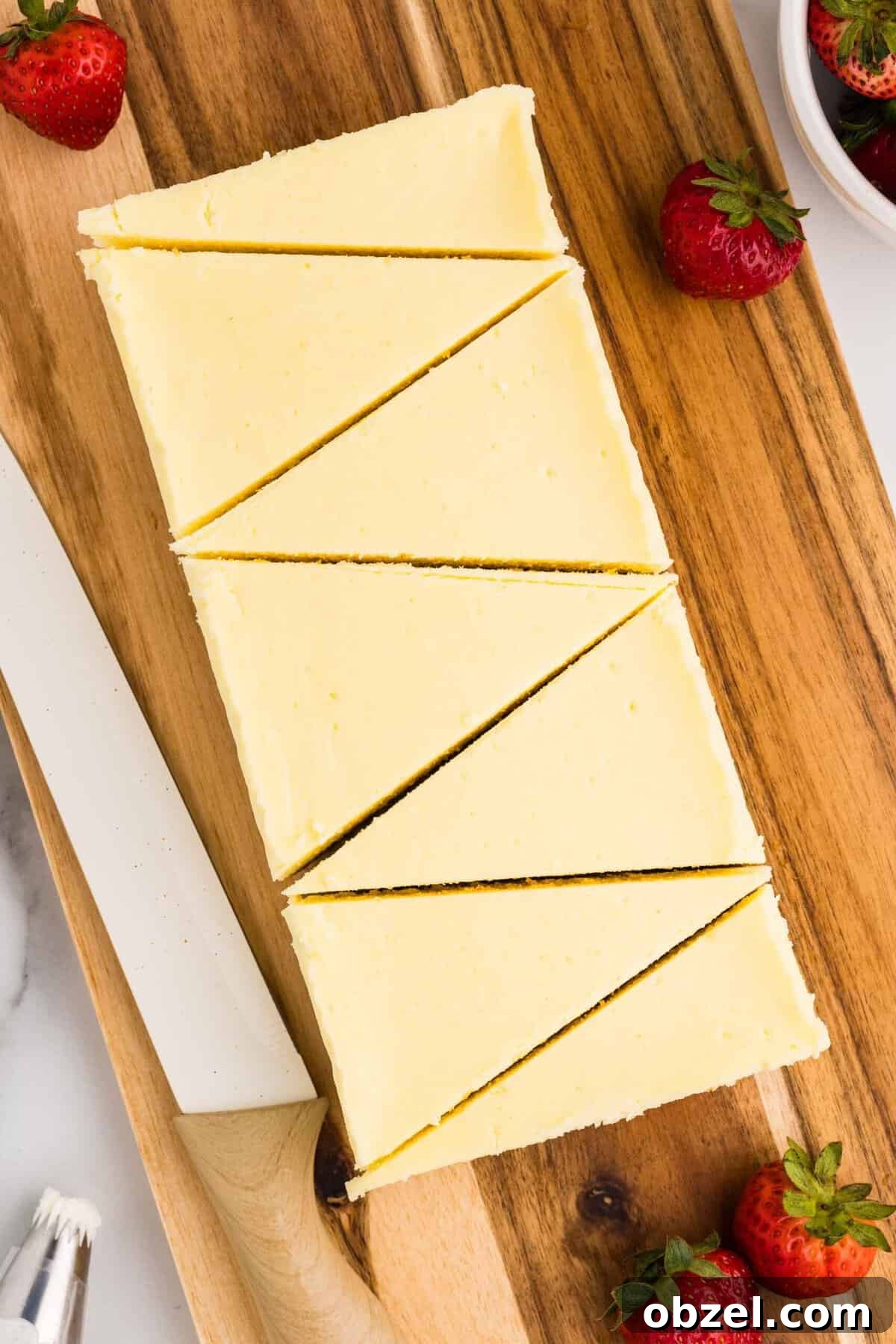
Serve
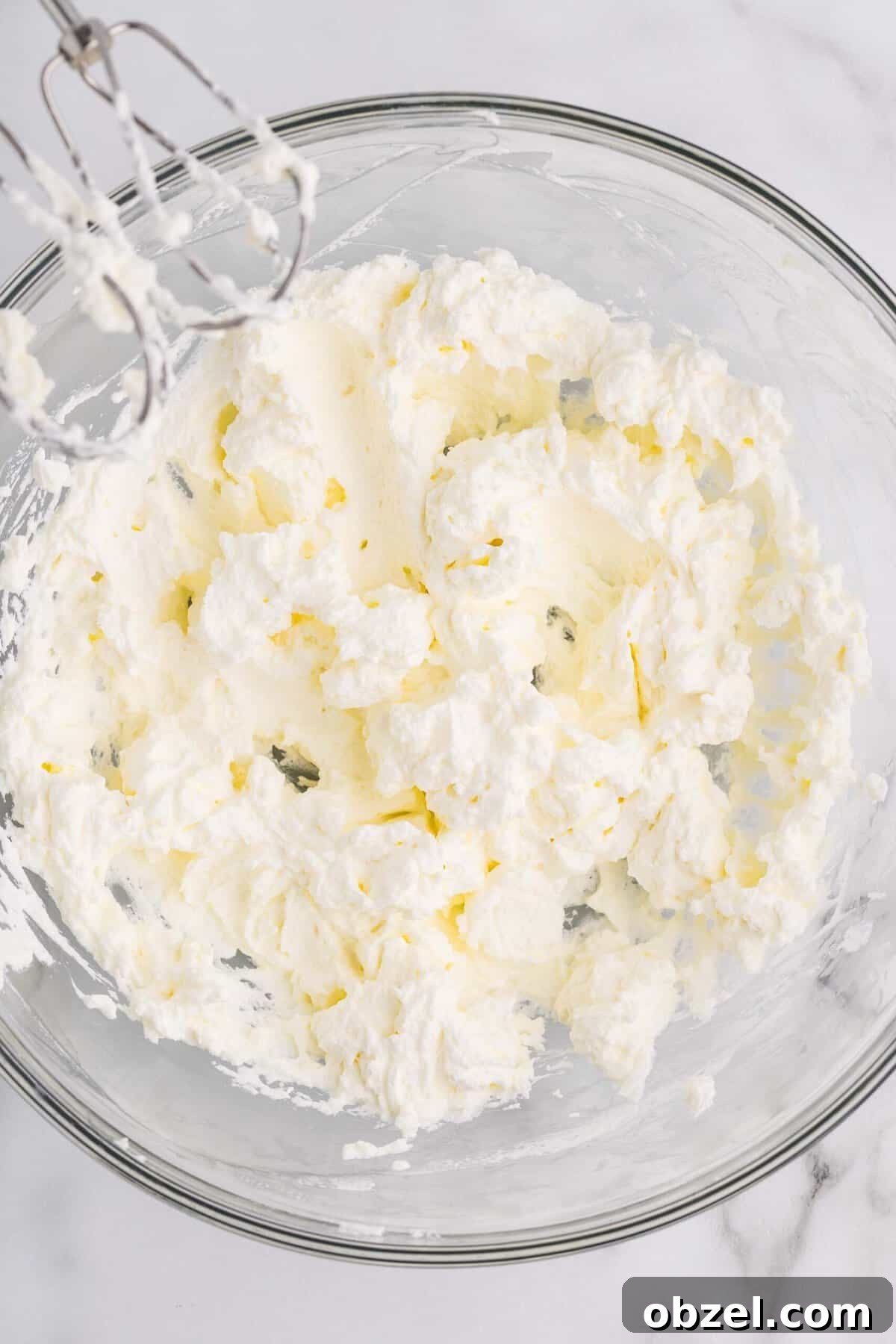
Pipe whipped cream over the chilled cheesecake and top each slice with fresh strawberries and a drizzle of strawberry glaze, if desired. The cornstarch in the whipped cream helps stabilize it, so it holds its shape longer after piping.
Melissa’s Tips
Tips & Variations
- Do not skip the foil trick: Without the foil on the rack above the cheesecake, the top may brown. The flavor will still be good, but the finish will not be as pale and bakery-smooth.
- Use a hot knife for every cut: Dip the knife in hot water and wipe it dry between slices for the cleanest edges.
- Bring ingredients to room temperature: Set the cream cheese, sour cream, heavy cream, and eggs on the counter about 2 hours before baking.
- Try different toppings: Strawberries are classic, but blueberry compote, lemon curd, or salted caramel also pair well with this creamy cheesecake.
- Make it ahead: This loaf pan cheesecake tastes even better after a full night in the refrigerator, making it a great make-ahead dessert.
Frequently Asked Questions
Covered tightly in the refrigerator, this cheesecake stays creamy for up to 5 days. You can also freeze individual slices or the whole loaf. Wrap well in plastic wrap, then foil, and freeze for up to 2 months. Thaw overnight in the refrigerator before serving. For the best appearance, add whipped cream and strawberries right before serving.
Cracks are usually caused by overmixing, baking at too high a temperature, skipping the water bath, or cooling too quickly. This recipe uses low-speed mixing, a water bath, a foil shield, and gradual cooling to help prevent cracking.
A water bath is strongly recommended for this recipe. It provides gentle, even heat and helps create the creamy, custard-like texture while keeping the top smooth and pale.
A slight jiggle in the center is exactly what you want. The cheesecake will continue to set as it cools and chills. If it is baked until completely firm in the oven, it may become dense or dry.
For best results, use an 8.5 x 4.5-inch loaf pan. A 9 x 5-inch loaf pan can work, but the cheesecake will be shorter and may bake a few minutes faster. Begin checking around 55 minutes.
Looking for More Easy Desserts?
-
Oreo Truffle Bars
-
Homemade Cosmic Brownies
-
The Best White Sheet Cake

Creamy Loaf Pan Cheesecake
Ingredients
- 1 cup finely crushed graham crackers, about 7 rectangles or 14 squares
- 5 tablespoons unsalted butter, melted
- 1 tablespoon light brown sugar
- Pinch of salt
- 16 ounces full-fat brick-style cream cheese, room temperature
- ½ cup granulated sugar
- 1 tablespoon cornstarch
- ¼ cup sour cream, room temperature
- ¼ cup heavy cream, room temperature
- 1 teaspoon pure vanilla extract
- 2 large eggs, room temperature and beaten
- 1 cup heavy whipping cream, cold
- 2 tablespoons powdered sugar
- 1 teaspoon cornstarch
- 1 teaspoon vanilla bean paste or vanilla extract
Instructions
- Preheat the oven to 325°F.
- Grease and line an 8.5 x 4.5-inch loaf pan with parchment paper, leaving overhang on the sides so the cheesecake can be lifted out after chilling.
- In a medium bowl, combine the graham cracker crumbs, melted butter, brown sugar, and salt. Press firmly into the prepared loaf pan to form an even crust.
- Bake the crust for 12 to 14 minutes, until set and lightly golden. Set aside while you prepare the filling.
- In a large bowl, beat the softened cream cheese, granulated sugar, and cornstarch on low speed until smooth, about 1 minute. Scrape the sides and bottom of the bowl.
- Add the sour cream, heavy cream, and vanilla extract. Mix on low speed just until combined.
- Add the beaten eggs in two additions, mixing on low speed and scraping the bowl between each addition. Do not overmix.
- Pour the batter over the baked crust and smooth the top. Tap the pan gently on the counter to release air bubbles.
- Place the loaf pan inside a rimmed 9 x 13-inch pan. Fill the larger pan halfway with hot water. Carefully place it on the bottom rack of the oven.
- Place a sheet of foil on the oven rack above the cheesecake, shiny side up, to help prevent overbrowning.
- Bake at 325°F for 60 to 70 minutes. Do not open the oven before 60 minutes. The cheesecake is done when the edges are set and the center still jiggles slightly.
- Turn off the oven, crack the door, and let the cheesecake cool inside the oven in the water bath for 1 hour.
- Remove the loaf pan from the water bath and dry the outside of the pan. Let the cheesecake cool fully at room temperature.
- Cover tightly and refrigerate for at least 4 hours, or overnight.
- To serve, loosen the edges with an offset spatula or thin knife. Lift the cheesecake out using the parchment paper. Slice with a hot, dry knife, wiping between cuts.
- For the whipped cream, beat the cold heavy whipping cream, powdered sugar, cornstarch, and vanilla for 2 to 3 minutes, until stiff peaks form. Pipe or spoon over the chilled cheesecake and top with strawberries, if desired.
Team Contributions
📸 Photography by Jane Campbell for Design Eat Repeat®
👩🍳 Recipe development by Rachel Walters for Design Eat Repeat®